How Many Tire Plugs Can You Put in One Tire? the Safe Limit
Most passenger tires should receive no more than three professional repairs, and many manufacturers allow fewer. A DIY string plug is a temporary fix, not a permanent repair.
Few questions confuse DIY drivers more than how many tire plugs can you put in one tire, and the answer is rarely a single number. Industry guidelines allow up to three professional repairs on most passenger tires, but puncture location, spacing, and the type of plug you used can lower that limit to one — or make replacement the only safe choice. Understanding the rules before you reach for a plug kit keeps you safer and saves you money.
- Industry limit: Most U.S. tire guidelines cap repairs at three per tire, and many makers allow.
- Location first: Only center-tread punctures under 1/4 inch are repairable; sidewall and shoulder holes call for.
- Plug vs. patch: A DIY string plug is a temporary fix; only a professional patch-plug is accepted.
- Spacing matters: Multiple repairs must be spaced well apart, and some tire brands require 16 inches.
- Keep records: A dated professional repair receipt protects your warranty, resale value, and insurance claim if.
The Short Answer: How Many Tire Plugs Can You Put in One Tire?
The Industry Standard: Three Repairs Maximum per Tire
Tire repair guidelines used across the United States, including those published by the Rubber Manufacturers Association (RMA), generally cap repairs at three per tire. That limit applies to professional repairs performed from the inside of the tire — not to the string plugs you push in from the outside at the roadside.
Many passenger-tire makers follow the same three-repair ceiling, but several use a lower one. Performance tires, low-profile tires, and tires driven at sustained highway speeds may be limited to one or two repairs by the manufacturer. Checking your tire brand’s published repair policy matters more than trusting a generic number.
Why the Plug Count Isn’t the Only Limit That Matters
A tire can have three small punctures and remain structurally sound if each one is properly repaired, far apart, and inside the tread. The same tire can be dangerous if a single puncture sits too close to the shoulder, runs wider than the guideline allows, or damages the inner liner. The number of plugs tells you only part of the story.
Remaining tread depth, tire age, any history of driving on a flat, and whether the damage reached the steel belts all influence the decision to plug, patch, or replace. Counting plugs is easy; judging the damage takes a trained professional’s eyes.
Plug vs. Patch: Know What You’re Actually Installing
Temporary String Plugs vs. Professional Patch-Plugs
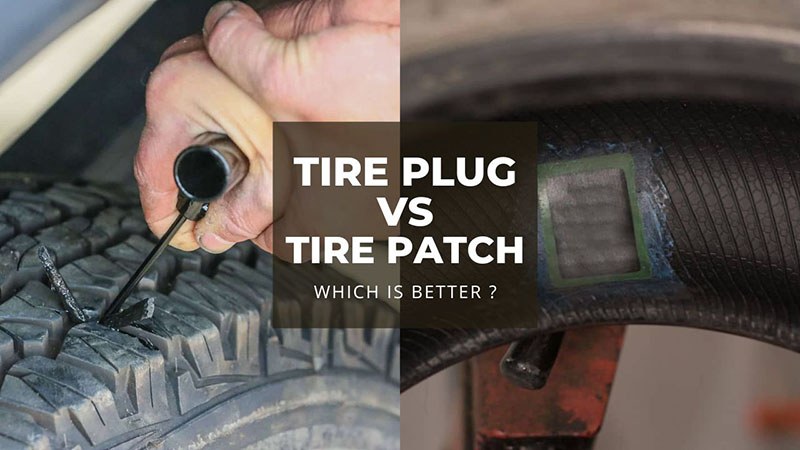
When most drivers say “plug,” they mean a sticky string coated with rubber cement that gets pushed into the puncture from outside the tire. These kits are inexpensive and can seal a hole in about 15 minutes. They are designed to get you back on the road long enough to reach a tire shop.
A professional patch-plug is a combined patch and plug. The tire is removed from the wheel, inspected from the inside, and the damaged area is buffed and cleaned before a one-piece repair unit seals both the hole and the inner liner. This is the only repair method accepted by industry guidelines for returning a tire to normal service. If you want the full comparison, read our breakdown of tire plug vs patch safety before you choose.
Why a Plug Alone Is a Temporary Repair, Not a Permanent Fix
A string plug seals the hole, but it does nothing for the damage to the inner liner underneath. Air can slowly migrate through the damaged liner and cause the belt layers to separate over time. That is why a correct repair must be sealed from the inside.
Industry guidelines and most tire manufacturers warn that a plug-only repair should be treated as temporary. Drive gently, keep speeds below the limit stated on the plug kit, and visit a tire shop as soon as possible. The longer you wait, the more risk you take with a repair that was never designed to last.
Puncture Location: The Repairable Zone on Your Tire
Where Plugs Are Allowed: The Center Tread Area
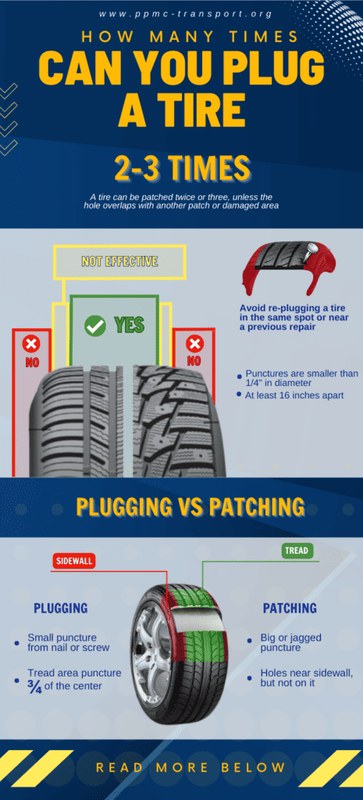
Professional repair guidelines allow repairs only in the crown area of the tire — the middle portion of the tread that normally contacts the road. Damage here is supported by the stiffest part of the belt package, so a proper repair can restore most of the tire’s original strength.
If the puncture sits in the center of the tread and measures under 1/4 inch, a professional patch-plug is usually the right fix. Location matters because the sidewall and shoulder flex with every rotation. The center tread does not.
Where Plugs Are Never Safe: Sidewall, Shoulder, and the 1-Inch Rule
Punctures in the sidewall, in the shoulder, or within about 1 inch of the shoulder edge are not repairable under standard tire guidelines. These zones flex and carry load differently than the tread, and a plug there can loosen or cause a sudden blowout.
If your tire leaks near the edge of the tread or on the side of the tire, do not install a plug. A sidewall puncture can fail quickly at highway speed, and no string plug kit can safely fix it. Our guide to why a tire plug kit cannot fix a sidewall puncture explains the danger in more detail.
Puncture Size and Spacing Rules for Multiple Plugs
Maximum Hole Diameter: The 1/4-Inch (6mm) Threshold
Industry guidelines cap the repairable puncture size at 1/4 inch, or 6 millimeters, in diameter. Anything larger — a spike, a big bolt, or damage from a curb strike — usually requires replacement because the belts and inner liner have been too badly damaged.
String plugs work best when the hole matches the plug’s size. If you have to stretch a plug aggressively or force it into a torn opening, the repair will not hold under load. When in doubt, measure the puncture and compare it to the 1/4-inch rule before wasting time on a plug that cannot hold.
Minimum Distance Between Repairs: Why Spacing Matters
Repairs that overlap or sit close together weaken the tire’s internal structure more than either puncture would alone. Several major tire manufacturers specify that multiple repair centers must be at least 16 inches apart; others set their own distance rules. Because spacing varies by brand, a shop should measure and confirm each repair before adding a new one.
If you are wondering whether a second plug can go into a tire that already has one, the answer depends on where the first repair sits and how much sound rubber remains between them. Our article on whether you can plug a tire twice in the same spot covers when a second repair location is acceptable and when it is not.
The Real Risks of Exceeding the Safe Plug Limit
Structural Integrity, Heat Build-Up, and Sudden Failure
Every puncture removes rubber and, in many cases, damages one or more steel belts. A tire with too many repairs loses stiffness and generates more heat as it rolls. Heat softens rubber compounds and can lead to belt separation or tread detachment.
That risk climbs when the tire is heavily loaded, driven in summer heat, or held at highway speeds for long stretches. A sudden air loss at speed gives you very little time to react, and the vehicle can pull hard to one side. A tire that has already failed this way must be replaced.
How Repairs Affect Speed Rating and Load Rating
A tire’s speed rating — the letter like “T,” “H,” or “V” on the sidewall — and its load rating are set by the manufacturer for an undamaged tire. After a correct patch-plug repair, some tire makers allow the original ratings to stand. Others require a reduction such as one speed step lower.
A DIY string plug never keeps those ratings intact. The tire should be treated as temporarily repaired, meaning lower speeds, reduced load, and a prompt trip to the shop. If you regularly drive at 70 mph or carry heavy loads, the safe choice is a professional repair or a replacement.
Post-Plug Maintenance: TPMS, Pressure, and Inspection
Cold Tire Pressure and the Door-Jamb Placard
After any plug repair, recheck the pressure on cold tires. Use the figure printed on the driver’s door-jamb placard, not the number molded into the tire sidewall. The sidewall number is a maximum pressure, not a recommended one.
Check the pressure again after a few days. A slow leak around a plug means the repair did not seal correctly, or the original puncture was not clean. A tire that keeps losing air needs professional attention, not another plug.
TPMS Relearn Limits After a Plug Repair
A string plug installed from outside does not touch the tire’s TPMS sensor, so no relearn should be needed. Repairs that require dismounting the tire — like a professional patch-plug — can disturb the sensor position, and many vehicles need a TPMS relearn after the wheel goes back on. If the warning light stays on after service, check the pressure first, then follow the vehicle’s relearn procedure. Our guide to resetting the TPMS light after tire rotation covers the same steps used after most tire service.
Gauge Accuracy and Inflator Duty Cycle When Refilling
If you refill a plugged tire with a portable inflator, know that the built-in gauge may not be exactly right. Cold weather and low battery voltage can make the inflator stop early or overfill. Let the tire sit briefly, then confirm the pressure with a separate quality gauge.
Portable inflators also overheat when run too long without a break. If your tire was very low, the inflator may need time to cool between runs. Do not trust a hot inflator to tell you the tire is safe — verify with a hand gauge and a visual check of the sidewall.
Legal and Inspection Rules for Plugged Tires in the U.S.
State Inspection Requirements for Plugged Tires
There is no single federal rule that bans or allows DIY tire plugs. State safety inspection programs set their own requirements, and many states reject a tire that shows sidewall damage, exposed cords, or multiple improper repairs. Some states require all repairs to follow RMA guidelines.
Liability and Insurance Considerations After a DIY Plug
If a plugged tire fails and causes a crash, an insurance claim may hinge on whether the tire was repaired properly. An adjuster can examine the tire for string plugs in non-repairable zones or repairs that exceed accepted limits.
A professional patch-plug with a dated receipt shows the repair was done to industry standards. A parking-lot string plug near the shoulder does not. Keep the paperwork, and treat any DIY plug as a short-term fix until a shop can inspect the tire from the inside.
Plug, Patch, or Replace: Cost and Ownership Decisions
When a Tire Is Beyond Repair: Professional-Repair Thresholds
A tire is beyond repair when the puncture is larger than 1/4 inch, located in the sidewall or shoulder, or when the inner liner has been contaminated by dirt or water. It is also beyond repair if it was driven while severely underinflated, which crushes the sidewall and hides damage from the outside. Most run-flat tires cannot be repaired after any significant low-pressure drive.
Cost Comparison: DIY Plug vs. Professional Patch vs. New Tire
A basic string-style plug kit typically costs between $10 and $25 at an auto parts store, and the repair takes about 15 minutes in your driveway. A professional patch-plug usually runs $20 to $40 per tire because the shop removes the wheel, dismounts the tire, and inspects the inside. A replacement passenger tire often costs $80 to $200 or more, depending on the vehicle and tire type.
The ownership math is simple: a $25 kit is cheap but only a bandage. A $30 professional repair is the most economical way to keep the tire for its full remaining life. A new tire is the only correct answer when the damage breaks the repair rules.
Final Verdict: The Safe Limit and Your Next Steps
The Bottom Line on Multiple Plugs in One Tire
The safest answer is no more than three professional repairs on one passenger tire, and often fewer once you account for location, spacing, and remaining tread. A DIY string plug is a temporary fix that should be replaced by a professional patch-plug as soon as possible. When the damage sits outside the repairable tread zone, replacement is the only responsible option.
Questions to Ask Your Tire Professional Before Driving Away
- Is this puncture inside the repairable zone under your shop’s written policy?
- How many repairs are already in this tire, and how far apart are their centers?
- Will the repair preserve the tire’s original speed and load ratings?
- What records do I receive, and does the repair carry a workmanship warranty?
- Best for: A single puncture in the center tread of a passenger tire, repaired with a professional patch-plug and kept within the three-repair maximum.
- Think twice if: The puncture sits near the shoulder, measures larger than 1/4 inch, or the tire was already driven flat — these cases require replacement.
- Next step: Verify your tire brand’s repair guidelines, then schedule a professional inspection if you have already used a DIY string plug.
Frequently Asked Questions
No. Plugging the same puncture twice, or stacking a new repair over an old one, weakens the tire’s internal structure and is not accepted by industry repair guidelines. A tire shop must inspect the damage from the inside before any second repair.
Most U.S. tire repair guidelines allow up to three professional repairs on one tire, as long as each puncture is in the center tread, smaller than 1/4 inch, and properly spaced from the others. Many tire manufacturers allow fewer, so always check the brand’s published repair policy.
A professional patch-plug installed according to industry guidelines may keep the tire’s original speed rating, depending on the manufacturer. A DIY string plug is a temporary repair and should be limited to lower speeds and a short, careful drive to a tire shop.
A string plug installed from the outside does not contact the TPMS sensor. A patch-plug repair requires dismounting the tire, and many vehicles then need a TPMS relearn procedure before the warning light goes out.
No single federal law governs DIY tire plugs, and state inspection rules vary. Some inspectors reject plug-only repairs or any repair outside the tread area, so check your state’s motor vehicle inspection requirements before relying on a plugged tire.
A professional patch-plug repair typically costs $20 to $40 per tire, including wheel removal, dismounting, inside inspection, and remounting. That is usually much less than the $80 to $200-plus price of a replacement passenger tire.