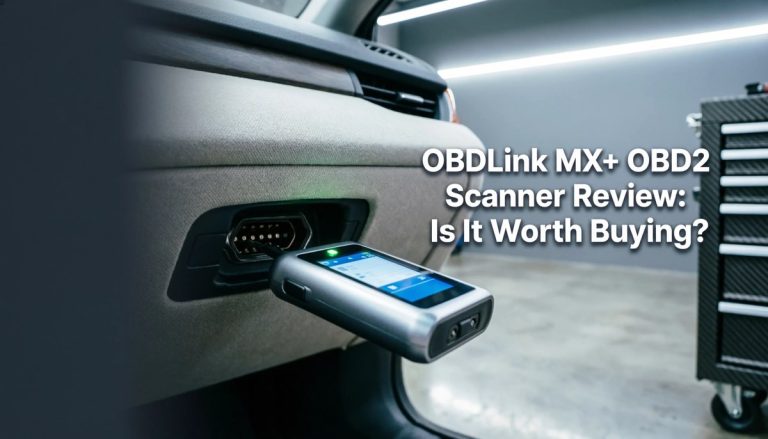
Best OBD2 Scanners Without Subscription: 8 No-Fee Picks
Modern vehicles rely on onboard computers to track engine performance and report problems. An OBD2 scanner connects to the car’s diagnostic port and translates those trouble codes into information you can use. It can help you understand a warning light before deciding whether to make a repair yourself or visit a mechanic.
The best OBD2 scanners without a subscription provide useful diagnostics with a one-time purchase and no ongoing app or data fees. When comparing models, we look at code coverage, live data, repair information, ease of use, update policies, and compatibility with your vehicle. Features such as ABS and airbag scans may cost more but can provide more useful information than a basic engine-code reader.
We evaluated scanners that work without a subscription to find the models that offer the best mix of features, accuracy, and value.
BlueDriver Pro Next-Gen is the best overall pick if you want app-based diagnostics without a recurring subscription. ANCEL AD310 is the budget choice for simple check-engine codes, while FOXWELL NT301 is a strong handheld option for DIY drivers who prefer a screen instead of a phone app.
- Best overall: BlueDriver Pro Next-Gen for app diagnostics and repair guidance.
- Best budget: ANCEL AD310 for basic engine-code reading.
- Best handheld: FOXWELL NT301 for simple DIY diagnostics without using a phone.
8 Best OBD2 Scanners Without a Subscription
We selected the best OBD2 scanners that work without ongoing subscription fees. Our list covers key features, vehicle compatibility, ease of use, and useful diagnostic functions.
BlueDriver Pro Next-Gen
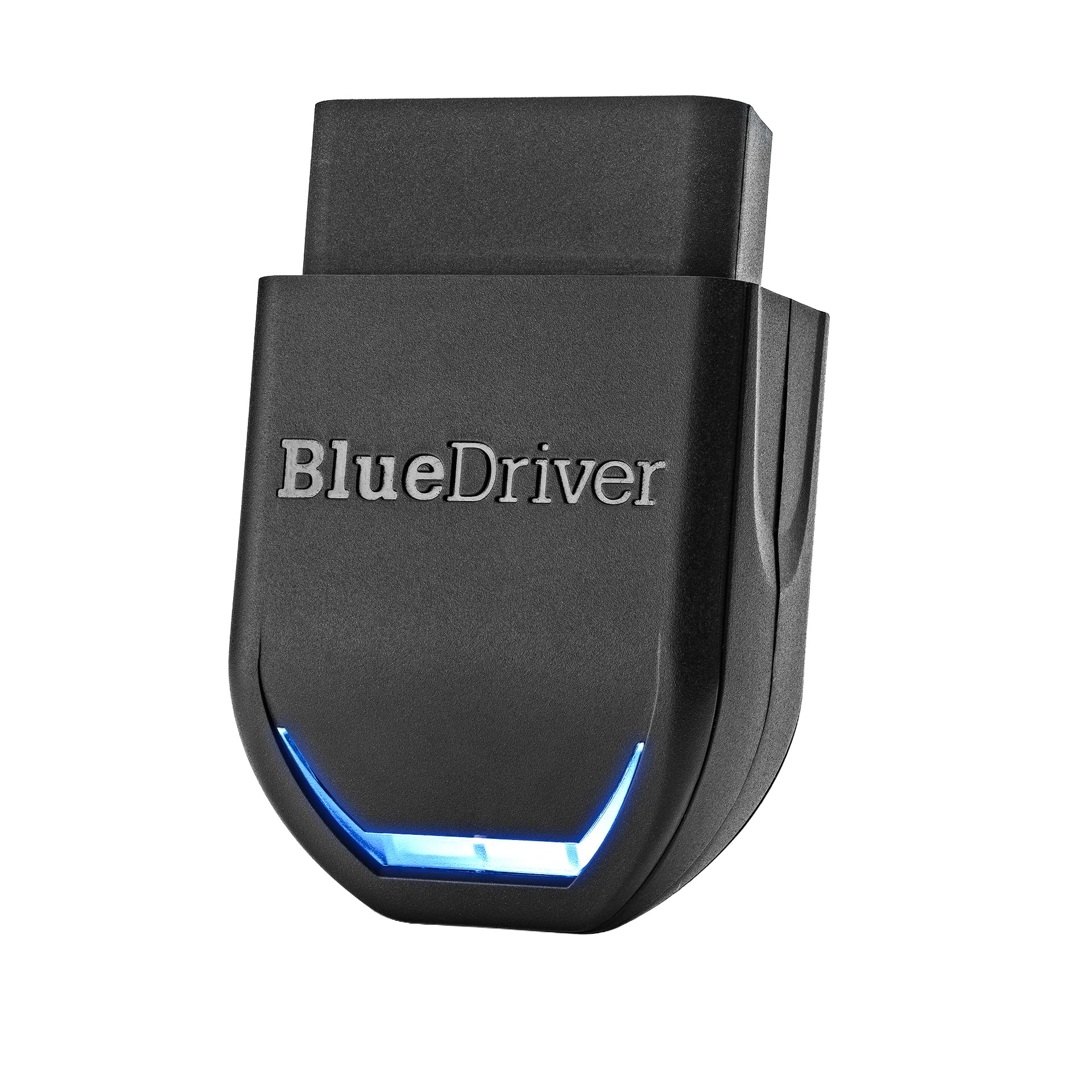
We recommend it for drivers who want detailed diagnostics, repair guidance, and no ongoing subscription fees.
Pros
- Reads more than basic engine codes on supported vehicles
- Provides live data and technician-verified repair reports
- Connects wirelessly to iPhone and Android devices
Cons
- Vehicle coverage varies by make and model
- Some users report dropped Bluetooth connections
- The app interface may take time to learn
We plugged the BlueDriver into the vehicle’s OBD2 port and paired it with a phone in a few minutes. The app made basic scanning simple, while its reports added likely causes and possible fixes instead of showing only a code number.
Compared with a basic code reader, it can access systems such as ABS, airbag, transmission, and TPMS on supported vehicles. We also found the live data, freeze-frame readings, smog checks, and Mode 6 results useful for checking a problem before visiting a repair shop.
The wireless design kept the cabin free of cables, and the one-time purchase avoids subscription costs. However, we would check the compatibility list first, especially for newer vehicles or less common brands.
Some owners report unstable connections or failed scans, while others praise the quick setup and clear reports. With a 3.8-star rating from 302 reviews, the experience appears mixed, so buyers should keep the return policy in mind.
ANCEL AD310 OBD2 Scanner

We recommend the ANCEL AD310 for drivers who want a simple, capable code reader without app fees or a subscription.
Pros
- Reads and clears common engine codes quickly
- Clear screen, labeled buttons, and sturdy cable
- Works with many 1996-and-newer OBD2 vehicles
Cons
- Limited to emission-related engine diagnostics
- Does not support older OBD1 vehicles
- Provides less coverage than advanced professional scanners
We found the AD310 easy to use right away. It powers through the car’s OBD2 port, so we did not need batteries, a charger, or a phone app. The controls felt straightforward, and the screen made codes and basic data easy to read.
The scanner quickly identified check-engine codes and allowed us to clear them after addressing the problem. Its live-data, freeze-frame, and readiness-check features also gave us more information than a basic code-only reader.
The thick cable and compact body held up well during use. However, the AD310 focuses on emission-related engine faults. It will not replace a professional scan tool for airbag, ABS, transmission, or other advanced systems.
UJS Rocco OBD2 Scanner
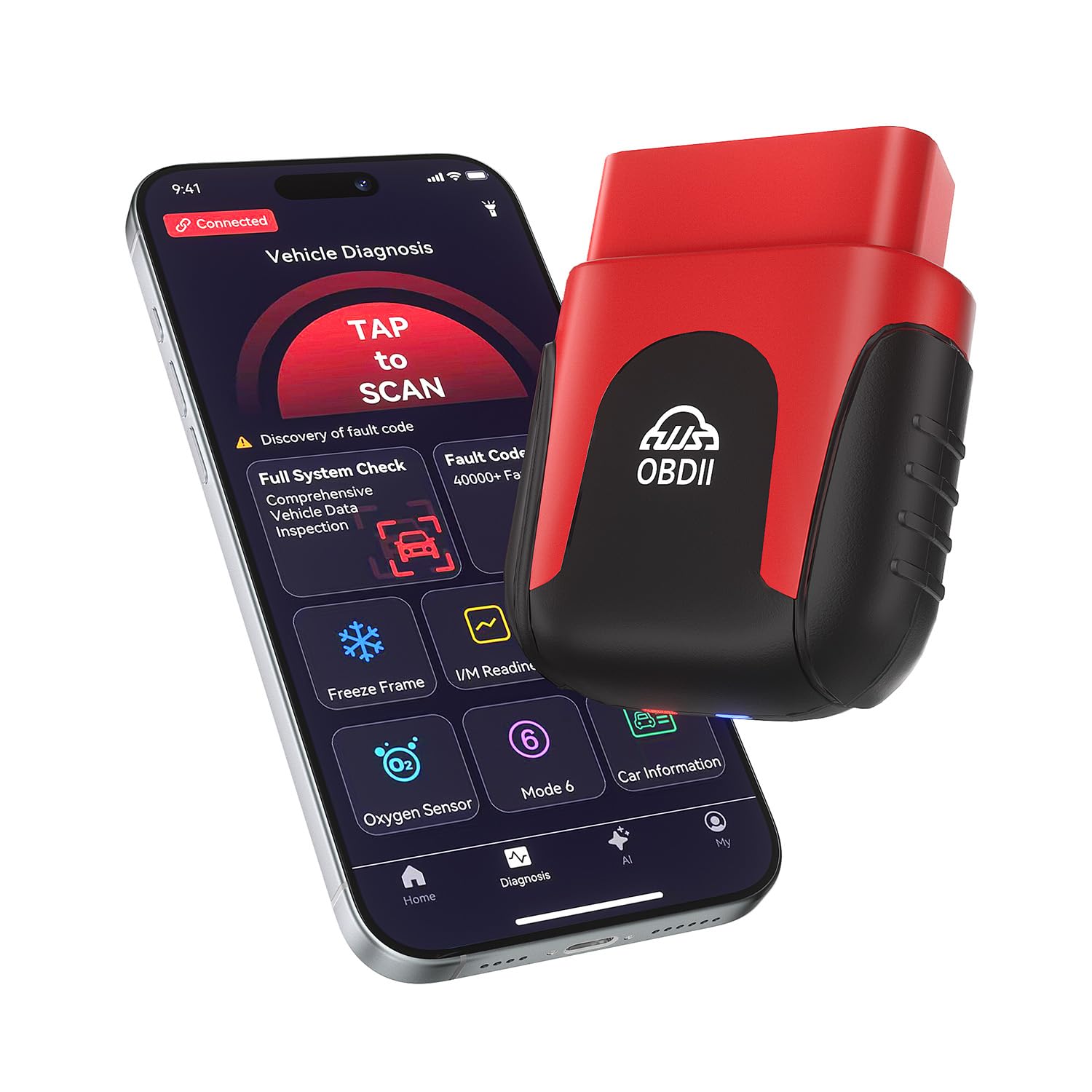
We recommend the UJS Rocco for drivers who want easy code checks, live data, and AI repair guidance without a subscription.
Pros
- No monthly fee or battery
- Works with iOS and Android
- Offers live data and health reports
Cons
- Requires a phone and app
- Some buyers reported incorrect box labeling
- Advanced system coverage may vary by vehicle
We plugged the compact Rocco into the OBD2 port and connected it to a phone through Bluetooth. Setup felt simple, and the small design avoids the loose cable that comes with handheld scanners.
The app reads and clears check-engine codes, then explains them in plain language. Its AI reports can help us understand whether a problem needs immediate attention, though we would still confirm serious repairs with a qualified technician.
Live graphs for items such as engine speed, coolant temperature, and oxygen sensor readings give us more detail than a basic code reader. The full-vehicle scan also provides a quick overview, but results can depend on the car’s available systems.
We like that the app does not require a subscription and supports both major phone platforms. The main drawback involves setup uncertainty, since some customer reviews mention receiving packaging labeled differently from the included scanner.
BLCKTEC 430 OBD2 Scanner

We recommend the BLCKTEC 430 for DIY owners who want detailed diagnostics and no ongoing subscription fee.
Pros
- Reads engine, ABS, airbag, SRS, and TPMS codes on supported vehicles
- Wireless phone and tablet connection
- Repair reports and videos help guide basic fixes
Cons
- Works only in the United States and Canada
- App pairing requires following the included instructions
- Advanced functions vary by vehicle
We found the compact scanner easy to carry and simple to power from the vehicle’s OBD2 port. The RepairSolutions2 app handles the connection, so we did not need a separate display or batteries.
Beyond check-engine codes, the BLCKTEC 430 can access systems such as ABS and airbags when the vehicle supports them. Its repair reports add possible causes and suggested solutions, which gives us more direction than a basic code reader.
The app also includes repair videos for common jobs. That makes the scanner more useful for home maintenance, although we would still verify any diagnosis before replacing parts.
We should note that the device does not connect through the phone’s normal Bluetooth menu. We need to pair it inside the app, and compatibility checks matter because features differ between vehicle makes and models. The scanner supports iOS 15 or later and Android 10 or later, with no subscription required after purchase.
Innova 5210 OBD2 Scanner
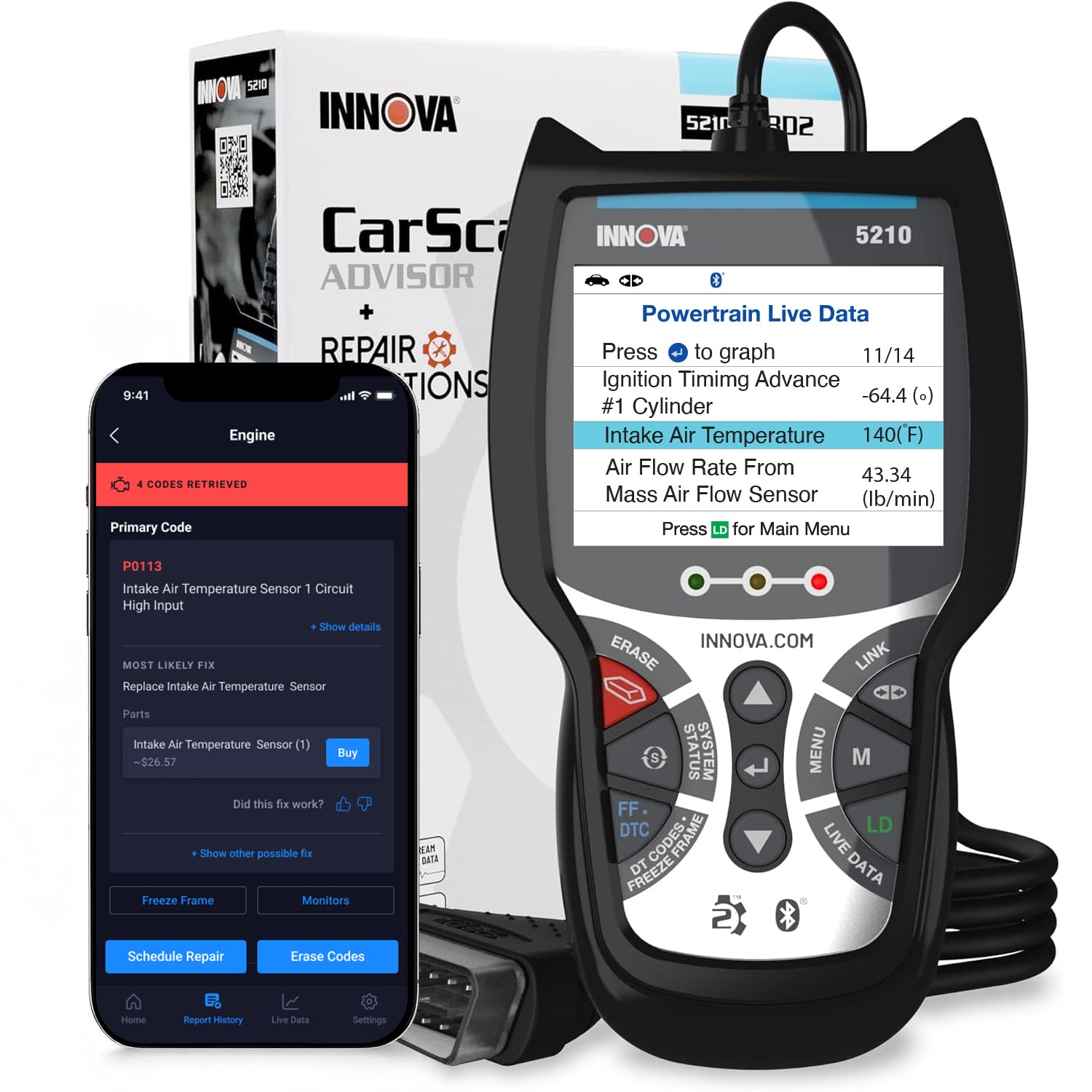
We recommend the Innova 5210 for drivers who want a capable, subscription-free scanner with live data, battery testing, and maintenance tools.
Pros
- Reads and clears engine codes, with ABS coverage on some vehicles
- Shows live data and emissions readiness
- Includes battery testing and oil-light reset functions
Cons
- Some features depend on the vehicle
- The attached cable limits portability
- Users must check coverage before buying
We found the 5210 simple to connect and use. Its screen made it easy to view trouble codes, engine readings, and readiness monitors without relying on a phone.
The battery test function adds practical value. We could check basic battery and alternator health from the same tool, which helps when a car shows starting or charging problems.
Live data readings, such as engine temperature, RPM, and fuel trims, give us more information than a basic code reader. The oil reset feature also helps after routine service.
The free RepairSolutions2 app can explain codes and suggest repair steps without requiring a subscription. However, we would confirm vehicle coverage first because ABS, oil reset, and other functions vary by make, model, and year.
FOXWELL NT301 OBD2 Scanner

We recommend the FOXWELL NT301 for basic code reading, live data, and check-engine-light work without a subscription.
Pros
- No subscription or app required
- Clear screen and simple controls
- Shows live data and emissions readiness
Cons
- Does not scan ABS or airbag systems
- Requires a wired OBD2 connection
- Updates need a Windows computer
The NT301 powers on as soon as we plug it into the vehicle. Its buttons and menus feel simple enough for routine checks, and the color screen remains easy to read in daylight.
We can read and clear engine fault codes, view live sensor data, and check emissions readiness. The graphing feature helps us watch values such as coolant temperature, RPM, oxygen sensors, and fuel trims while the engine runs.
Its dedicated readiness button and red-yellow-green indicators make emissions checks quick. We also like that it supports common OBD2 protocols and works with many 1996-and-newer U.S. vehicles, along with many newer European and Asian models.
This remains a basic engine diagnostic tool. It cannot scan ABS, SRS, air conditioning, parking brake, or battery systems, and it does not perform advanced resets or bidirectional tests. We should confirm compatibility by vehicle year, make, model, and VIN before buying.
For home mechanics who want a dependable, no-subscription reader for check-engine problems, the NT301 offers useful features without much setup.
BLCKTEC 460T OBD2 Scanner

We recommend the BLCKTEC 460T for DIY owners who want broad diagnostics and useful reset tools without a subscription fee.
Pros
- Reads engine, transmission, ABS, and SRS codes
- Includes 12 or more service reset functions
- Offers free lifetime software updates
Cons
- Some functions vary by vehicle
- Limited to use in the United States and Canada
- The 4.3-inch screen may feel small for detailed graphs
We found the 460T more capable than a basic check-engine-code reader. It scans several vehicle systems, shows live data, and displays freeze-frame information that helps us understand what happened when a fault appeared.
Its service tools add useful value for home repairs. We could use functions such as oil resets, battery registration, electronic parking brake service, steering-angle calibration, and ABS bleeding when the vehicle supported them. BLCKTEC advises checking compatibility first, since not every function works on every make and model.
AutoVIN and automatic system scanning made setup quick. The scanner also reconnects and checks fault information at regular intervals, which helped when we monitored readiness data before an emissions test.
We also like the included RepairSolutions2 app. It can provide repair information, maintenance details, recalls, and saved scan reports without a paid subscription. Still, the scanner works best when we confirm its supported functions before purchase, especially for newer vehicles or advanced service tasks.
ANCEL AD410 OBD2 Scanner
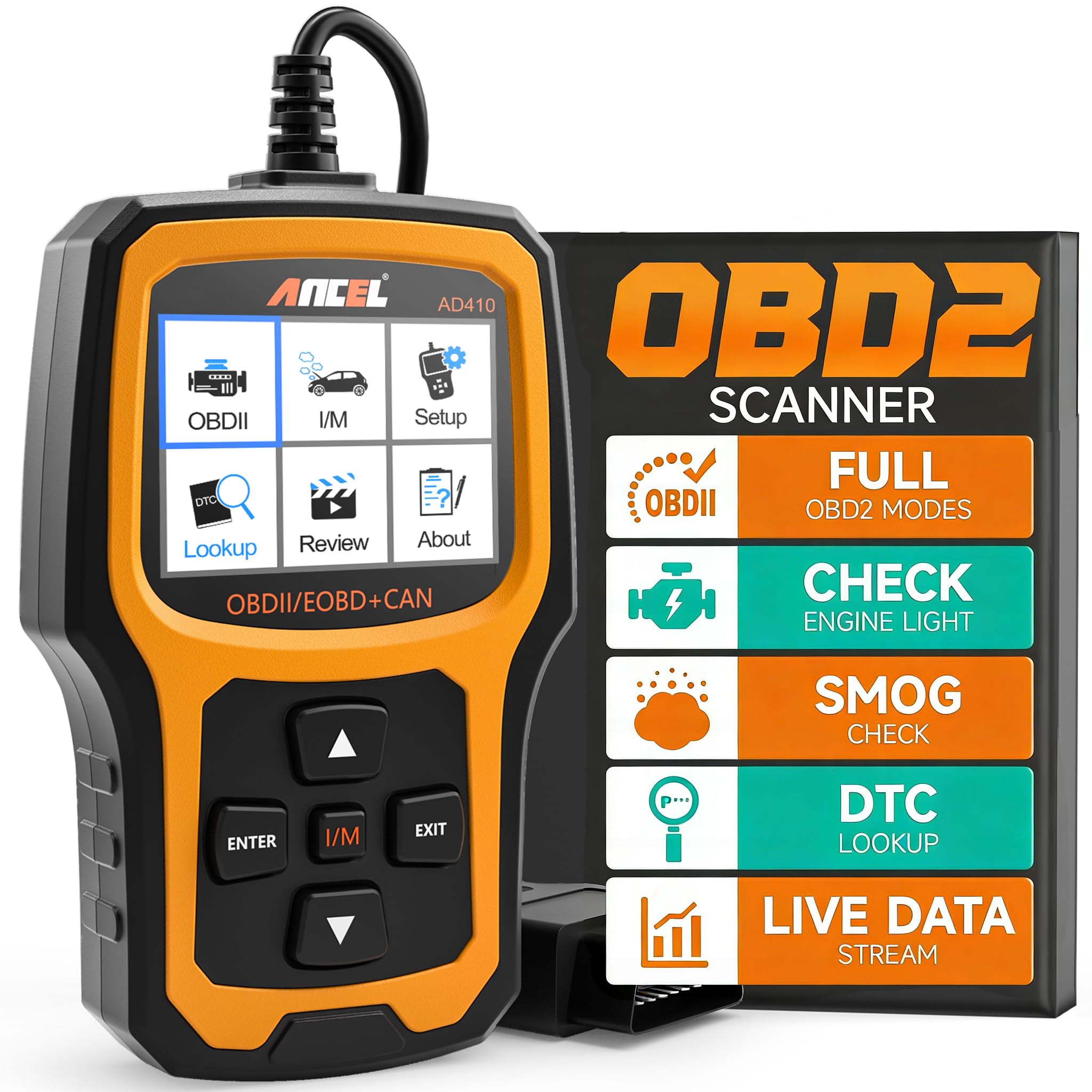
We recommend the ANCEL AD410 for drivers who want a simple, capable code reader without an app, Bluetooth connection, or subscription.
Pros
- Reads and clears engine fault codes quickly
- Shows live data and built-in code definitions
- Includes I/M readiness and emissions checks
Cons
- Does not diagnose ABS, airbag, or transmission systems
- The manual uses small, unclear print
- Requires a wired connection to the vehicle
We plugged the AD410 into several OBD2 vehicles, and it connected quickly once we turned on the ignition. The color screen made the menus easy to follow, while the built-in definitions helped us understand common engine codes without reaching for a phone.
The scanner also shows live readings such as engine speed, coolant temperature, and fuel trim. These details helped us look beyond the warning light and check whether the vehicle was running normally after a repair.
Its I/M readiness test proved useful before an emissions inspection. We could see whether the monitors were ready, though recent repairs may require several driving cycles before all systems report as complete.
The AD410 works with most 1996 and newer U.S. OBD2 vehicles and many newer European and Asian models. It handles engine and emissions diagnostics well, but we should not expect ABS, SRS, transmission, service reset, or advanced repair functions.
Because it draws power from the OBD2 port, we did not need batteries or a separate charger. Free software updates add value over time, although the included manual could explain the process more clearly.
Buying Guide
We should first confirm that the scanner works with our vehicle’s model year and OBD2 system. Most cars sold in the United States from 1996 onward support OBD2, but some advanced functions may require extra coverage.
We should also check which diagnostic tasks the scanner supports. Basic models read and clear engine codes, while more advanced units may access ABS, airbag, transmission, or body systems.
| Feature | What to look for |
|---|---|
| Subscription-free use | No required monthly or yearly payment for core functions |
| Code coverage | Support for manufacturer-specific and system-specific codes |
| Live data | Real-time readings from sensors and vehicle systems |
| Readiness tests | Emissions monitor status before an inspection |
| Updates | Included or optional software updates with clear costs |
| Connection type | Wired or wireless setup that suits our needs |
| Display | A clear screen with simple menus and readable text |
We should choose a scanner with plain-language code definitions, not just code numbers. Live data, freeze-frame records, and readiness checks can help us understand when and why a fault occurred.
We should review the update policy before buying. A scanner may work without a subscription but still charge for optional updates, expanded vehicle coverage, or advanced features.
Build quality and support also matter. We should look for a durable cable or stable wireless connection, clear instructions, a suitable return policy, and customer support that can help with setup.
Editor’s picks
We favor OBD2 scanners that offer useful tests, clear data, and free software access after purchase. These picks work well for different needs without requiring a recurring subscription.
| Scanner | Best for | Key strengths |
|---|---|---|
| BlueDriver | Smartphone users | Live data, repair reports, and manufacturer-specific codes |
| Autel MaxiAP AP200 | Advanced diagnostics | Broad system coverage with a one-time vehicle software purchase |
| ANCEL AD410 | Basic code reading | Simple controls, fast code checks, and an affordable price |
| TOPDON AD600S | Home mechanics | Full-system scans, live data, and active tests |
We recommend BlueDriver for drivers who want detailed repair information in a mobile app. It connects through Bluetooth and supports many common vehicle systems, but some advanced features depend on the vehicle model.
The Autel MaxiAP AP200 suits users who want deeper diagnostics without paying for a yearly plan. We should check the cost of vehicle-specific software before buying, since the first vehicle may be included while additional brands can cost extra.
For basic engine-code checks, the ANCEL AD410 keeps the process simple. The TOPDON AD600S offers more functions for users who want to test systems beyond the engine, such as the ABS or airbag modules.
Frequently asked questions
Do OBD2 scanners work with every car?
We can use most OBD2 scanners with cars sold in the United States from 1996 onward. Some features, such as airbag or ABS scans, may depend on the vehicle and scanner model.
Do we need Wi-Fi or a subscription?
We usually do not need Wi-Fi for basic code reading and clearing. A scanner without a subscription lets us access its core functions without recurring fees, but some apps may require internet access for updates or extra data.
Can an OBD2 scanner clear a check engine light?
Most scanners can clear stored trouble codes after we repair the cause. Clearing the code does not fix the problem, and the light may return if the issue remains.
What features should we look for?
- Live data: Shows sensor readings while the engine runs.
- Code definitions: Explains common trouble codes.
- Readiness checks: Helps us see whether emissions systems completed testing.
- Vehicle coverage: Confirms support for our car’s make and model.
- Update policy: Shows whether software updates remain free.
Are Bluetooth scanners reliable?
Bluetooth scanners can work well with a compatible phone app. We should check app reviews, phone compatibility, and data privacy before buying. A wired scanner offers a simpler setup and does not depend on wireless pairing.
Conclusion
We can avoid subscription fees by choosing an OBD2 scanner with a one-time purchase price and the features we need. Basic readers work well for checking and clearing engine fault codes, while advanced models may support live data, ABS, airbag, and service functions.
Before buying, we should confirm vehicle compatibility and check whether the scanner supports the systems we plan to diagnose. A clear display, regular software updates, and reliable code definitions also make daily use easier.
Key buying points:
- Choose a wired model for simple, dependable use.
- Choose Bluetooth if we want to use a phone app.
- Check update policies before purchasing.
- Confirm coverage for the vehicle’s make, model, and year.
- Avoid models that lock important features behind recurring payments.
A no-subscription scanner suits drivers who want regular access without ongoing costs. We should match the scanner’s functions to our repair needs instead of paying for features we will not use.