How to Test a Car Battery After Sitting Overnight Before You Drive
Let your car sit overnight, then test the battery with a multimeter for a true resting voltage reading. If it reads below 12.4 volts, charge it and retest before you trust it for a drive.
Learning how to test a car battery after sitting overnight is the most dependable way to judge whether your battery is genuinely healthy or just holding a surface charge. A battery that fails the overnight test is the same battery that leaves you stranded on a cold morning. This guide explains the process, what the numbers mean, and when to charge, replace, or call a professional.
- Overnight rest: Wait 8 to 12 hours after driving so surface charge dissipates and you get.
- Voltage baseline: 12.6V means fully charged; anything below 12.4V needs a charge before further testing.
- Load test matters: Voltage alone doesn’t measure cold cranking amps, so follow up with a battery tester.
- Parasitic drain: If the battery dies repeatedly overnight, test for draws above 100 milliamps.
- Hybrid and EV caution: Only test the 12-volt auxiliary battery, never the orange high-voltage cables.
Why the Overnight Test Is the Most Reliable Way to Judge a Car Battery
After a drive, the alternator pushes the battery to a higher voltage. That reading, called surface charge, can hide a weak battery. Letting the car sit overnight lets the chemistry settle. The result is a true resting voltage that reflects what the battery can do on its own.
What an Overnight Rest Reveals That a Quick Test Misses
A quick test right after driving can read 12.8 volts even on a dying battery. That is surface charge, not real capacity. After 8 to 12 hours of rest, the surface charge dissipates. The voltage you measure then becomes a far better indicator of state of charge.
An overnight rest also reveals how fast the battery loses charge. If you park at 12.6 volts and find 12.2 volts the next morning, something is draining the battery or the battery cannot hold a charge.
State of Charge vs. Battery Health: Understanding the Difference
State of charge tells you how full the battery is. Battery health tells you how much capacity the battery has lost permanently. A battery can be fully charged and still be unhealthy, just like a phone that shows 100 percent but dies after ten minutes.
Tools You Need: Multimeter, Hydrometer, Load Tester, and OBD2 Scanner
You do not need a full garage to test a battery after sitting overnight. These four tools cover nearly every situation:
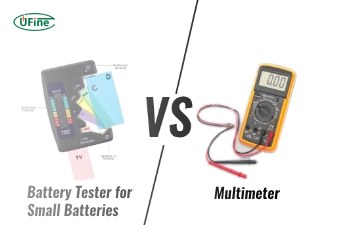
- Digital multimeter: Measures voltage. This is the primary tool for the overnight test.
- Hydrometer: Measures electrolyte specific gravity in flooded batteries. Not for AGM or EFB.
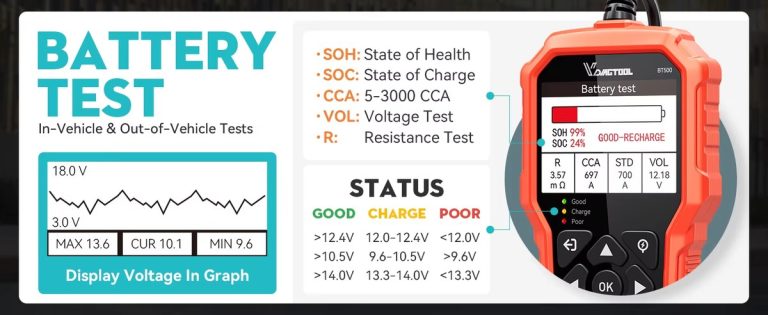
- Battery tester: Measures cold cranking amps and overall health. See our guide on how to test a battery with a battery tester for the full process.
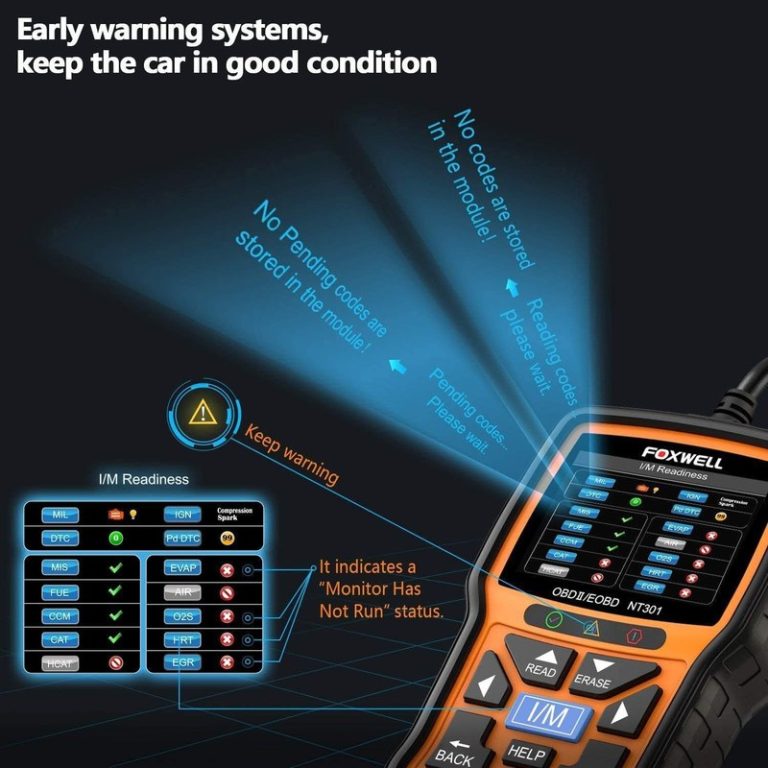
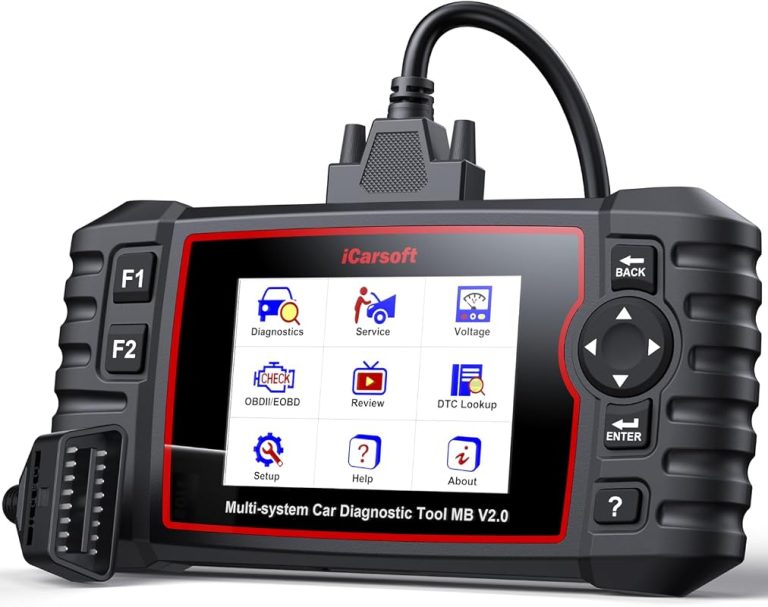
- OBD2 scanner: Helps confirm sleep mode and check the charging system on newer vehicles.
Step-by-Step: How to Test a Car Battery After Sitting Overnight
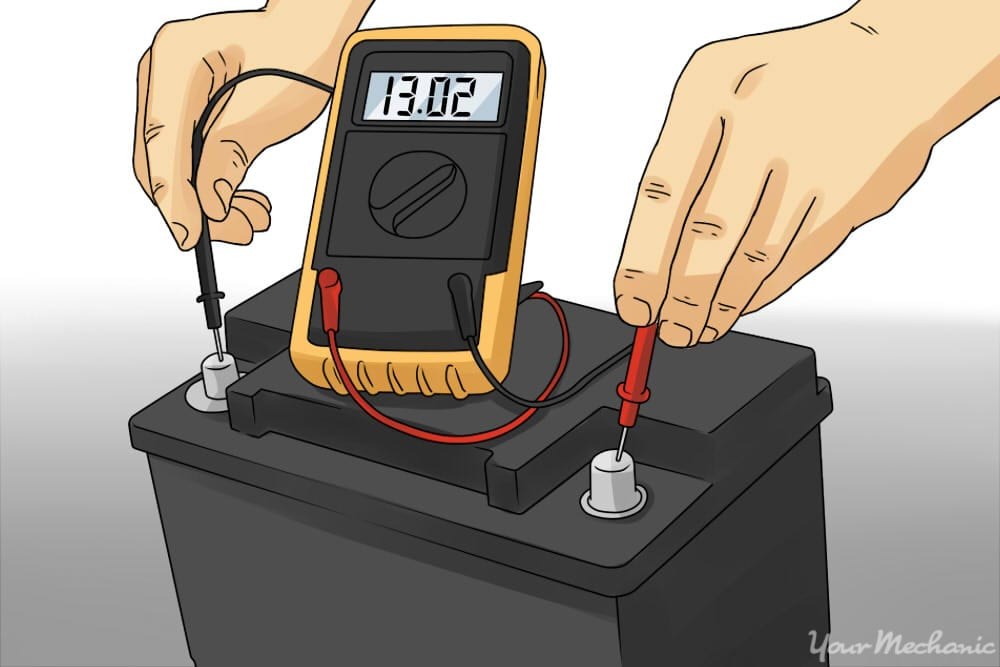
Follow these steps in order. Skipping the inspection or connecting the multimeter incorrectly can give you a false reading or damage the meter.
Step 1: Inspect the Battery for Damage Before Connecting Anything
Look for cracks in the case, bulging sides, corroded terminals, and leaking acid. Check the cables for fraying and make sure the terminal clamps are tight. A swollen or cracked battery is dangerous and must be replaced, not tested.
Step 2: Connect the Multimeter in the Correct Order
Set the multimeter to DC volts and choose the 20-volt range. Connect the red lead to the positive terminal first, then the black lead to the negative terminal. When you finish, remove the black lead first, then the red. This order reduces the risk of shorting the meter.
Step 3: Read Open-Circuit Voltage Against the 12-Volt System Baseline
A fully charged 12-volt battery reads about 12.6 volts at rest. Each 0.1-volt drop below that represents a meaningful loss of charge. If your reading is below 12.4 volts, the battery is at 75 percent charge or less. See what battery voltage is too low to start a car for the full breakdown.
Step 4: Load Test or Cranking Voltage Test for Real-World Power
Voltage alone does not prove the battery can deliver power. A load tester applies a controlled electrical load and measures how the voltage holds. A conductance tester estimates cold cranking amps without a full load. If you do not have a tester, watch the multimeter while someone cranks the engine. A healthy battery should stay above 9.6 volts during cranking at room temperature.
What Your Overnight Voltage Reading Actually Means
Voltage readings are only useful when you compare them to the 12-volt system baseline. Here is what common overnight readings mean:
Voltage Table: 12.6V, 12.4V, 12.2V, and Below
| Overnight voltage | State of charge | What to do |
|---|---|---|
| 12.6V or higher | 100% | Fully charged. Move to a load test if you suspect weakness. |
| 12.4V | About 75% | Charge fully, then retest after another rest period. |
| 12.2V | About 50% | Charge slowly, then load test. Expect possible replacement. |
| 12.0V or below | 25% or less | Deeply discharged. Charge slowly and load test before trusting it. |
Battery Chemistry Differences: Flooded, AGM, and EFB
Flooded batteries have removable caps and allow hydrometer testing. AGM batteries are sealed, have lower internal resistance, and handle deep cycling better. EFB batteries are enhanced flooded batteries used in many start-stop vehicles. Your tester must be set to the correct chemistry, or the readings will be wrong.
When a Multimeter Isn’t Enough: Voltage vs. Cold Cranking Amps
A battery can read 12.6 volts and still fail to start your car. Cold cranking amps measure the battery’s ability to deliver power in cold weather. A conductance tester estimates CCA by measuring internal resistance. If the estimated CCA is far below the battery’s rating, the battery is near the end of its life even if the voltage looks fine.
Testing for Parasitic Drain When the Battery Keeps Dying Overnight
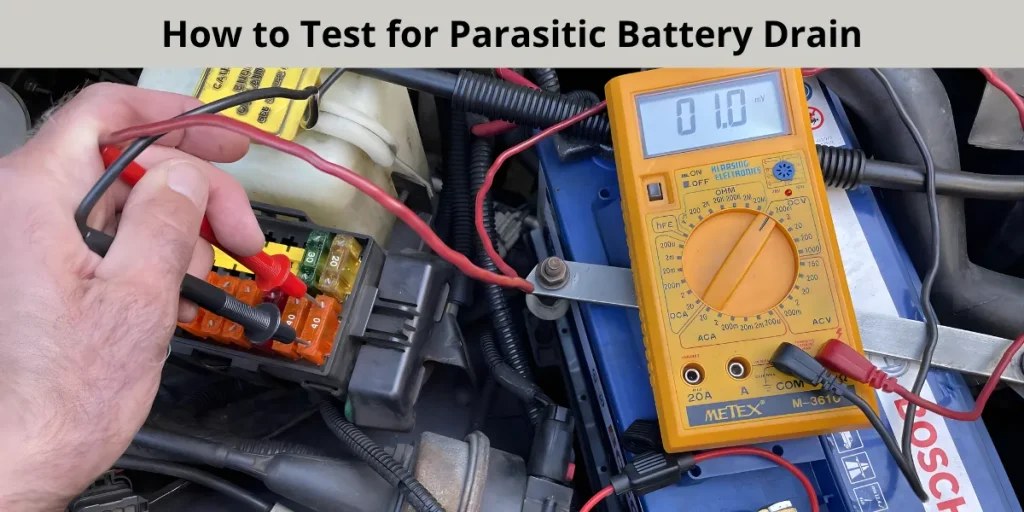
If the battery reads low every morning but the alternator charges fine, you may have a parasitic drain. That is an electrical load that stays on after the car is parked. Common causes include trunk lights, glove box lights, aftermarket radios, and faulty door switches. Our guide on why your car battery is dead after sitting overnight covers the symptoms in more detail.
How to Perform a Parasitic Draw Test Safely
Set your multimeter to the amp scale. Disconnect the negative battery cable and connect the meter in series between the negative post and the cable. Wait 15 to 30 minutes for the vehicle’s modules to enter sleep mode. Most vehicles draw between 30 and 80 milliamps when asleep. A draw above 100 milliamps is worth investigating.
Locate the OBD2 Port and Use Live Data to Confirm Sleep Mode
The OBD2 port is usually under the dashboard on the driver’s side. Many scanners display battery voltage in live data. You can use that reading to confirm the system voltage is stable while the car sleeps. Some advanced scanners also show which modules are still communicating.
Model-Year and Protocol Coverage: When OBD2 Can’t See the Problem
OBD2 is required on all 1996 and newer US vehicles, but not every scanner can read every module. Some parasitic drains come from body control modules or aftermarket accessories that a basic scanner cannot see. If your scanner cannot connect or cannot show the data you need, a professional-grade tool may be required.
Testing the Charging System After an Overnight Battery Failure
A dead battery in the morning is not always the battery’s fault. The alternator may be failing to recharge it during the drive.
Checking Alternator Output at Idle and Under Load
With the engine running, connect the multimeter to the battery terminals. A healthy charging system reads about 13.5 to 14.5 volts at idle. Turn on the headlights, blower motor, and rear defroster. The voltage should stay above 13 volts. If it drops below that, the alternator may be weak.
OBD2 Live Data Limits, Ignition Modes, and App Permissions
OBD2 scanners vary widely in what they display. Some show charging voltage in live data; others do not. Bluetooth scanners rely on phone apps that may request location, account, or data-sharing permissions. Review the app’s privacy policy before granting access.
Emissions Readiness, Reset Limitations, and Firmware Considerations
Clearing diagnostic trouble codes can reset emissions monitors, which can cause a vehicle to fail an emissions test until the monitors complete their drive cycles. Some scanners cannot clear codes on every module, and older firmware may not support newer vehicles. Check for firmware updates before relying on a scanner for charging-system diagnosis.
When Diagnosis Requires a Professional
Modern vehicles with start-stop systems, smart charging, and CAN bus networks can confuse a basic multimeter test. If the battery, alternator, and parasitic draw all test fine but the problem continues, take the vehicle to a qualified shop with dealer-level diagnostic tools.
Hybrid and EV Battery Cautions You Can’t Skip
Hybrids and electric vehicles have two separate electrical systems. The high-voltage traction battery powers the drive motor. A smaller 12-volt auxiliary battery powers the computer systems, lights, and accessories. The 12-volt battery can die just like any other car battery and is often the reason a hybrid will not start.
High-Voltage vs. 12-Volt Auxiliary Batteries: Know Which One You’re Testing
Before you open the hood, confirm which battery you are testing. In many hybrids, the 12-volt battery is in the trunk or under a rear seat, not under the hood. The owner’s manual will show the location and the correct test procedure.
Why Standard Jump-Start and Charging Rules Don’t Apply
Jump-starting a hybrid or EV is different from a conventional car. Some models have dedicated jump terminals under the hood, while others require access to the 12-volt battery in the trunk. Using the wrong connection point can damage sensitive electronics. Always follow the vehicle manual.
How to Decide: Charge, Replace, or Call a Professional
Once you have the overnight voltage reading and a load test result, the decision becomes clearer. Here is how to think through it.
When a Slow Charge Can Save the Battery
If the overnight voltage is between 12.2 and 12.4 volts and the battery shows no damage, a slow charge may restore it. Use a smart charger designed for your battery chemistry, not a fast charger. Fast charging can warp plates and shorten battery life. Before you charge, read our guide on whether you should charge a car battery before testing it.
Replacement Compatibility: Matching CCA, Group Size, and Chemistry
If the load test shows low CCA, replacement is usually the right call. Match the battery group size, CCA rating, and chemistry to the original. The owner’s manual or the label on the current battery lists these specifications.
Check: Verify the battery group size, terminal orientation, CCA rating, and chemistry (flooded, AGM, or EFB) against the owner’s manual. Limitations: Some vehicles with start-stop systems require AGM or EFB batteries; a standard flooded battery may not be compatible.
Ownership Cost, Disposal Rules, and Next Steps
Replacement batteries typically cost between $120 and $250 depending on type and CCA rating, with AGM batteries at the higher end. Most auto parts stores accept old batteries for recycling, and many states require it. Check the warranty on the old battery before buying a new one; many batteries carry three to five year warranties that may still be active.
Common Mistakes That Ruin the Overnight Battery Test
A few small errors can turn a reliable test into a misleading one. Avoid these mistakes.
Connecting the Multimeter in the Wrong Order
Red lead to positive, black lead to negative. Reverse the connection and the multimeter will show a negative voltage reading, which can confuse the result and, on some meters, blow an internal fuse.
Testing a Damaged, Leaking, or Frozen Battery
Never test a battery with visible damage. A frozen battery can crack internally and leak acid when it warms up. If the battery case is swollen or the electrolyte is cloudy, stop and replace it.
Ignoring Temperature, Gauge Accuracy, and Surface Charge
Cold temperatures lower voltage readings. A battery that reads 12.4 volts at 20°F may be healthier than the number suggests. Cheap multimeters can also be off by 0.1 to 0.2 volts, which is enough to mislead you. And surface charge needs 8 to 12 hours to fully dissipate.
- Confirm the battery chemistry and set your tester correctly
- Inspect the battery case, terminals, and cables before testing
- Let the car rest overnight before taking the voltage reading
- Test a cracked, leaking, or frozen battery
- Connect the multimeter leads in reverse order
- Trust a single voltage reading without a load test
- Best for: Any driver who wants a reliable, low-cost way to judge battery health before a cold morning leaves them stranded.
- Think twice if: You are dealing with a hybrid or EV high-voltage system, or the battery shows visible damage — in both cases, follow the manual or call a professional.
- Next step: Let the car rest overnight, test the open-circuit voltage with a multimeter, then follow up with a load test before deciding to charge or replace.
Frequently Asked Questions
Yes, a digital multimeter is enough for the first pass. It reads open-circuit voltage, which tells you the state of charge. You’ll need a load tester to measure cold cranking amps and overall health.
A healthy, fully charged battery should read about 12.6 volts after sitting overnight. Readings of 12.4 volts or lower mean the battery is partially discharged and needs a charge before further testing.
Most experts recommend 8 to 12 hours of rest. That gives surface charge time to dissipate and lets the battery settle to its true open-circuit voltage.
Yes. Voltage measures state of charge, not health. A battery can show 12.6 volts but deliver far fewer cold cranking amps than its rating, which means it won’t start the car reliably.
You can use a test light or an ammeter, but a digital multimeter set to amps is the standard tool. Some shops use a parasitic draw tester that clamps around the cable without disconnecting it.
Test it first. Charging before testing can hide a sulfation problem. If you do charge, use a smart charger and wait several hours before retesting.