What Does Engine Load Mean on OBD2 Live Data? Normal Range Explained
Engine load is a live data percentage that shows how hard your engine is working compared with its maximum possible output. Most healthy engines idle around 15-30 percent and climb toward 80-100 percent at wide-open throttle, so sudden changes outside those ranges deserve attention.
If you have ever scrolled through live data on an OBD2 scanner and wondered what does engine load mean on obd2 live data, you are not alone. Engine load is one of the most useful values on the screen, yet it is also one of the least understood. This guide explains what it measures, what normal readings look like, and how to use it to catch engine problems early.
- What it is: Engine load is a percentage showing how hard the engine works versus its maximum.
- Normal ranges: Expect roughly 15-30% at idle, 25-45% in city driving, 40-65% on the highway, and.
- Use with other PIDs: Read load together with RPM, throttle position, MAF airflow, and fuel trims for a.
- Watch for causes: High load often points to vacuum leaks, MAF issues, or exhaust restrictions; low load.
- Scanner limits: Many budget code readers cannot display live data, and clearing codes can erase emissions.
What Does Engine Load Mean on an OBD2 Scanner?
The Short Answer: It Measures How Hard Your Engine Is Working
Engine load is a percentage that tells you how hard your engine is working compared with its maximum possible output at that moment. A reading near 0 percent means the engine is barely working. A reading near 100 percent means the engine is being pushed to its limit.
The number changes constantly. It climbs when you accelerate, climb a hill, or carry a heavy load. It drops when you cruise on a flat road or coast to a stop. Your engine control module (ECM) calculates it from airflow, throttle position, RPM, and other sensor inputs.
Why Engine Load Matters for Your Daily Drive and Long-Term Engine Health
Engine load helps you see strain that you cannot feel from the driver’s seat. A car can feel fine while the engine is working much harder than it should. That hidden strain can lower fuel economy, increase emissions, and shorten the life of internal parts.
For daily drivers, engine load is a useful early warning. For commuters and rideshare drivers, it can help you notice problems before they turn into breakdowns. For DIY owners, it is one of the best ways to confirm a suspected issue without guessing.
How OBD2 Calculates Engine Load: Calculated vs. Absolute
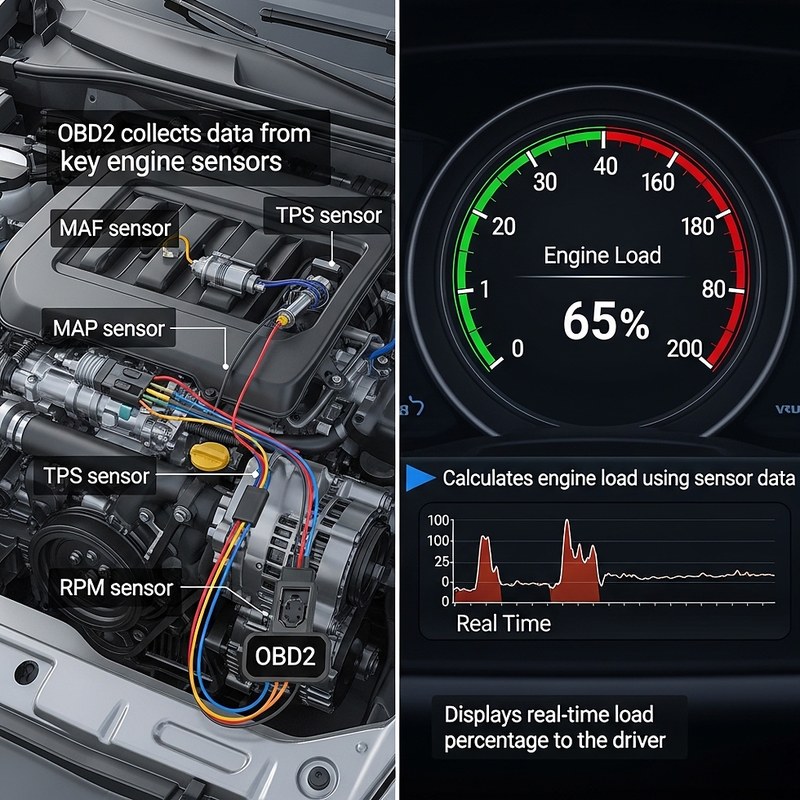
Calculated Engine Load (PID 04) vs. Absolute Load (PID 43)
Most scanners display calculated engine load, which is Parameter ID 04. The ECM calculates it by comparing current airflow with the maximum airflow the engine can pull in at wide-open throttle at sea level. The result is shown as a percentage.
Absolute engine load is Parameter ID 43. It works in a similar way but includes corrections for altitude and barometric pressure. The ECM uses absolute load for fueling and timing decisions. Most basic code readers only show PID 04, and that is fine for general diagnosis.
You may see both values on a professional scan tool. If they disagree by a large amount, altitude or barometric pressure is usually the reason. Neither value is wrong; they simply measure slightly different things.
Model-Year and Protocol Coverage: OBD2, OBD1, and CAN Compatibility
In the United States, gasoline vehicles from 1996 and newer are required to have OBD2. That means engine load should be available on any OBD2-compliant scanner. Vehicles from 2008 and newer generally use the CAN protocol, which supports faster live data and additional PIDs.
OBD1 vehicles from the early 1990s and older do not support standard OBD2 live data. If you drive a classic car or an older truck, you may need a manufacturer-specific scanner or an adapter. Always confirm that your scanner and app support your exact make, model, and model year.
Check: Confirm your vehicle is OBD2-compliant (1996 or newer for most US gasoline vehicles) and that your scanner supports live data, not just code reading. Limitations: Some budget code readers display codes only and cannot show engine load at all.
What Is a Normal Engine Load Reading?
Idle, City Cruise, Highway Cruise, and Wide-Open Throttle Benchmarks
There is no single correct engine load number because every vehicle is different. Still, most healthy engines fall into similar ranges during normal driving:
Idle: 15 to 30 percent. Accessories like air conditioning can push it higher.
City cruise: 25 to 45 percent, depending on speed and traffic.
Highway cruise: 40 to 65 percent at steady speed on level ground.
Wide-open throttle: 80 to 100 percent under hard acceleration.
These ranges are general benchmarks, not factory specifications. A reading slightly above or below them is not automatically a problem. The trend matters more than a single snapshot.
How Load Readings Vary by Engine Type, Transmission, and Tuning
A small four-cylinder engine often works harder than a large V8 at the same speed, so its load reading may be higher. A diesel engine may show different load behavior than a gasoline engine. Manual and automatic transmissions also change load because of gearing and torque converter behavior.
Tuned or modified engines can show unusual readings too. If a previous owner changed the intake, exhaust, or engine calibration, the load value may not match factory expectations. Use the normal ranges as a starting point, and compare readings with the same vehicle over time.
What Causes High or Low Engine Load Readings?
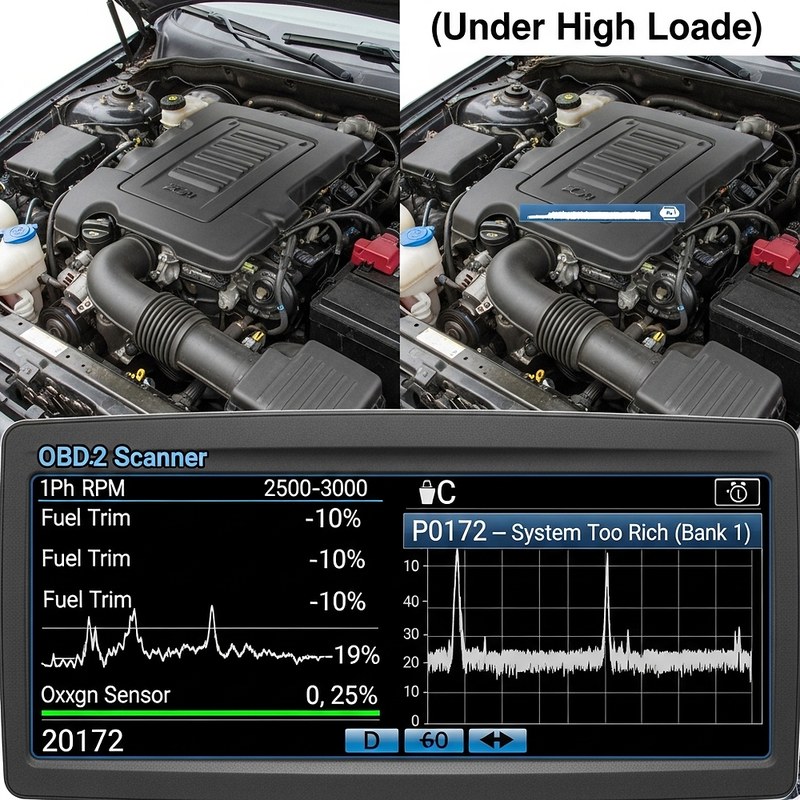
Common Causes of High Load: Vacuum Leaks, MAF Issues, and Clogged Exhaust
A high load reading at idle or light throttle usually means the engine is working harder than it should. Common causes include:
- Vacuum leaks: unmetered air enters the engine, so the ECM adds fuel and load climbs.
- Mass airflow (MAF) sensor issues: dirty or failing MAF sensors can report incorrect airflow.
- Clogged exhaust or catalytic converter: backpressure forces the engine to push harder.
- Dragging brakes or low tire pressure: extra rolling resistance raises load.
- Low compression: worn rings or valves reduce efficiency and increase load.
Common Causes of Low Load: Faulty Sensors, Timing Problems, and Fuel Delivery Issues
A suspiciously low load reading can also point to a problem. If the engine is not producing enough power, the load value may stay artificially low even when you press the accelerator. Possible causes include:
- Faulty sensors: a bad throttle position sensor or MAP sensor can confuse the ECM.
- Timing problems: retarded ignition timing reduces power and load.
- Fuel delivery issues: a weak fuel pump or clogged injector limits power.
- Misfires: a cylinder that is not firing cannot contribute to load.
Low load is less common than high load, but it is just as important when you are chasing a performance problem.
How to Read Engine Load on Your OBD2 Scanner
Locate the Port and Set the Correct Ignition Mode
The OBD2 port is usually under the dashboard on the driver’s side, near the steering column or center console. Plug in your scanner, then turn the ignition to the on position without cranking the engine. Many scanners will connect at this point.
To see live engine load, you usually need the engine running. Some values are available with the key on, but load is most useful while the engine is idling or driving. Follow your scanner’s instructions for the correct mode, and never operate the scanner in a way that distracts you while driving.
If you are unsure about power states and connection steps, read our guide on whether you need the engine running to use an OBD2 scanner.
Choosing a Scanner and App That Display Live Data Reliably
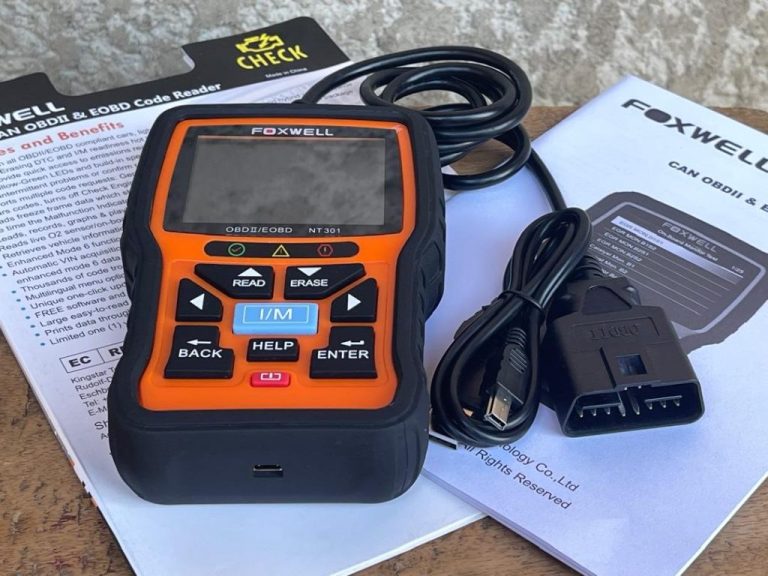
A basic budget code reader usually cannot show live data. You need a scan tool with a live data mode, or a Bluetooth or Wi-Fi OBD2 adapter paired with a smartphone app. Many apps display engine load as a percentage bar or gauge.
Not all apps show the same PIDs, so check the app’s feature list before you rely on it. Some apps label the value Calculated LOAD Value or Engine Load. Others show both PID 04 and PID 43. If you are new to this, our walkthrough on how to find live data on an OBD2 scanner covers the basic steps.
App Permissions, Firmware Updates, and Data Privacy Considerations
Smartphone OBD2 apps often ask for location, Bluetooth, and account permissions. Some of that access is needed for the adapter connection, but not all of it is necessary for basic diagnostics. Review the permissions before you install the app.
Apps may also store your VIN, diagnostic trouble codes, and live data in the cloud. Check the app’s privacy policy to see how long data is kept and whether it is shared. Keep the app and the scanner firmware updated to avoid connection drops and missing PIDs.
Engine Load vs. Other Live Data Parameters
Reading Engine Load Together with MAF, RPM, and Throttle Position
Engine load means the most when you read it alongside other live data. RPM tells you how fast the engine is spinning. Throttle position tells you how far you are pressing the pedal. MAF airflow tells you how much air is actually entering the engine.
For example, high engine load at low RPM with high throttle position can indicate a mechanical problem. High load with low MAF airflow can point to a dirty or failing MAF sensor. Low load with high throttle position can suggest a fuel delivery or timing issue.
Using Load Readings to Confirm or Rule Out a Diagnosis
Engine load helps you confirm a suspicion or rule one out. If you suspect a clogged catalytic converter, watch load during a steady highway cruise and during uphill acceleration. If load climbs abnormally high with only light throttle, the exhaust restriction theory gains support.
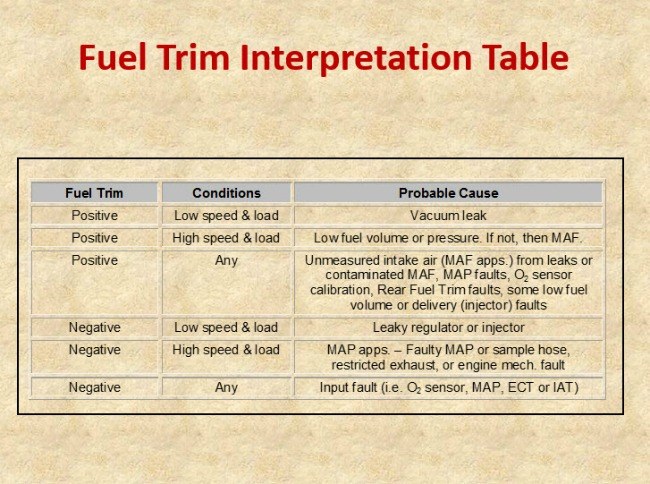
Fuel trims are another useful partner. A high load reading combined with a normal long-term fuel trim reading suggests a different problem than high load with positive fuel trims, which often points to unmetered air entering the engine.
OBD2 Scanner Limits: Emissions Readiness, Resets, and Professional Diagnosis
Emissions Readiness Status and Reset Limitations
A consumer OBD2 scanner can read codes and live data, but it cannot fix the underlying problem. Clearing codes can also erase emissions readiness monitors. If you clear codes right before an emissions test, the monitors may show incomplete and your vehicle can fail the test.
Some scanners can display readiness status, but they cannot force the monitors to run. The vehicle must complete a specific drive cycle before the monitors reset. If you are preparing for an emissions test, check the readiness status before you clear anything.
When a Professional Diagnostic Is Required
Engine load is a helpful clue, but it is not a complete diagnosis. Complex problems may require a professional scan tool with bidirectional controls, a lab scope, or a smoke machine. If you see a load reading that looks wrong and you cannot find the cause, stop guessing and get a professional opinion.
Maintenance and Next Steps for Healthy Load Readings
Simple Checks That Keep Engine Load in a Normal Range
Regular maintenance keeps load readings where they belong. Replace the engine air filter on schedule, keep tires inflated to the door placard pressure, and address misfires quickly. A clean MAF sensor and fresh spark plugs also help the engine run efficiently.
If you drive mostly short trips, the engine may never reach normal operating temperature. That can raise load and fuel consumption over time. Occasional longer drives help burn off moisture and keep the exhaust system healthy.
What to Do After You Spot an Abnormal Reading
If you see an abnormal load reading, do not panic. First, record the exact numbers for load, RPM, throttle position, coolant temperature, and any stored codes. Then check for obvious causes like a dirty air filter, low tire pressure, or a loose vacuum hose.
If the reading stays abnormal, look up any diagnostic trouble codes before clearing them. Compare the load value with fuel trims and MAF readings to narrow down the cause. If you cannot identify the problem, take the vehicle to a qualified technician with the recorded data.
- Best for: DIY owners and daily drivers who want an early warning of engine strain, vacuum leaks, airflow problems, and exhaust restrictions.
- Think twice if: You only have a code reader with no live data mode, or you expect engine load to replace a professional diagnostic.
- Next step: Confirm your scanner shows live data, record your vehicle’s idle and cruise load baselines, and pair load readings with fuel trims and MAF values before replacing any parts.
Frequently Asked Questions
No. High load is normal during hard acceleration, hill climbing, or when carrying heavy loads. It only becomes a concern when load stays high at idle or with light throttle, which often points to vacuum leaks, MAF sensor issues, or a clogged exhaust.
Most healthy engines show between 15 and 30 percent engine load at warm idle. The exact number varies by engine size, transmission, and accessories like air conditioning. A sudden change from your own baseline is more meaningful than a single reading.
A 100% load reading at idle is abnormal and usually indicates a problem. Common causes include a dirty or failing MAF sensor, a vacuum leak, a clogged catalytic converter, or an app that is reading the wrong PID. Record other live data values and check for stored codes before replacing parts.
Many budget code readers can only read and clear codes, so they cannot display engine load. You need a scan tool with live data mode or a Bluetooth OBD2 adapter paired with a smartphone app. Check the product description for live data support before buying.
No. Clearing codes erases freeze frame data and emissions readiness monitors, which removes useful diagnostic evidence and can cause an emissions test failure. Record the codes and live data first, then investigate the cause or consult a professional.
Yes. Higher engine load generally means more fuel is being burned to produce power. When load is abnormally high at steady speeds, the engine is working harder than it should, which often lowers fuel economy and points to a mechanical or sensor problem.