What Does P0420 Mean After Replacing an O2 Sensor? Check the Cat
P0420 after an O2 sensor replacement almost always points to a failing catalytic converter, not a bad sensor. Verify the converter with live data and a temperature test before buying more parts.
If you’re trying to figure out what does P0420 mean after replacing an O2 sensor, the short answer is that you probably replaced the wrong part. P0420 is a catalyst efficiency code, and the downstream O2 sensor only reports what it sees. This guide explains how to confirm the real cause — usually the catalytic converter — before you spend money on another repair.
- Real cause: P0420 is a catalyst efficiency code; the downstream O2 sensor only monitors the converter.
- Check first: Inspect wiring, connectors, fuses, and exhaust leaks before condemning the cat.
- Confirm with data: Compare upstream vs. downstream O2 waveforms and test converter temperature delta.
- Clearing codes: Resets readiness monitors and won’t fix a weak converter or pass state inspection.
- Legal replacement: Confirm CARB vs. federal certification when ordering a new converter.
What P0420 Actually Means (and Why a New O2 Sensor Won’t Fix It)
The Code Definition: Catalyst Efficiency Below Threshold (Bank 1)
P0420 stands for “Catalyst System Efficiency Below Threshold (Bank 1).” Bank 1 is the side of the engine that contains cylinder number one. The powertrain control module (PCM) runs a catalyst monitor test and compares the signals from the upstream and downstream oxygen sensors.
When the catalytic converter works well, it stores oxygen and smooths the exhaust signal. The upstream sensor produces a normal oscillating wave, while the downstream sensor stays relatively flat. When the converter loses its ability to clean exhaust gases, the downstream signal starts to swing with the upstream signal. If that pattern persists, the PCM sets P0420.
Why the Downstream O2 Sensor Is a Monitor, Not the Root Cause
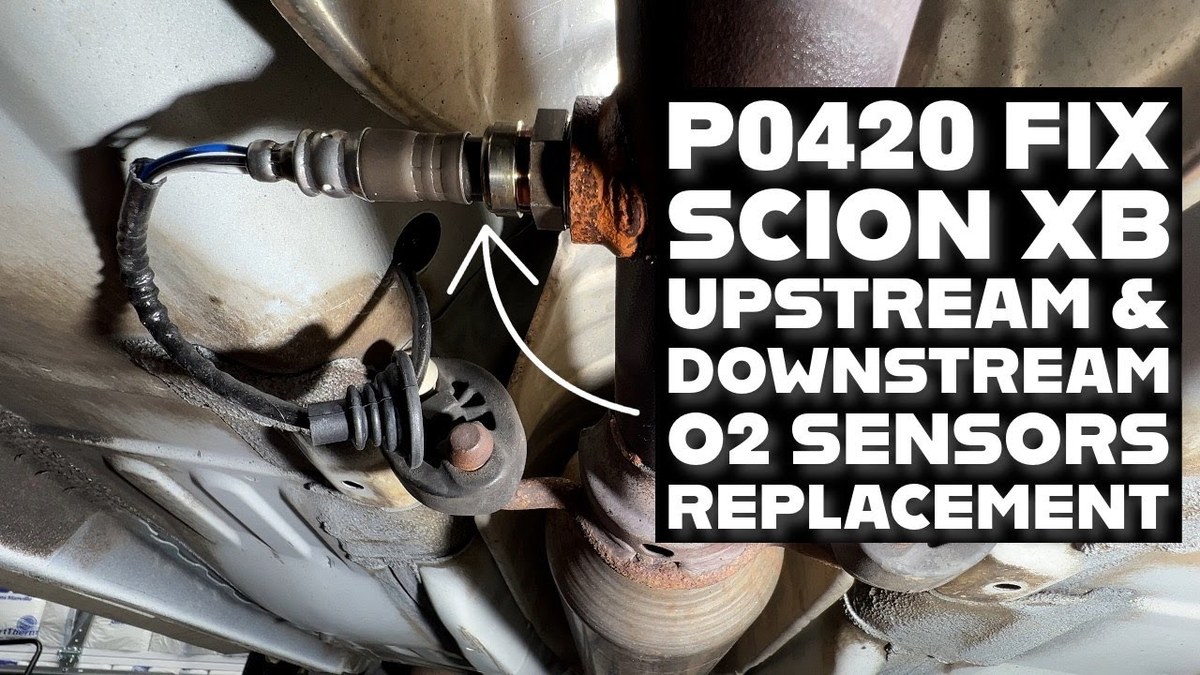
The downstream O2 sensor sits behind the catalytic converter. Its only job is to monitor how well the converter is performing. A sensor that reports a problem is not the problem itself. Installing a brand-new sensor changes the reporter, not the converter behind it.
If the replacement sensor was the correct part for your vehicle and the code returned, the sensor is almost certainly fine. Old sensors can become sluggish and trigger false codes, but a fresh sensor is rarely the reason P0420 comes back.
Why P0420 Persists After Replacing the O2 Sensor
The Real Culprit: A Failing Catalytic Converter
The catalytic converter is a metal canister with a honeycomb interior coated in precious metals. It converts harmful exhaust gases into less harmful ones. Over time, the honeycomb can become contaminated by burned oil, coolant, or excess fuel. It can also melt or crack from the heat of a long-running misfire.
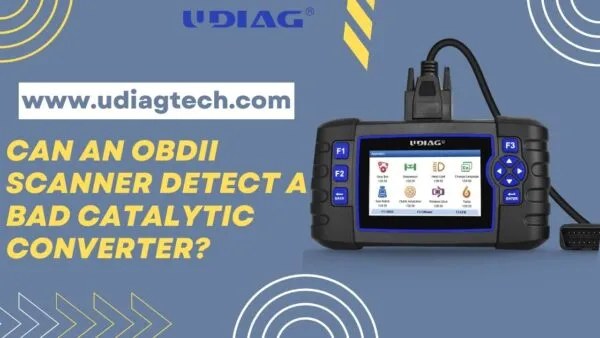
When the internal structure is damaged, the converter cannot store oxygen correctly. The PCM sees the faulty downstream signal and sets P0420 again. In many cases, an OBD2 scanner can already point you toward a failing catalytic converter before you break out wrenches.
Common Misdiagnosis: Wiring, Connectors, and Fuse Issues
Before blaming the converter, check the O2 sensor wiring. Damaged wires, corroded connectors, weak grounds, and a blown heater fuse can all disrupt the downstream signal. A bad electrical signal can look exactly like a weak catalyst on a scanner.
Inspect the harness where it passes near hot exhaust parts and sharp edges. Look for melted insulation, green corrosion on the pins, and a connector that did not latch fully. These checks are free and take minutes.
Exhaust Leaks That Mimic a Bad Catalyst
An exhaust leak near the downstream O2 sensor lets fresh air into the stream. That extra oxygen changes the reading and can make a healthy converter look weak. Listen for hissing or tapping sounds under the car while the engine idles.
Manifold gaskets, flex pipes, and flange joints are common leak points. A professional smoke test finds leaks that are difficult to hear.
P0420 Code Basics: Model-Year Coverage, Protocols, and Live-Data Limits
OBD2 Protocol Coverage: 1996 and Newer Vehicles
P0420 is a generic OBD2 powertrain code, so it appears on most gasoline vehicles sold in the US from 1996 onward. A few 1994 and 1995 models include early OBD2 support, but 1996 is the safe reference point.
Not every scanner reads every vehicle equally. Some adapters lack support for older protocols, and you may see a vehicle not supported error on an OBD2 scanner instead of useful data. That is a separate problem, but it can block the live data you need for P0420.
Where to Plug In: OBD2 Port Location and Ignition Mode
The OBD2 port is usually under the dashboard on the driver’s side, near the steering column. It is a 16-pin trapezoid connector. For reading codes, turn the ignition to the Run position with the engine off. For live sensor data, start the engine and let it reach operating temperature.
What Live Data Can (and Can’t) Tell You About the Catalyst
Live data provides O2 sensor voltage, fuel trims, coolant temperature, and freeze frame details. That is enough to compare upstream and downstream sensor behavior. Live data cannot look inside the converter, see a melted honeycomb, or measure the temperature difference across the converter. Those checks need a thermometer and a physical inspection.
Check: Confirm your scanner supports your vehicle’s make, model, year, and OBD2 protocol before relying on live data. Limitations: Entry-level code readers may only show codes and freeze frame, not real-time O2 waveforms.
How to Diagnose P0420 Properly Without Throwing Parts at It
Step 1: Read the Freeze Frame Data and Verify the Code
Freeze frame records engine speed, load, coolant temperature, and fuel trim at the moment the code set. That snapshot tells you whether P0420 appeared at idle, during highway driving, or under heavy load. Write it down before clearing anything.
Step 2: Compare Upstream vs. Downstream O2 Sensor Waveforms
Warm the engine and hold a steady 2,500 rpm. Watch both sensors on the scanner’s live data screen. A healthy upstream sensor oscillates quickly between about 0.1 and 0.9 volts. A healthy downstream sensor stays close to a steady value with small, lazy movements.
When the downstream signal begins oscillating in rhythm with the upstream sensor, the converter is not storing oxygen properly. That pattern points at the catalyst. Before replacing another sensor, see whether an OBD2 scanner can tell which oxygen sensor is bad.
Step 3: Test Catalytic Converter Temperature Delta
With the engine warm and idling, aim an infrared thermometer at the converter inlet and then at the outlet. The outlet should be hotter because chemical reactions inside the cat release heat. Many technicians look for a rise of at least 100°F at idle, though the exact value varies by vehicle design. A cooler outlet suggests an inactive converter.
Step 4: Rule Out Engine Misfires and Vacuum Leaks First
A misfire sends raw fuel into the converter and eventually destroys the honeycomb. Fix misfires before buying a new cat, or the replacement will fail the same way. Check spark plugs, ignition coils, fuel trims, and vacuum lines. High long-term fuel trim means the engine runs rich, which will poison a fresh converter too.
- Record freeze frame data before clearing P0420
- Inspect O2 wiring, connectors, and the heater fuse
- Test the converter’s temperature delta with the engine hot
- Fix misfires and vacuum leaks before replacing the converter
- Replace another O2 sensor without live-data proof it’s faulty
- Clear the code and expect the catalyst monitor to pass
- Ignore a flashing check engine light during active misfire
Emissions Readiness, Reset Limitations, and Scanner App Permissions
Why Clearing the Code Is Not a Fix
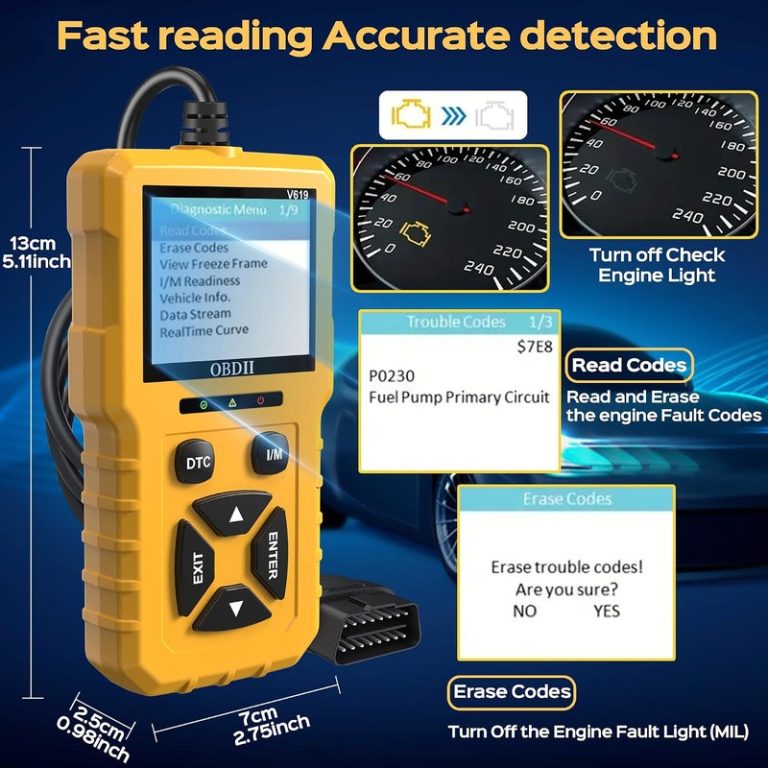
Erasing P0420 only deletes the code from memory. The catalyst monitor re-runs on the next drive cycle, and a weak converter will set the code again. This is why the check engine light comes back after clearing codes — the underlying fault never went away.
Emissions Readiness Monitors and State Inspection Rules
Many states with OBD2 emissions testing check whether readiness monitors are complete, not just whether the light is off. A freshly cleared computer shows incomplete monitors until it finishes a drive cycle. Before your test, understand what an incomplete readiness monitor means — cleared codes can still fail an inspection.
OBD2 Scanner Apps: Permissions, Firmware, and Accuracy Limits
Bluetooth scanner apps are convenient but limited. Some request account creation, location access, or vehicle data sharing when basic features would be enough. Review app permissions and privacy settings before connecting the app to your vehicle.
Firmware matters too. A basic adapter may read only generic codes, miss manufacturer-specific data, or update so slowly that O2 waveforms become useless. Live-data accuracy depends on the adapter’s sampling speed, the app’s software, and the vehicle’s protocol.
When You Actually Need a New Catalytic Converter
Replacement Cost vs. Driving on a Failing Cat
Converters are among the most expensive emissions parts on a car, and prices vary widely by make, model, converter type, and labor rates. A clogged converter can cause rough running, reduced power, overheating, and engine damage from backpressure. If the honeycomb breaks apart, pieces can block the exhaust and stall the vehicle.
Aftermarket vs. OEM Converters: Compatibility and Fitment
OEM converters match original specifications and carry a higher price. Aftermarket converters can save money and work well, but the part must be certified for your specific vehicle. Confirm the part number, fitment notes, and warranty before ordering.
EPA and State-Level Legal Variations (CARB vs. Federal Standards)
Federal law prohibits removing a functioning catalytic converter or installing an uncertified replacement. California and states that adopt CARB rules enforce stricter standards than the federal 49-state requirement. A converter sold for federal use may not be legal in a CARB state, and many shops will not install one.
The Bottom Line: Next Steps for Your Car
When to DIY and When to Call a Professional
You can safely check wiring, listen for exhaust leaks, compare O2 waveforms, and measure converter temperatures yourself. Converter replacement usually needs jack stands, exhaust tools, and experience with rusted bolts. A professional shop with a smoke machine and factory diagnostics can confirm the failure faster than replacing parts blindly.
How to Prevent a Future P0420 Recurrence
Prevention starts with regular maintenance. Fix misfires quickly, address oil consumption and coolant leaks, and keep plugs and coils fresh. A converter that fails from neglect will often fail again for the same reason once replaced.
- Best for: Drivers who want to confirm a failing catalytic converter before spending money on unneeded repairs.
- Think twice if: The converter was contaminated by a misfire, oil consumption, or coolant leak that has not been fixed yet.
- Next step: Compare upstream and downstream O2 waveforms and measure the converter’s temperature delta before ordering a new cat.
Frequently Asked Questions
P0420 means the catalytic converter on bank 1 is not cleaning exhaust gases efficiently. After an O2 sensor replacement, the code usually means the converter itself is failing, not the new sensor.
Neither replacement fixes P0420 unless a sensor test proves the old part is faulty. P0420 is a catalyst efficiency code, so the fix is usually the converter, not the sensor.
You can drive for a while, but a failing converter can cause reduced power, overheating, and worse fuel economy. A clogged converter can stall the engine or cause exhaust backpressure damage. Have it diagnosed soon.
Compare upstream and downstream O2 sensor waveforms with a scanner and measure the temperature difference between the converter inlet and outlet. A weak converter shows a matching downstream waveform and a smaller temperature rise.
Usually no. Clearing the code also resets the readiness monitors, and many states require complete monitors plus no active codes. The catalyst monitor will re-run, and P0420 will likely return.
OEM converters match the original fit and emissions certification but cost more. Aftermarket converters are cheaper, but the part must be certified for your vehicle and legal in your state, especially in CARB states.