What Voltage Should an Alternator Put Out at Idle: 13.8-14.4v
Expect 13.8 to 14.4 volts at idle on most gas-powered vehicles with the engine warm and accessories off. Readings below or above that range deserve a closer look at the charging system.
If you’re asking what voltage should an alternator put out at idle, the practical answer for most cars and trucks is 13.8 to 14.4 volts. This range means the charging system is keeping the battery topped up while the engine runs at its lowest normal speed.
- Healthy range: 13.8–14.4 volts at idle with a warm engine and electrical loads off.
- Test twice: Check voltage with loads off, then again with headlights and HVAC on.
- Check the battery first: A low or weak battery can drag alternator voltage down.
- Watch for overcharging: Sustained voltage above 15 volts can damage electronics and the battery.
- Know your system: Start-stop, AGM, and hybrid vehicles may charge differently than older gas cars.
The Short Answer: 13.8–14.4 Volts at Idle Is the Healthy Range
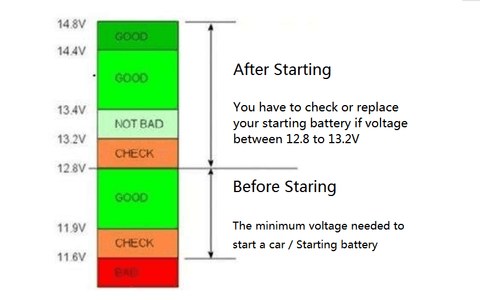
Voltage at idle matters because that’s when the alternator works the least. At idle, the engine spins the alternator slowly, so the charging system has less output available. Even so, a healthy setup should hold system voltage between 13.8 and 14.4 volts with the engine warm and normal loads off.
Readings can move around based on temperature, battery state of charge, and which accessories are running. That’s why one quick reading is a useful checkpoint, not a complete diagnosis.
Why Idle Voltage Differs from Driving Voltage
Alternator output depends on RPM. At idle, the pulley turns slowly, so the alternator can’t produce as much current. That’s normal. The voltage regulator still keeps voltage in a safe range, but you may see slightly lower numbers than at highway speed.
Many newer vehicles use smart charging. The engine computer adjusts alternator output to reduce fuel use and emissions. That means voltage can move around more than it did on older cars.
What a Reading Outside 13.8–14.4v Actually Means
Below 13.8 volts at idle can point to a weak alternator, belt slip, corroded cables, or a battery that’s pulling the system down. Above 14.4 volts often points to a failing voltage regulator. But a single reading isn’t a full diagnosis. Temperature, battery state of charge, and electrical loads all affect what you see.
How to Test Alternator Voltage at Idle: Step-by-Step Guide
Tools That Work: Multimeter vs. OBD2 Scanner vs. Dash Gauge
A digital multimeter is the most direct way to measure voltage at the battery. An OBD2 scanner reads the voltage the engine computer sees, which can differ slightly from battery voltage. A dash gauge is convenient but often shows a smoothed or approximate value.
| Tool | Best for | Owner consideration | Driver consideration |
|---|---|---|---|
| Digital multimeter | Direct battery-terminal reading | Low cost, no app or subscription | Requires safe probe placement near moving parts |
| OBD2 scanner | Live data from the engine computer | May include code reading and freeze-frame data | Some vehicles don’t report charging voltage |
| Dash gauge | Quick glance while driving | No extra tools needed | May not be accurate enough for diagnosis |
Correct Connection Order and Safety Precautions Before You Test
Park on level ground. Set the parking brake. Put the transmission in Park or Neutral. Make sure the hood is secure and nothing is near the belt or fan.
Set the multimeter to DC volts. Touch the red lead to the positive battery terminal and the black lead to the negative terminal. Do not let the probes touch each other.
Testing with a Warm Engine and Electrical Loads Off
Start the engine and let it reach normal operating temperature. Turn off headlights, HVAC, the radio, and other accessories. Let the engine idle. Record the voltage after it stabilizes, usually within a minute or two.
- Confirm the vehicle is in Park with the parking brake set
- Test with a warm engine for a realistic reading
- Record readings with loads off and loads on
- Touch the probes together while connected to the battery
- Test a swollen, cracked, or leaking battery
- Clear diagnostic codes before you finish testing
Understanding the Numbers: System Voltage, State of Charge, and Battery Health
State of Charge vs. Battery Health: Why a Low Reading Isn’t Always the Alternator
State of charge is how full the battery is. Battery health is how much usable capacity the battery has left. A deeply discharged battery can pull system voltage down even when the alternator is fine. If you want a clean alternator test, start with a battery that has a reasonable charge.
If the battery is very low, it may accept a large charging current, which drags voltage down. That’s why a low reading at idle doesn’t automatically mean the alternator is bad. Check the battery first. You can learn more about what battery voltage is too low to start a car if you’re seeing slow cranking or dim lights.
Damaged-Battery Stop Conditions: When to Abort Testing Immediately
Stop testing right away if you see a swollen case, cracked terminals, leaking fluid, or a strong rotten-egg smell. A damaged battery can release hydrogen gas and acid. Do not jump-start it. Do not keep the engine running. Have the vehicle inspected by a professional.
Battery Chemistry and Charging Voltage: Flooded, AGM, and EFB Compatibility
Flooded lead-acid, AGM, and EFB batteries have different charging profiles. Many modern vehicles, especially start-stop models, use AGM or EFB batteries and rely on the engine computer to control charging voltage. If a vehicle with a smart charging system is fitted with the wrong battery type, voltage behavior can change.
OBD2 Diagnostics: Voltage Codes, Live Data, and Their Limits

Model-Year and Protocol Coverage for Alternator Voltage Data
Not every vehicle reports charging voltage through the OBD2 port. Many 2008 and newer vehicles do, but the data name and location vary by make and model. If your scanner doesn’t show a voltage PID, a multimeter is still the reliable fallback. A scanner that can read live data is useful here, and you can see how to find live data on an OBD2 scanner if the menu is confusing.
P0562 and P0563 Codes: What They Tell You and What They Don’t
P0562 means the charging system voltage is lower than expected. P0563 means it’s higher than expected. These codes confirm that the engine computer noticed a problem. They don’t tell you whether the fault is the alternator, battery, wiring, belt, or a bad ground.
Ignition Mode, Live-Data Limits, and Reset Limitations
To read charging voltage, the engine usually needs to be running. Some scanners also require a specific ignition mode to communicate with all modules. Clearing a code doesn’t fix the fault. If the underlying problem remains, the code will come back.
App Permissions, Firmware, and When Diagnosis Requires a Professional
Bluetooth OBD2 scanners often require a phone app. Some apps ask for location, account, or vehicle data permissions. Check the app’s privacy policy before you connect. Firmware updates can change vehicle coverage, so keep the scanner updated.
If you see codes in multiple modules, or if the charging voltage is unstable under load, stop guessing. A professional with a higher-end scan tool and wiring diagrams can isolate the fault safely. For more on what these tools can and can’t do, read our guide on whether an OBD2 scanner can detect a bad alternator.
Troubleshooting Low Voltage at Idle: Common Causes and Fixes
Belt Slip, Weak Grounds, and Failing Diodes
A loose or glazed serpentine belt can slip at idle and reduce alternator output. Weak ground connections between the engine, chassis, and battery can also cause low voltage. Failing diodes inside the alternator can produce AC ripple, which shows up as unstable voltage or dim flickering lights.
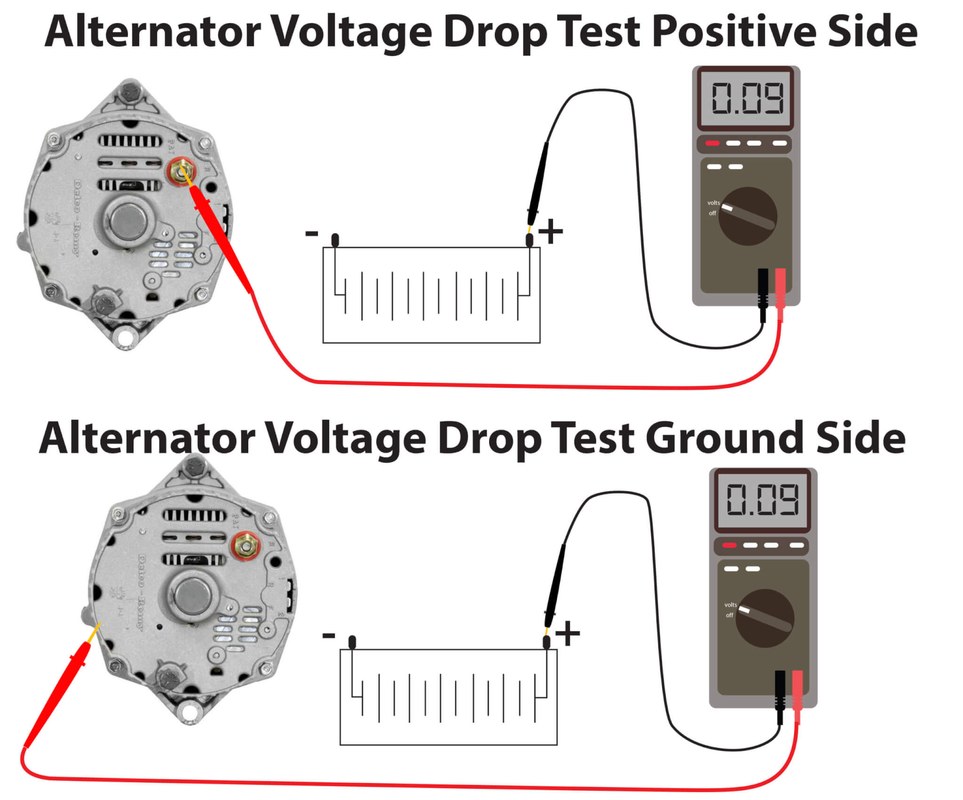
Corroded Battery Terminals and Voltage Drop Across Cables
Corrosion on battery terminals adds resistance. That resistance eats voltage before it reaches the rest of the car. Check the terminals and cable ends for white or green buildup. Clean them only when the engine is off and the battery is disconnected.
How to Isolate an Alternator Problem from a Battery Problem
Test the battery first with the engine off. If the battery is healthy, start the engine and test voltage at idle. If the battery is low, charge it and retest. A battery that keeps dropping voltage while driving has a separate cause. See our article on why car battery voltage drops while driving for a closer look at that pattern.
Troubleshooting High Voltage at Idle: Overcharging Risks
Bad Voltage Regulator and Its Impact on Battery Life
When the voltage regulator fails, the alternator can push too much voltage into the battery. Sustained overcharging causes the battery to gas, lose water, and overheat. That shortens battery life and can damage the charging system itself.
Why High Voltage Damages Electronics, Lights, and the Battery
Modern vehicles rely on sensitive electronics. Voltage above about 15 volts can stress modules, sensors, and lighting. Bulbs may burn out faster, and some computers may set fault codes or shut down functions to protect themselves.
When to Stop Driving and Address Overcharging Immediately
If you see sustained voltage above 15 volts, or if you smell sulfur or see battery swelling, stop driving. Turn off the engine and have the vehicle towed or serviced. Overcharging can cause battery failure or an acid leak, which is a safety risk.
Alternator Voltage Under Load vs. Idle: What’s Normal in 2026 Vehicles
Testing with Headlights, HVAC, and High Beams On
Turn on the headlights, HVAC fan on high, and high beams. With these loads running, voltage should stay above roughly 13 volts at idle. If it drops below that, the alternator may be weak or the belt may be slipping.
Comparing Idle Readings Across Gas, Diesel, and Start-Stop Vehicles
Gas and diesel vehicles generally behave the same at idle, though diesel alternators may be larger to support glow plugs and higher electrical demand. Start-stop vehicles often use AGM or EFB batteries and may reduce charging voltage at idle to save fuel. That means a slightly lower reading at idle can be normal on these systems.
Hybrid and EV Cautions: Don’t Test or Jump-Start These the Same Way
Hybrids and EVs use a separate 12-volt battery for accessories, but the high-voltage traction battery is dangerous. Only trained technicians should work on high-voltage components. For routine 12-volt checks, follow the owner’s manual exactly.
Maintenance, Repair Costs, and Next Steps
Alternator Replacement Cost and Ownership Impact
Alternator replacement cost varies widely by vehicle, alternator type, and labor rates. Rebuilt units cost less than new ones, but quality varies. A failing alternator can leave you stranded, so replacing it when symptoms first appear is usually cheaper than a tow plus emergency repair.
Emissions Readiness and Drive-Cycle Considerations After a Battery Reset
Disconnecting the battery or clearing codes can reset the emissions monitors. If your state requires an OBD2 emissions test, the vehicle may show “not ready” until it completes a drive cycle. This matters if you’re about to get a state inspection.
When to DIY vs. Call a Professional: Your Clear Next Steps
If you’re comfortable with basic tools and the alternator is easy to reach, DIY replacement can save money. If the vehicle has a smart charging system, start-stop, or a hybrid powertrain, professional diagnosis is safer. Always confirm the replacement alternator matches the exact battery and charging system type.
- Best for: Most owners should expect 13.8–14.4 volts at idle and use that range as the first checkpoint for charging system health.
- Think twice if: You have a start-stop, AGM, or hybrid system; those vehicles may charge differently, so check the owner’s manual before judging a reading.
- Next step: Test with a multimeter on a warm engine, then repeat with headlights and HVAC on to confirm the alternator handles real load.
Frequently Asked Questions
Yes. 14.4 volts sits at the top of the healthy 13.8 to 14.4 volt idle range for most vehicles. It shows the alternator is charging the battery while the engine idles.
Sustained readings below 13.2 volts at idle with loads off suggest a weak alternator, loose belt, or poor connection. Readings near battery voltage with the engine running mean the alternator is barely charging.
Yes. A deeply discharged or failing battery can pull system voltage down even when the alternator is healthy. Test the battery first before blaming the alternator.
Sustained voltage above 15 volts usually means a failing voltage regulator. Stop driving and have the charging system inspected to avoid damaging electronics and the battery.
Yes. With the engine off, you’re only measuring battery voltage. Start the engine and let it idle to see what the alternator is producing.
Many scanners can read charging voltage as live data, but not all vehicles report it through the OBD2 port. A multimeter at the battery is the most reliable method.