How to Tell If a Car Battery Has a Bad Cell Using a Multimeter
Healthy car batteries rest at about 12.6 volts; a bad cell typically drags the reading down to about 10.5 volts. Use a digital multimeter to check resting voltage and cranking voltage before you decide on a replacement.
If you want to know how to tell if a car battery has a bad cell, the fastest answer is to check its resting voltage with a digital multimeter. A battery with one dead cell usually reads around 10.5 volts instead of the healthy 12.6-volt baseline. This guide explains three checks you can run at home, plus the safety steps that protect you and your car’s electrical system.
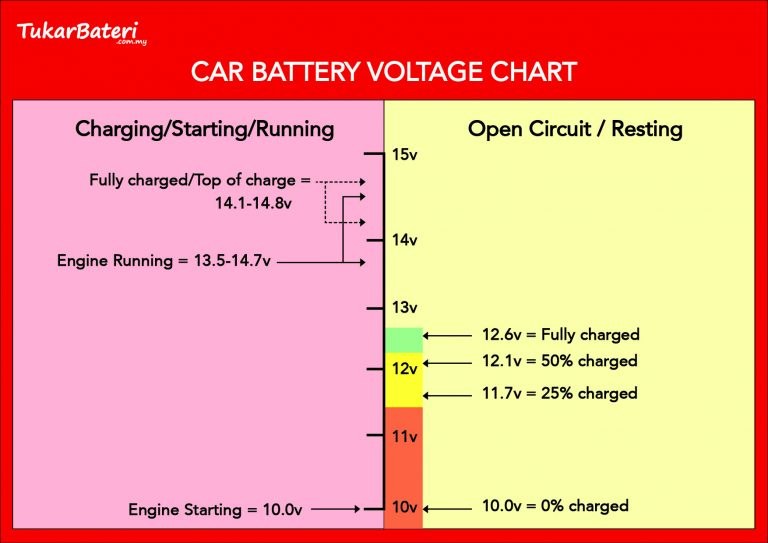
- Healthy resting voltage: A fully charged battery reads about 12.6V; a dead cell often reads near 10.5V.
- Open-circuit first: Let the car sit off for 12 hours before testing, and connect probes to.
- Cranking load test: If voltage drops below 9.6V during engine crank, a bad cell or weak battery.
- Check the alternator: Confirm 13.8–14.4V at idle so you do not replace a battery when the charging.
- Match replacement specs: Use the owner’s manual for group size, CCA, and chemistry (flooded/AGM/EFB) before buying.
Quick Answer: A Bad Cell Reads Around 10.5 Volts at Rest
A conventional 12-volt car battery uses six cells wired in series. When fully charged, each cell produces about 2.1 volts, which adds up to a total of 12.6 volts. If one cell fails internally, it stops contributing, and the whole battery drops by roughly 2 volts to about 10.5 volts.
Why Six Cells Equal 12.6 Volts
Six healthy cells multiplied by 2.1 volts each gives you that familiar 12.6-volt reading. The battery is only as strong as its weakest cell. A bad cell drags down the entire pack, even when the other five cells look fine.
Healthy Resting Voltage Benchmarks
- 12.6V or higher: Fully charged and ready for service.
- 12.4V: About 75% charged — charge and retest before judging health.
- 12.2V: Around 50% charged and needs a full charge.
- 10.5V: A strong sign of a dead cell, especially after charging.
Use these numbers as your starting point. A battery that stays near 10.5 volts after a full charge is your main suspect.
Signs You Might Have a Bad Cell Before You Test
Slow Cranking, Clicking, and Dimming Lights
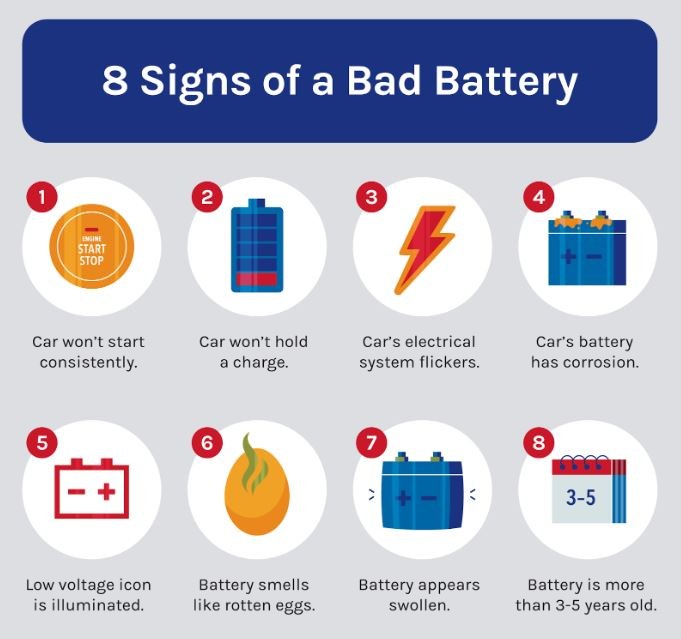
Cell damage means the battery cannot supply the current the starter needs. You may hear a rapid clicking sound, feel the engine turn over slowly, and watch the dash lights dim while you crank. These symptoms are often worse on cold mornings because low temperatures slow the battery’s internal chemical reaction.
Battery Takes a Charge But Drops Fast
A battery with a dead cell can accept a surface charge and then lose it quickly. The charger may show “full,” but the voltage falls back toward 10.5 volts within hours. If your battery seems strong right after charging and is dead the next morning, a failing cell should be high on your suspect list.
Multimeter Settings and the Battery Basics You Should Know
DC Voltage Range Setup
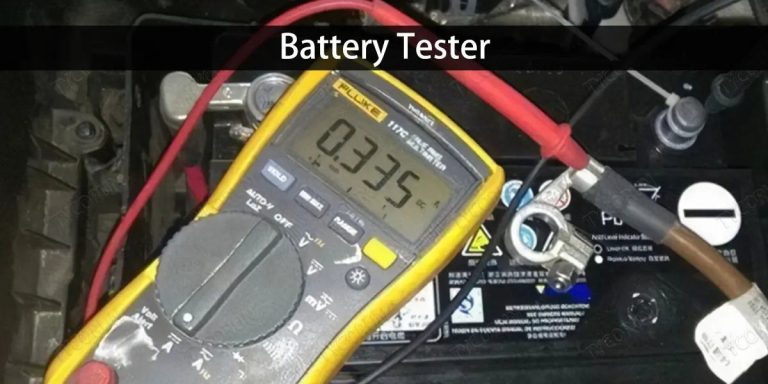
Turn the multimeter dial to DC voltage and select the 20-volt range if the meter has manual ranges. Put the black test lead in the COM port and the red test lead in the V/Ω port. Connect the red probe to the positive battery terminal and the black probe to the negative terminal. If you are new to this job, check out our guide on can I test a battery with a multimeter for a quick setup refresher.
State of Charge vs. Battery Health
Voltage only tells you how charged the battery is, not whether it can do real work. A weak cell can still show a decent open-circuit voltage until a load is applied. That is why the resting voltage test has to be paired with a load or cranking test to confirm a dead cell.
Flooded, AGM, and EFB Battery Chemistry
Flooded batteries are the traditional wet-cell design and are usually the least expensive. AGM batteries are sealed and common in luxury vehicles and start-stop systems. EFB batteries sit between the two in cost and are used in many newer economy cars. The voltage thresholds are the same for all three, but AGM and EFB batteries need a charger and tester matched to their chemistry.
Safety First: Connection Order, Stop Conditions, and Hybrid Cautions
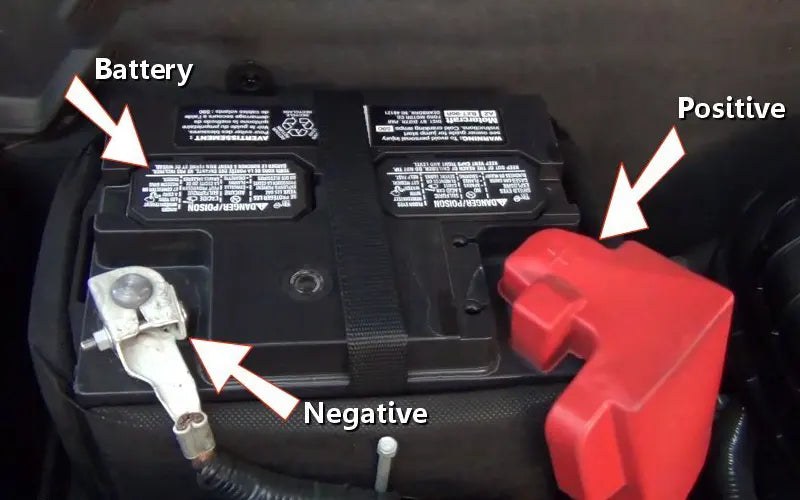
Correct Positive and Negative Lead Sequence
Connect the red probe to the positive terminal first, then the black probe to the negative terminal. When you finish, remove the black probe first. This reduces the chance of shorting the probes against the body or each other. Wear safety glasses, remove metal jewelry, and set the parking brake before you open the hood.
Stop Testing If You See Bulging, Cracks, or Leaks
A swollen case, cracking, acid residue, or a strong rotten-egg smell means stop any testing. The battery may release sulfuric acid or hydrogen gas, which can be dangerous. Replace the battery or have the vehicle towed to a professional instead of risking an injury.
Hybrid and EV High-Voltage Cautions
Standard multimeters are not rated for the high-voltage traction battery packs in hybrids and EVs. Those circuits can carry well over 250 volts DC and can be fatal if touched. Test only the 12-volt auxiliary battery in these vehicles, and never go near the orange high-voltage cables.
Test 1: Open-Circuit Voltage Test
How to Get a True Resting Voltage Reading
Open-circuit voltage means testing a battery with no load, no charging, and no recent surface charge. Let the car sit off for at least 12 hours for the most accurate result. If you test right after a drive, the surface charge makes the voltage look higher than reality.
Connect the probes to the metal battery posts rather than the cable clamps, because corroded clamps can create a false reading. For a deeper look at the overnight procedure, read our guide on how to test a car battery after sitting overnight.
Interpreting 12.6, 12.4, and 10.5 Volt Readings
A reading of 12.6 volts means the battery is fully charged. A reading of 12.4 volts means the battery is around 75% charged, so give it a full charge and retest. A reading near 10.5 volts is the classic dead-cell signature, but only after the battery has been fully charged. A deeply discharged battery can also land near 10.5 volts before charging, which is why the charge step matters.
Test 2: Load and Cranking Test With a Multimeter
Using the Headlights as a Simple Load
With the engine off, turn the high beams on for 15 to 30 seconds and watch the multimeter reading. A healthy battery stays above 12.2 volts under this load. A battery with a bad cell often drops below 12 volts quickly or falls into the low 11-volt range. If the battery was already resting near 10.5 volts, skip this test and charge the battery first.
Cranking Voltage Test Procedure
Keep the red probe on the positive post and the black probe on the negative post with the engine off.
To prevent the engine from catching, remove the fuel pump fuse or relay only if the owner’s manual shows one. Keep in mind you may need to clear a fault code afterward.
Have a helper turn the key while you watch the lowest voltage shown on the multimeter.
The lowest number during cranking is the figure used to judge cell health.
Why a Drop Below 9.6 Volts Signals a Bad Cell
During cranking, a healthy battery should hold at or above 9.6 volts at normal room temperature. A reading below that means the battery cannot deliver enough current, and a bad cell is a leading cause. A dragging starter, corroded terminals, or very cold weather can also push the voltage lower. To understand how this compares with a dedicated tool, review our explanation of battery tester vs multimeter before making a final call.
Test 3: Charging System Check to Confirm the Cell Is the Problem
Alternator Output: 13.8 to 14.4 Volts at Idle
After the engine starts, check the voltage again at idle. The alternator should deliver roughly 13.8 to 14.4 volts to the battery. If you see 12.6 volts or less, the alternator or voltage regulator may be failing. In that case, the battery might be fine, and you would be replacing it for the wrong reason.
Parasitic Draw and Other False Positives
Another reason a battery sits at 10.5 volts is a parasitic drain that runs down a good battery overnight. Common culprits include a trunk light left on, a broken door switch, an aftermarket stereo, or a dash cam that never shuts off. If battery testing shows healthy cells but the car still won’t start in the morning, look for a drain. This matches the pattern we cover in why does my car battery test good but still dies.
- Use the 20-volt DC setting on the multimeter for all battery checks.
- Charge the battery fully before judging a 10.5-volt reading.
- Confirm the alternator output before buying a new battery.
- Let the red and black probes touch each other while connected to the battery.
- Test a cracked, swollen, or leaking battery — replace it or call a pro.
- Assume a low cranking voltage is always the battery; starters and cables matter too.
Replacing a Battery With a Bad Cell: Compatibility, Cost, and Next Steps
Choosing the Right Group Size, Chemistry, and Cold Cranking Amps
Once a cell has failed, the only lasting fix is replacement. Check the owner’s manual for the correct group size, battery chemistry, and cold cranking amp (CCA) rating. Group sizes such as 24F, 35, 47, and H6 are common, but your vehicle may use another size. A battery that is too small may not fit the hold-down tray, and a battery with too little CCA may struggle in winter. AGM batteries cost more than flooded batteries but are required by many late-model vehicles.
DIY vs. Professional Installation and Battery Registration
Replacing a battery is a straightforward job, but many modern vehicles need battery registration through a scan tool. Registration tells the charging system that the battery is new so it can adjust the charge rate. Skipping it can shorten the new battery’s life. Some vehicles also lose radio presets, key fob settings, and power-window memory when the battery is disconnected. If you are comfortable with the job and the vehicle does not require registration, DIY is reasonable. If you are unsure, a professional install removes the guesswork.
Core Charges, Disposal, and When to Call a Pro
Most US battery retailers add a core charge when you buy a replacement and refund it when you return the old battery. Lead-acid batteries are recyclable, so do not put them in regular trash. If the battery sits under a seat, behind a panel, in a trunk, or in a tight engine bay, professional installation is safer and often faster.
- Confirm the group size, chemistry, and CCA from the owner’s manual or the battery label.
- Check the alternator output so a charging system fault is ruled out first.
- Ask whether your car requires battery registration after installation.
- Plan to return the old battery to avoid the core charge.
- Review the new battery’s warranty and expected service life before buying.
- Best for: DIY owners who want to confirm a suspected bad cell before paying for a replacement battery.
- Think twice if: The battery case is damaged or the vehicle is a modern hybrid or EV — those situations need a qualified professional.
- Next step: Confirm the correct group size, chemistry, and CCA from the owner’s manual, then schedule a core-charge-friendly replacement at a local auto parts retailer.
Frequently Asked Questions
Yes, in most cases. An open-circuit voltage near 10.5 volts after a full charge points to a failed cell, and a cranking voltage below 9.6 volts confirms the battery cannot deliver enough current. For a complete health report, a dedicated battery tester adds CCA and state-of-health readings.
A battery with one dead cell typically rests around 10.5 volts instead of the healthy 12.6-volt baseline. If it will not climb above roughly 10.5 volts even after charging, a bad cell is the likely cause.
Set the dial to DC voltage, connect the red lead to the positive post and the black lead to the negative post, and read the resting voltage. Then watch the lowest voltage while a helper cranks the engine for up to 10 seconds. If it drops below 9.6 volts, the battery is weak or has a bad cell.
No, not practically. Internal cell damage is not a DIY repair, and attempting to open a sealed battery is dangerous. Replacing the battery is the safe and reliable fix.
Open-circuit voltage only shows the state of charge. A failing cell can appear healthy at rest but collapse when the starter pulls heavy current. A cranking test or conductance battery tester will reveal the true performance.
It is not worth the risk. A battery with a bad cell may lose charge quickly and leave you stranded, and it can put extra strain on the alternator and starter. Replace it before you depend on the car for a commute or road trip.