Why Is My Jump Starter Beeping and Not Starting My Car
Your jump starter is usually beeping because it detects a safety problem, weak connection, low pack charge, or a battery that is too damaged or too discharged to support a normal jump. Stop repeated cranking, verify the clamps and vehicle type, and follow the manual before trying again.
why is my jump starter beeping and not starting my car? In most cases, the beep means the pack sees a safety problem like reversed clamps, weak contact, a battery that is too damaged or too low to detect, or a jump pack that does not have enough charge or current for the vehicle. The good news is that a beep often points you toward the issue before you waste more attempts or risk damage.
- Beep meaning: It usually signals a safety lockout, not instant product failure.
- First checks: Confirm clamp polarity, clean metal contact, and jump-pack charge level.
- Compatibility: Match the pack to 12V or 24V systems, engine size, and battery type.
- Stop signs: Swollen batteries, hot cables, heavy sparking, or strong sulfur smell mean stop.
- Aftercare: Recharge the pack promptly and test the vehicle battery if the problem returns.
Why a jump starter beeps but will not crank your car: the most common causes first
If your jump pack powers on but the engine will not turn over, start with the simple causes. Modern packs are designed to stop the process when they detect a condition that could harm the battery, the vehicle, or the jump starter itself.
Reverse-polarity protection, poor clamp contact, and low pack charge
The most common reason for beeping is reverse-polarity protection. That means the clamps are on the wrong terminals, or the pack thinks they are. Even if red is on positive and black is on negative, heavy corrosion, painted metal, loose side-post adapters, or a partially clipped clamp can confuse the safety circuit.
Poor clamp contact is more common than many drivers expect. The clamp teeth need clean, solid metal-to-metal contact. If they are grabbing plastic battery covers, crusty corrosion, or a loose terminal end, the jump starter may beep and refuse to send power.
Low internal charge is another big one. A jump starter can light up, run a flashlight, or charge a phone and still be too weak to crank an engine. If you are not sure how long your pack stays ready in storage, this guide on how long portable jump starters hold a charge can help you plan maintenance intervals.
Battery voltage too low to detect, damaged battery stop conditions, and starter current limits
Some jump starters will not activate unless they detect a minimum battery voltage. If your car battery is deeply discharged, the pack may beep because it cannot “see” the battery correctly. That can happen after lights were left on, after long storage, or when the battery has been draining overnight.
If this sounds familiar, it may help to read why a car battery dies after sitting overnight, because a repeated drain can leave the battery too low for normal jump-pack detection.
Some packs also stop when they detect a battery that may be damaged. Internal shorts, a failed cell, or severe sulfation can create conditions that trigger overload or short-circuit warnings. In that case, the beep is doing its job.
Starter current is the other limit. A small lithium pack may be fine for a compact gas engine but struggle with a large V8, a cold-soaked battery, or a diesel truck. If the pack’s real cranking ability is below what the starter motor needs, it may beep, click, or shut down instead of cranking.
Wrong mode selected, safety lockouts, and temperature-related shutdowns
Some jump starters have a manual override, boost mode, or battery-type setting. If the wrong mode is selected, the pack may not deliver output. Other units require a certain connection order before they unlock the clamps.
Temperature can also trigger a shutdown. Very cold weather reduces battery output and can slow lithium chemistry. Extreme heat inside a parked car can also push some packs into protection mode. If the pack or cables feel unusually hot, stop and let everything cool before trying again.
What the beeping usually means on modern jump starters in 2026
There is no single universal beep code across all brands. One model may use a steady beep for reverse polarity, while another uses rapid beeps for overload or a flashing icon for low internal battery. That is why the manual matters.
How brands use different alert patterns for polarity errors, overload, short circuit, and low internal battery
Most modern jump packs use audible and visual alerts together. Common reasons include polarity error, overload, short circuit, over-temperature, low pack charge, and connection fault. Some units also beep if the clamp harness itself is not fully seated in the pack.
App-connected and screen-based units may show clearer warnings than older packs, but the basic logic is the same: the device is trying to prevent a bad connection or an unsafe power draw.
Why a beep is a safety feature, not always a product failure
It is easy to assume the jump starter is defective when it beeps and does nothing. Often, though, the product is refusing to energize because it senses risk. That can save the pack from overload and help protect sensitive vehicle electronics from a bad connection event.
In other words, the beep is often a warning, not a death sentence for the tool.
Firmware, app-connected packs, and why the manual still matters
Some newer packs use firmware and companion apps for status reporting, charging information, or setup prompts. That can help, but it also adds another variable. A firmware note or manual may explain a lockout pattern that is not obvious from the beeps alone.
If your model has app features, review any permission settings and update notes before assuming the hardware has failed.
Step-by-step troubleshooting before you try another jump start
Good troubleshooting is safer than repeated guessing. Work through the basics in order and stop if you find a serious battery or wiring problem.
Get as far from traffic as practical, turn on hazard lights, and make sure you can see the battery area clearly.
Check that the jump pack is charged, the clamp lead is fully connected, and the vehicle really uses the voltage your pack supports.
Use the correct order from the manuals, verify clean contact, then attempt a short crank instead of repeated long attempts.
Move to a safe location, improve traffic visibility, and confirm the tool kit is complete
If possible, get off the travel lane and onto a shoulder, parking lot, or other safer area. Set the parking brake. At night or in bad weather, visibility matters as much as the jump itself.
Make sure you have the full kit: the jump pack, the correct clamp lead, any required adapter, a flashlight, and gloves if available. A missing clamp module or damaged lead can mimic a dead pack.
For broader roadside planning, this list of tools every car owner should keep in the trunk is a useful checklist.
Check system voltage, battery chemistry, and whether the vehicle is 12V, 24V, hybrid, or EV
Most portable jump starters sold to US drivers are for 12V vehicles. Some commercial trucks use 24V systems, and many hybrids and EVs still have a 12V support battery but may have special procedures. Never assume.
Check: Verify the vehicle’s system voltage, battery location, battery type, and any remote jump terminals listed in the owner’s manual. Limitations: Some hybrids, EVs, and heavy-duty diesels have special restrictions or need more current than a compact pack can safely provide.
Battery chemistry matters too. Flooded, AGM, EFB, and lithium starter batteries can behave differently under low-voltage conditions, and some jump packs have specific instructions for start-stop vehicles.
Use the correct connection order and confirm solid metal-to-metal clamp placement
Follow the vehicle and jump-starter instructions exactly. On many vehicles, that means positive to the approved positive point first, then negative to the approved ground point. On others, direct battery terminal connection is allowed. The manual decides.
Clamp placement should be firm, clean, and square on bare conductive metal. Wiggle each clamp lightly to confirm it is not sitting on corrosion or a loose terminal shell.
Verify ignition mode, brake-pedal requirements, key-fob detection, and anti-theft lockouts
Some no-start problems are not battery problems. Push-button vehicles may need the brake pedal pressed firmly, the key fob present, and the transmission fully in Park. A weak key-fob battery or anti-theft issue can make the car appear dead even when jump power is available.
If the dash lights come on but the engine does not crank, think beyond the battery. Immobilizer faults, starter relay issues, or a failed brake-switch input can stop cranking.
Know when repeated attempts can overheat the pack or damage vehicle electronics
Do not hold the starter for long repeated cranks. That can overheat the jump pack, stress the clamp harness, and overwork the starter motor. Many manufacturers recommend short crank attempts with a cooling pause between them.
Battery condition vs battery charge: why a full jump pack still may not start the vehicle

A fully charged jump starter cannot fix a battery that has failed internally. This is one of the biggest reasons drivers get confused by a beeping pack.
State of charge versus battery health and why sulfation, internal shorts, or a failed cell matter
State of charge tells you how much energy is in the battery right now. Battery health tells you whether the battery can still accept and deliver power properly. A battery can be low on charge and recover. A battery with a bad cell may not.
Sulfation from age or long discharge periods can reduce performance badly. Internal shorts and failed cells can create voltage readings that fool simple assumptions. If you want a deeper read on testing, compare guides on car battery testers for home use before buying one.
Signs the battery is too damaged for a safe jump-start attempt
Warning signs include a swollen case, leaking fluid, severe terminal melt, repeated instant voltage collapse, or a battery that gets hot very quickly. Another clue is a battery that accepts a jump only briefly and then dies again almost at once.
At that point, the problem may be beyond roadside recovery. Replacement or professional diagnosis is often the safer path.
How cold weather, heat soak, and long storage affect both the car battery and the jump pack
Cold weather thickens engine oil and lowers battery output at the same time. That raises the current needed to crank. Heat can also shorten battery life over time, even if the failure shows up later on a mild day.
Long storage hurts both parts of the equation. The car battery self-discharges, and the jump pack can lose readiness too. Temperature-controlled storage usually helps portable packs last longer and perform more predictably.
Compatibility guide: matching the jump starter to your engine, battery type, and vehicle electronics
Not every jump starter is a good fit for every vehicle. Size, engine type, battery type, and electronics all matter.
Peak amps vs cranking amps and what actually matters for gas, diesel, trucks, and SUVs
Marketing often highlights peak amps, but that number does not always tell you how the pack performs during real cranking. For many drivers, sustained current delivery and clamp quality matter more than a flashy peak number.
If you are comparing pack sizes, this article on how many amps you need to jump-start a car explains the difference in plain language. Larger gas engines, cold starts, and diesel applications usually need more from the pack.
AGM, EFB, flooded, lithium, and start-stop systems
Many newer vehicles use AGM or EFB batteries, especially with start-stop systems. These batteries can have different charging and recovery behavior than older flooded types. Your jump pack may still work, but the battery condition and vehicle charging strategy can affect results.
Always check whether the jump starter manual lists any battery-type cautions or special procedures.
Hybrid and EV cautions, including 12V support batteries and manufacturer restrictions
Many hybrids and EVs still rely on a 12V battery to boot computers and close contactors, but that does not mean the jump procedure is identical to a gas car. Some manufacturers specify exact jump points and warnings about the high-voltage system.
Never probe orange high-voltage cables or open covers related to the traction battery. If the owner’s manual is unclear, professional service is the safer choice.
When an older vehicle is easier to jump than a late-model car with sensitive modules
Older vehicles often have simpler electronics and fewer startup conditions. Late-model vehicles may require healthy module voltage, stable communication between control units, and correct key authentication before they will crank or run.
That does not make newer cars fragile, but it does mean a weak battery can create more confusing symptoms than it did years ago.
Side-by-side comparison: compact lithium jump packs vs larger booster packs vs jumper cables
Different emergency-start tools fit different owners. The best choice depends on the vehicle, climate, storage habits, and whether another running vehicle is usually available.
| Option | Best for | Owner consideration | Driver consideration |
|---|---|---|---|
| Compact lithium jump pack | Commuters and solo drivers | Needs regular recharge checks and careful temperature storage | Easy one-person use with less roadside setup time |
| Larger booster pack | Trucks, SUVs, larger engines, colder climates | Bulkier to store and usually costs more | Can provide stronger cranking support when a small pack struggles |
| Jumper cables | Drivers who often have help nearby | Lower tool cost but requires a second vehicle | More traffic exposure and more room for connection mistakes |
Current capability, storage conditions, recharge needs, and ease of use
Compact lithium packs are convenient and easy to store, but they are more sensitive to charge maintenance and temperature extremes. Larger booster packs can offer more reserve and stronger output, though they take up more space.
Jumper cables are simple and durable, but they depend on another vehicle and good technique. They also create more time standing near traffic.
Which option fits commuters, cold-climate drivers, larger engines, and infrequent drivers
Commuters who park alone often benefit most from a portable jump pack. Cold-climate drivers and owners of trucks or SUVs may need a larger-capacity unit than the average compact-car driver. Infrequent drivers should pay extra attention to storage charge and battery maintenance.
Ownership cost, maintenance demands, and limitations of each emergency-start option
Jump packs add cost and require periodic charging. Booster packs can be heavier and less convenient. Cables are cheaper but less self-sufficient. The right answer depends on whether you value independence, low maintenance, or maximum starting muscle.
- Confirm your vehicle’s voltage, battery type, and current needs before choosing a jump tool.
- Follow the connection order in both the vehicle and jump-starter manuals.
- Recharge and inspect the pack after every use or long storage period.
- Assume a phone-charging power bank can replace a real jump starter.
- Keep cranking repeatedly when the pack is beeping or shutting down.
- Use a swollen pack, damaged clamps, or frayed cables.
Safety, legal, and placement issues drivers often overlook
Even a simple jump start has placement and roadside safety details that matter. Many problems come from connecting to the wrong point or working in an unsafe location.
Where to connect on vehicles with remote jump terminals or trunk-mounted batteries
Some vehicles place the battery in the trunk or under a seat and provide remote jump terminals under the hood. Use those approved terminals if the manual says to. They are there for a reason and may offer a safer, better ground path.
Storage temperature, cabin vs trunk placement, and why swollen packs or damaged cables must be retired
Portable packs do best when stored within the manufacturer’s recommended temperature range. A trunk may be convenient, but extreme summer and winter conditions can reduce performance or shorten service life compared with a more moderate cabin or indoor storage routine.
If the case is swollen, cracked, or smells unusual, retire the pack. The same goes for loose clamp jaws, melted insulation, or damaged leads.
State-by-state roadside safety expectations, parking restrictions, and when to call professional assistance
US roadside safety rules vary by state and local conditions. Shoulder use, warning devices, and stopping restrictions can differ, especially on bridges, interstates, and limited-shoulder roads.
Using a jump starter as part of diagnosis: what it can and cannot tell you
A jump starter can help confirm that low battery voltage is part of the problem. It cannot prove the battery is healthy or rule out other no-start causes.
When a no-start points to the starter, alternator, fuse, immobilizer, fuel, or ignition system instead of the battery
If the engine will not crank even with strong jump support, the fault may be the starter motor, starter relay, fuse, ignition switch input, immobilizer, or wiring. If the engine cranks well but does not run, think fuel delivery, spark, timing, or sensor issues instead.
An alternator problem can also show up after the jump succeeds but the battery dies again soon after.
OBD2 basics that help after a failed jump: model-year coverage, protocol support, and port location
An OBD2 scanner may help if the car powers up enough to communicate. It can reveal stored faults related to voltage, immobilizer events, or charging-system issues, but only if the tool supports your vehicle and the port is accessible and powered.
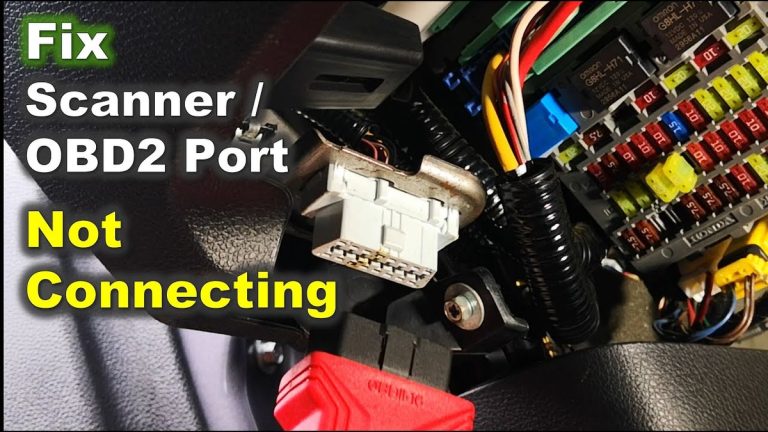
If your scan tool will not connect after a no-start event, this guide on why an OBD2 scanner won’t connect covers the common reasons.
Ignition mode, code and live-data limits, emissions readiness, reset limitations, and app-permission concerns
Some scanners need the ignition in the correct mode, not just accessory power. Basic code readers may show generic powertrain codes but not body, security, or network faults. Live data can help, but only if the vehicle stays powered long enough to read it.
Clearing codes can erase useful clues, so record them first. App-based scanners may also request Bluetooth, location, account, or storage permissions, which drivers should review carefully.
When firmware updates, scan-tool results, or persistent warning lights mean diagnosis requires a professional
If the jump pack, battery test, and scan results do not line up, step back. Persistent warning lights, repeated low-voltage faults, or signs of module communication problems usually mean the issue needs a proper diagnostic process, not more jump attempts.
After the car starts: post-use inspection, recharge, and maintenance to prevent the next roadside failure
Once the engine starts, the job is not over. This is the time to protect the jump pack and figure out why the battery failed in the first place.
How long to drive, what charging-system checks matter, and why idling alone may not recover the battery
Many drivers assume a few minutes of idling will recharge the battery. Often it will not. A weak battery may need a proper charger, and a short idle period may not replace the energy used to start the engine.
If the battery warning light stays on, headlights dim, or the car struggles again after shutdown, the charging system may need inspection.
Inspect clamps, cables, case condition, and recharge schedule after every use
After use, inspect the clamps for heat damage, looseness, or corrosion. Check the cable insulation and connector block. Recharge the pack promptly according to the manual instead of tossing it back in the trunk half empty.
When to replace the battery, upgrade the jump starter, or add a tire inflator and pressure gauge to your roadside kit
If the battery is old, repeatedly discharged, or fails testing, replacement is usually smarter than repeated emergency starts. If your vehicle is larger or your climate is harsher than your current pack can handle, upgrading the jump starter may also make sense.
It is also worth building a more complete roadside kit. A tire inflator, pressure gauge, flashlight, and gloves can reduce stress when one problem turns into two.
- Best for: Drivers who need a clear, safe explanation when a jump starter beeps but the car still will not crank.
- Think twice if: You plan to keep forcing jump attempts despite battery damage signs, repeated safety alerts, or unclear hybrid/EV procedures.
- Next step: Check clamp contact, pack charge, vehicle voltage, and the owner’s manual before trying one more short crank attempt.
Frequently Asked Questions
No. A beep often means the jump starter has detected reverse polarity, poor clamp contact, overload, or low internal charge. Many units are designed to block output until that issue is fixed.
Yes. A battery with a bad cell, internal short, or severe sulfation may not respond safely even when the jump pack is full. The vehicle may also need more cranking current than the pack can deliver.
Sometimes, but only on the 12V support battery if the owner’s manual allows it. Hybrid and EV systems can have special jump points and restrictions, so never guess around high-voltage components.
Follow the manufacturer’s schedule, especially after every use and after long storage. It is also smart to inspect the clamps, cables, connector block, and case for damage or swelling each time.
Not always in the same way. State and local rules on shoulder stopping, warning devices, and roadside work can vary, so a busy or restricted road may make professional roadside help the safer option.
Verify your vehicle voltage, engine size, battery type, and whether it is gas, diesel, hybrid, or EV. Also compare clamp quality, recharge needs, storage limits, included accessories, and the manual’s safety instructions.