How Many Drive Cycles Does It Take for Readiness Monitors to Reset
Most vehicles need one to two complete drive cycles to reset readiness monitors, but some can take five or more depending on the monitor and driving conditions. Use a scan tool to track readiness status after each cycle.
If you are asking how many drive cycles does it take for readiness monitors to reset, the short answer is that most vehicles will set their monitors after one or two complete drive cycles. Some monitors, especially the EVAP system, may need more attempts depending on your car’s age, fuel level, and driving conditions.
- Drive cycles: Most cars need 1–2 complete cycles; the EVAP monitor can take 5 or more.
- Cold start: Begin the cycle with a fully cooled engine for the best results.
- Fuel level: Keep the tank between 15 and 85 percent for the EVAP monitor to run.
- Scan tool: Check readiness status after each cycle to track progress and avoid wasted trips.
- State rules: Readiness requirements vary by state and model year; verify before your inspection.
The Short Answer: Most Vehicles Need 1–2 Drive Cycles, But It Varies
Most gasoline cars built after 2000 will complete their readiness monitors within one to two full drive cycles. That assumes the vehicle is in good working order and you follow the right driving pattern.
Some monitors, like the catalytic converter and oxygen sensor checks, tend to set quickly once the engine reaches operating temperature. Others, particularly the evaporative emissions (EVAP) monitor, can take several cycles or specific fuel-level conditions before they complete.
Why the “One-Size-Fits-All” Answer Doesn’t Exist
Every automaker programs its engine computer differently. A Toyota may set all monitors in one 20-minute trip, while a Ford or Chevrolet may need two or three separate drives.
Your driving style matters too. Short stop-and-go trips rarely satisfy the conditions needed for all monitors to run. Highway cruising at steady speeds is usually the fastest way to complete most of them.
The Difference Between a “Trip” and a “Drive Cycle”
A trip is simple: start the engine, drive, and shut it off. Even a short run to the corner store counts as one trip.
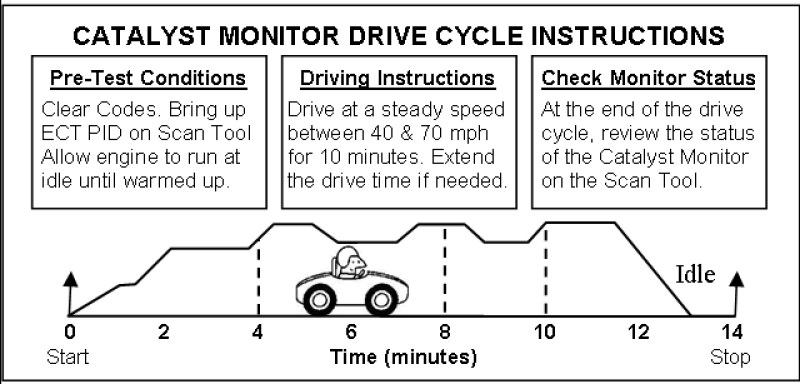
A drive cycle is more specific. It includes a cold start, idle time, acceleration, steady cruising, deceleration, and another idle period. Each monitor has its own conditions, and a complete cycle is designed to trigger as many of them as possible.
What Are Readiness Monitors and Why Do They Matter?
Readiness monitors are self-tests built into your vehicle’s engine computer. They check whether the major emissions control systems are working correctly.
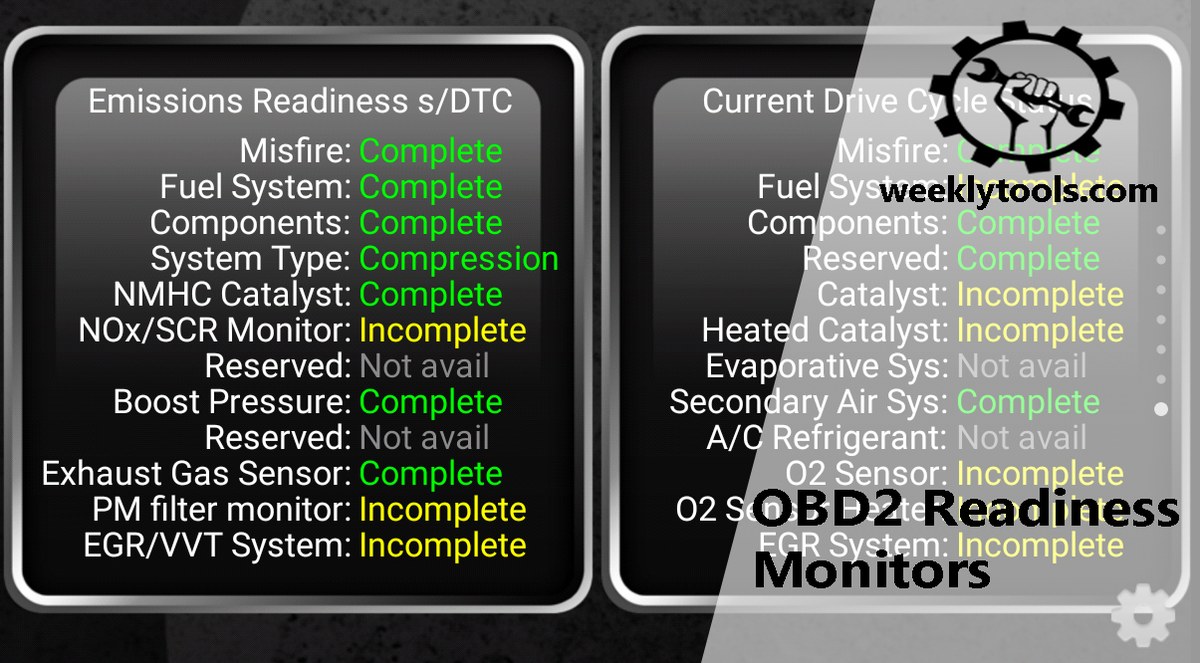
Most vehicles have between eight and ten monitors. They cover the catalytic converter, oxygen sensors, EVAP system, EGR valve, fuel system, and misfire detection, among others.
The Role of Readiness Monitors in Emissions Testing
When your car goes through an OBD2 emissions inspection, the tester plugs into the diagnostic port and checks two things: stored trouble codes and readiness status.
If any monitor shows “incomplete” or “not ready,” the vehicle fails the test even if no check engine light is on. That is why readiness matters for anyone facing a state inspection.
How Readiness Monitors Affect Your Check Engine Light
Readiness monitors and the check engine light are related but not the same thing. A monitor that fails will usually turn on the light and store a diagnostic trouble code.
An incomplete monitor, by contrast, simply means the test has not finished running yet. The light may stay off, but the monitor still needs to complete before you can pass an emissions test. If you are seeing the light, check the code first before attempting a drive cycle. A related guide on what readiness monitor incomplete means explains the difference in more detail.
How Drive Cycles Work: The Conditions That Trigger a Reset
The engine computer does not run every monitor at once. Each self-test has its own set of conditions that must be met before it will execute.
Those conditions usually involve engine temperature, vehicle speed, throttle position, and time. If any condition is missing, the monitor stays incomplete and waits for the next drive.
Cold Start vs. Warm Start: Which One Counts?
A cold start means the engine has cooled down completely, usually after sitting for several hours or overnight. Many monitors require a cold start because the computer needs to see the system warm up from a known baseline.
A warm start, like restarting your car after a quick errand, often does not provide the same data. If you want to complete your monitors quickly, start the drive cycle when the engine is fully cold.
The “Complete” Drive Cycle: Speed, Temperature, and Time Requirements
Most drive cycle procedures share the same bones. You start the car cold, let it idle, accelerate to around 30 mph, cruise, stop, then accelerate to highway speed and cruise again.
Exact speeds and durations vary by manufacturer. Check your owner’s manual or a trusted repair database for the exact procedure for your make and model.
Battery Voltage and State of Charge: Why a Weak Battery Can Mess Up Your Drive Cycle
Readiness monitors depend on stable electrical power. If your battery is weak or the charging system is struggling, the computer may cancel a monitor run to protect other systems.
This is especially common on cars with older batteries or after a jump start. If your monitors will not reset and you suspect the battery, have it tested before you waste time on drive cycles. You can learn how to test a car battery after sitting overnight to rule out a voltage problem.
Why Some Monitors Reset Faster Than Others (EVAP, Catalyst, etc.)
The catalyst monitor usually completes quickly because it only needs the engine to reach operating temperature and hold a steady cruise for a few minutes.
The EVAP monitor is the opposite. It checks for fuel vapor leaks and needs the fuel level to be between roughly 15 and 85 percent. It also requires specific temperature and pressure conditions. Some drivers report needing five or more drive cycles before the EVAP monitor finally sets.
Model Year and Protocol Coverage: OBD2 Compatibility and Variations
All gasoline vehicles sold in the United States since 1996 must be OBD2 compliant. That means they all have a standard diagnostic port and support the same basic readiness reporting.
How the data is delivered, however, changed over time. Older cars use slower serial protocols, while newer cars use the faster CAN bus system.
OBD2 Protocols (CAN, KWP2000, etc.) and Readiness Reset Differences
Before 2008, automakers used several different OBD2 protocols. Some used KWP2000, others used ISO 9141, and a few used proprietary formats like VPW or PWM.
Since 2008, CAN (Controller Area Network) has been the required standard in the US. For readiness purposes, the protocol does not change how many drive cycles you need. It only changes how a scan tool talks to your car. Any modern OBD2 scanner that supports your protocol can read readiness status.
1996–2000 vs. 2001–2026: How the Rules Changed
Early OBD2 vehicles from 1996 to 2000 had fewer standardized monitors. Many states also allowed more lenient readiness rules for those years because the technology was still new.
From 2001 onward, federal and state regulators tightened the requirements. Newer vehicles have more monitors, and most states require more of them to show “ready” before an emissions test can pass.
Hybrid and Electric Vehicles: Do They Even Have Readiness Monitors?
Hybrids like the Toyota Prius still have a gasoline engine, so they do have readiness monitors. Their drive cycles can be different because the gas engine may shut off and restart during normal driving.
Full electric vehicles do not have emissions readiness monitors because they have no tailpipe emissions. They still have diagnostic systems, but they are not part of the OBD2 emissions inspection process in most states.
How to Perform a Proper Drive Cycle for Readiness Reset
A generic drive cycle will work for many vehicles, but you should always check your owner’s manual first. The following procedure covers the most common conditions used by major automakers.
Let the car sit overnight or for at least four hours so the engine cools completely. Keep the fuel tank between a quarter and three-quarters full.
Start the engine and let it idle without touching the gas pedal. Turn on the headlights and rear defroster to add a small electrical load.
Drive at a steady 30 mph for about one minute. Avoid hard acceleration and heavy braking.
Bring the car to a complete stop and let it idle for 30 seconds. Then accelerate smoothly back to 30 mph.
Accelerate to 55 to 60 mph and cruise for five to ten minutes at a steady speed. This is where the catalyst and oxygen sensor monitors usually complete.
Lift off the gas and coast down to 20 mph without using the brakes. Then accelerate back to 55 mph and cruise for another five minutes.
Using a Scan Tool to Monitor Readiness Status (Including Port Location and Ignition Mode)
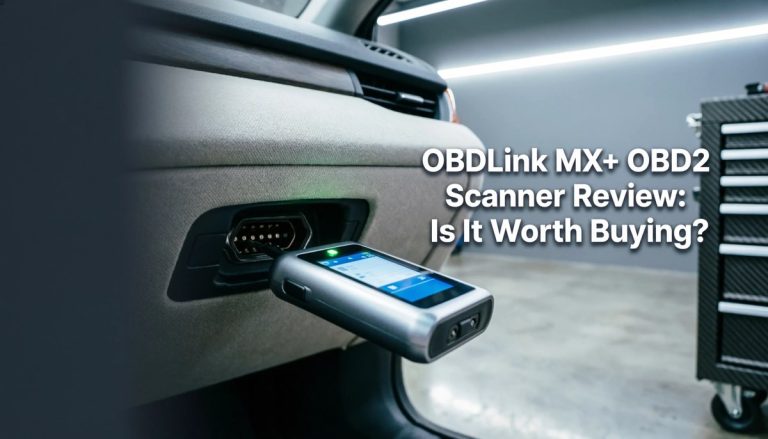
The OBD2 port is usually located under the dashboard on the driver’s side, near the steering column. Some vehicles hide it behind a small cover or fuse panel door.
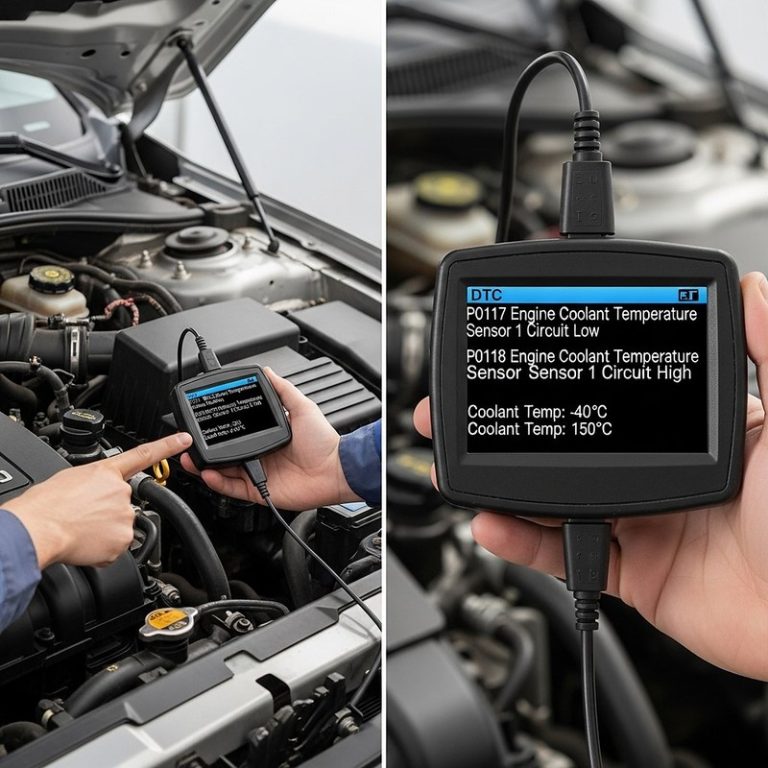
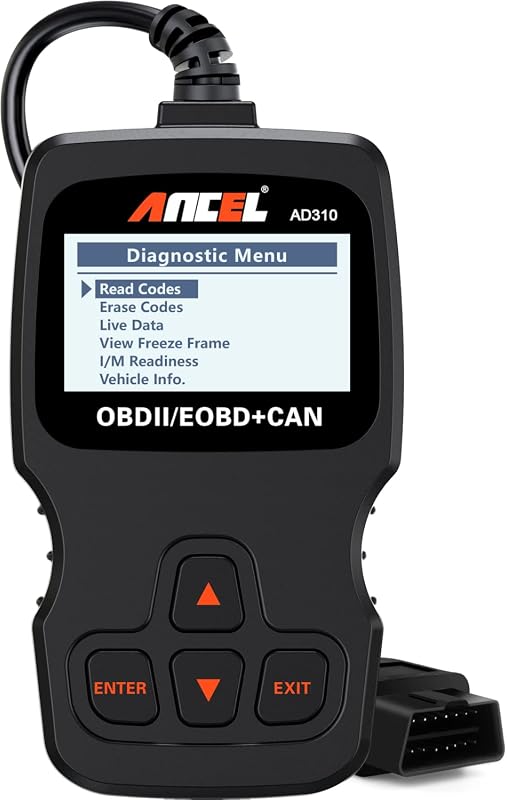
To check readiness, plug in a scan tool, turn the ignition to the “on” position without starting the engine, and navigate to the emissions or readiness menu. The tool will show each monitor as “ready” or “not ready.” If you are new to this, a guide on how to find live data on an OBD2 scanner covers the basics of navigating these menus.
Common Mistakes That Reset the Counter
- Confirm your fuel level is between 15 and 85 percent before starting, especially for the EVAP monitor
- Follow the exact drive cycle for your make and model from the owner’s manual
- Check readiness with a scan tool after each cycle to track progress
- Clear diagnostic trouble codes right before a drive cycle, since that erases readiness data
- Stop the cycle early because a monitor will not finish until all its conditions are met
- Drive aggressively or use cruise control in a way that prevents the required speed changes
Emissions Testing and Legal Variations Across the U.S.
Emissions testing rules are not the same everywhere. Some states require annual inspections, others test every two years, and many rural counties are exempt entirely.
Because rules change and vary by county, always check with your state’s DMV or environmental agency before your test. A procedure that works in California may not apply in Texas.
State-Specific Readiness Rules (California, New York, etc.)
California and New York have some of the strictest rules. Most 2001 and newer vehicles must have all readiness monitors set to “ready” to pass, with limited exceptions.
Some states allow one or two incomplete monitors for certain model years, especially if the vehicle has a recently replaced battery or ECU. The exact allowances change over time, so verify the current rule for your state and model year.
How Many Drive Cycles Are Required to Pass an OBD2 Test?
There is no universal number because the test does not count drive cycles. The testing computer simply checks whether each required monitor is marked “ready.”
If your vehicle still shows incomplete monitors after several proper drive cycles, do not keep repeating the same pattern. Something else may be wrong, or you may need the exact procedure from a factory service manual.
The “Not Ready” Fail: What Happens Next?
If you fail because of incomplete monitors, you will usually get a rejection notice and a set amount of time to fix the issue and retest. Some states offer a free retest within 30 days.
Driving the vehicle normally for a few days and repeating a proper drive cycle often resolves the issue. If it does not, the next step is a professional diagnosis, not another failed inspection. For a deeper look, the guide on how to pass emissions after clearing codes walks through the full process.
When a Drive Cycle Won’t Fix It: Diagnostic Limits and Professional Help
Sometimes readiness monitors will not reset no matter how many drive cycles you complete. That is your car telling you something needs attention.
Readiness Monitors That Won’t Reset: Common Causes
A weak or failing battery is a common culprit because monitors need stable voltage. A vacuum leak, failing oxygen sensor, or worn catalytic converter can also prevent a monitor from completing.
Aftermarket tunes or modified emissions equipment can also keep monitors permanently incomplete. If the vehicle has been tuned or had parts removed, a drive cycle will not fix it.
The Limits of OBD2 Scan Tools: Code, Live Data, and Firmware
A basic OBD2 scanner can read codes and check readiness, but it cannot tell you why a monitor will not complete. That requires live data and manufacturer-specific information.
Some scanners need firmware updates to work with newer vehicles. If your scanner is old and your car is new, the tool may not read all monitors correctly. Check the manufacturer’s update policy before relying on the results.
App Permissions and Privacy: What Your Scan Tool App Can (and Can’t) Do
Scan tool apps vary widely in what they can access. Some read only emissions data, while others offer live graphing, freeze-frame data, and even bidirectional controls.
Bidirectional controls let you command parts like fuel pumps or solenoids to turn on and off. That is powerful, but it also means the app can affect the vehicle. Only use bidirectional functions when you understand the risk and the vehicle is safely parked.
When to Call a Professional (and What to Expect)
Call a professional if you have completed several correct drive cycles and monitors still will not reset, or if the check engine light returns immediately after clearing codes.
A shop with a factory-level scan tool can run the monitors manually, check live sensor data, and identify the specific condition preventing completion. Expect to pay for diagnostic time, and ask for a clear explanation before authorizing any repairs.
Next Steps: What to Do After Your Readiness Monitors Reset
Once all monitors show “ready,” you can take the vehicle for its emissions test. Keep in mind that clearing codes or disconnecting the battery will erase the readiness data and force you to start over.
Clearing Codes vs. Resetting Monitors: The Difference
Clearing codes wipes diagnostic trouble codes and resets readiness monitors back to “not ready.” It is a diagnostic action, not a way to cheat an emissions test.
Resetting monitors, by contrast, means completing the drive cycles so the monitors run and report their results. The two are opposite processes, and you need the second one before an inspection.
Maintaining Your Car to Avoid Future Readiness Issues
Regular maintenance prevents most readiness problems. Keep the battery in good condition, fix small vacuum leaks early, and replace oxygen sensors when the check engine light calls for it.
If you park a vehicle for weeks at a time, use a battery maintainer so the computer does not lose its memory. A dead battery and a jump start can reset readiness monitors and trigger a fresh set of drive cycles.
Understanding Your Car’s Health Beyond Readiness
Readiness monitors are one piece of your vehicle’s overall health, but they are not the whole picture. They only check emissions-related systems, not brakes, suspension, or tires.
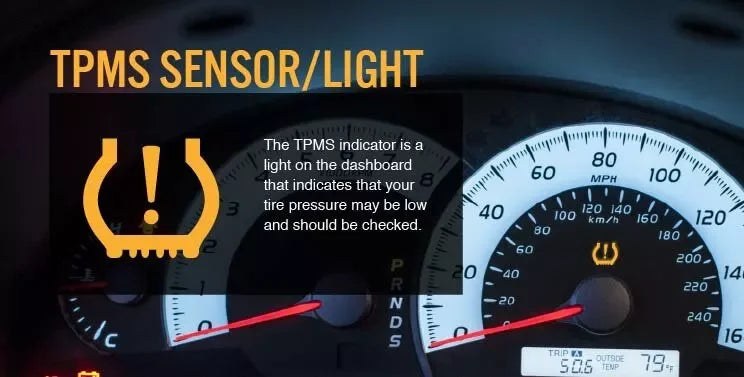
Keep up with oil changes, tire rotations, and fluid checks. A healthy car is more likely to complete its monitors quickly and pass inspection. If your TPMS light comes on after a tire rotation, that is a separate system from emissions readiness — a guide on how to reset the TPMS light after tire rotation covers that process.
- Best for: Most drivers facing an emissions test, especially those with a recently cleared code or a new battery that wiped out readiness data.
- Think twice if: Your monitors still will not reset after several proper drive cycles, or the check engine light keeps coming back. That points to a real fault, not a procedural issue.
- Next step: Check your owner’s manual for the exact drive cycle, confirm your battery is healthy, and use a scan tool to track readiness after each attempt.
Frequently Asked Questions
A complete drive cycle usually takes 15 to 30 minutes of driving. The exact time depends on your vehicle and which monitors still need to run.
No. Clearing codes also resets all readiness monitors to “not ready.” You must complete the drive cycles again before the vehicle can pass an OBD2 emissions test.
Not strictly, but it helps. Without a scan tool, you cannot see which monitors are ready or incomplete. Many auto parts stores will run a readiness check for free.
Yes, disconnecting the battery clears the computer’s memory and resets readiness monitors to “not ready.” You will need to complete drive cycles again afterward.
The EVAP monitor needs a fuel level between roughly 15 and 85 percent, specific temperature conditions, and often several drive cycles. A loose gas cap or small vapor leak can also prevent it from completing.
It depends on your state and vehicle model year. Some states allow one or two incomplete monitors for older vehicles, while others require all monitors to be ready. Check your state’s current rules.