Can a Bad Battery Cause Transmission Problems? How to Diagnose
A weak car battery can confuse your transmission computer and cause harsh shifts, delayed engagement, or limp mode — even when the transmission is fine. Test the battery first before paying for transmission repairs.
Can a bad battery cause transmission problems? Yes — and it’s one of the most overlooked causes of shifting complaints. A weak battery can confuse the transmission computer, trigger warning lights, and make a healthy transmission feel broken. The good news? A simple battery test can save you from an expensive transmission repair bill.
- Battery first: Low voltage can mimic real transmission failures, so test the battery before major repairs.
- Know the numbers: Key-off, cranking, and running voltage each tell a different story about battery health.
- OBD2 helps: Transmission codes in the P0700–P0899 range are often voltage-related and worth checking.
- Safe first: Follow correct connection order and never charge or jump a damaged battery.
- Prevention pays: A seasonal battery test and clean terminals reduce surprise transmission-like symptoms.
The Short Answer: Yes, a Bad Battery Can Mimic Transmission Problems
Modern transmissions rely on electronics just as much as they rely on fluid and gears. The transmission control module, or TCM, manages shifts using input from sensors and output to solenoids. Those parts need steady voltage to work correctly.
When battery voltage drops, the TCM may not receive reliable signals. Shift solenoids may open late, close early, or stop responding altogether. The result can feel exactly like a failing transmission.
Why Low Voltage Confuses the TCM and Shift Solenoids
Shift solenoids are electromechanical valves that control fluid flow inside the transmission. They need consistent voltage to move at the right moment. Low voltage can make them sluggish or unpredictable.
The TCM also uses voltage to power its internal processors and memory. If power dips, the module can reset, log fault codes, or enter a fail-safe mode. That’s why battery problems often show up as transmission problems first.
How to Tell a Battery Issue From a True Mechanical Failure
Battery-related shifting problems tend to come and go. They often appear when the battery is under load, such as at idle, during cold starts, or after short trips. True mechanical failures usually get worse steadily over time.
If your transmission acts up but also cranks slowly, dims headlights, or shows other electrical signs, start with the battery. It’s cheaper to test than a transmission, and it’s a common root cause.
Why Modern Transmissions Depend on Stable System Voltage
Your vehicle’s electrical system powers more than lights and infotainment. The engine computer, transmission computer, sensors, and solenoids all share the same battery. When voltage drops, every one of those systems can misbehave.
How the Transmission Control Module Uses Battery Power
The TCM monitors engine speed, throttle position, wheel speed, and fluid temperature to decide when to shift. It also supplies power to the shift solenoids. A stable battery keeps those decisions accurate and timely.
Many modern vehicles also use electronic shift-by-wire systems. These replace mechanical linkages with electronic controls. A weak battery can cause delayed gear selection, false neutral states, or refusal to shift.
The Voltage Thresholds That Trigger Limp Mode and Harsh Shifts
Most vehicles need roughly 12.6 volts with the engine off and 13.7 to 14.7 volts while running. During cranking, voltage naturally dips, but it should stay above about 9.5 to 10 volts on most gasoline vehicles. Exact numbers vary by make and model.
When voltage falls below what the TCM considers acceptable, it may enter limp mode. Limp mode locks the transmission into one gear to protect it. You’ll notice poor acceleration and high engine RPM on the highway.
For more detail on voltage limits, see our guide on what battery voltage is too low to start a car.
Why the Problem Gets Worse in Cold Weather and Short Trips
Cold temperatures slow the chemical reaction inside a battery. That reduces available cranking power and system voltage. Short trips also prevent the alternator from fully recharging what the starter used.
If you mostly drive short distances in winter, your battery may run chronically low. That’s when transmission-like symptoms tend to appear. A longer drive or a battery charger can sometimes restore normal shifting until the next cold start.
Transmission Symptoms That a Weak Battery Can Cause
Not every transmission symptom points to the battery, but several are common enough to check. Here’s what drivers often report when battery voltage is the real culprit.
Erratic or Delayed Shifting at Low Speeds
A weak battery can make shifts feel delayed, especially when accelerating gently from a stop. The TCM may wait longer to command a shift, or the solenoid may respond slowly. The result is a noticeable pause before the next gear engages.
Harsh Engagement When Shifting Into Drive or Reverse
Shifting from park into drive or reverse should feel smooth. When voltage is low, the TCM may not modulate the solenoids properly, causing a hard clunk or jolt. This can happen even when the transmission fluid is fresh and at the correct level.
Transmission Warning Lights, Limp Mode, and No-Start Conditions
Low voltage can trigger the check engine light, a transmission temperature warning, or a generic transmission fault. In severe cases, the vehicle may enter limp mode or refuse to start entirely. A no-start condition with transmission codes is a strong hint to check the battery first.
How to Test Your Battery Before You Touch the Transmission
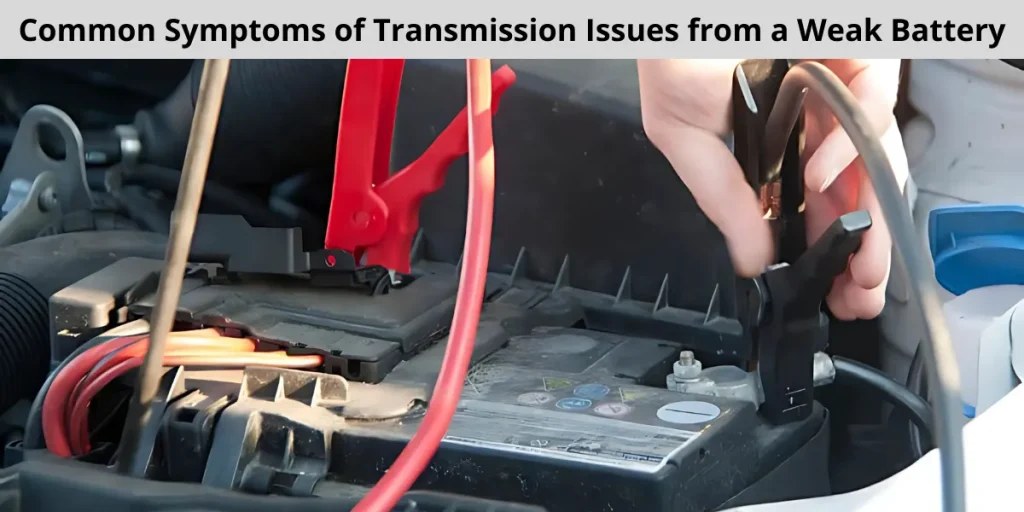
Testing a battery is simple, and it’s the smartest first step. You don’t need a scan tool or a lift. A digital multimeter is enough for basic checks.
Multimeter Checks: Key-Off, Cranking, and Running Voltage
Start with the key off. A fully charged battery should read about 12.6 volts. Next, have someone crank the engine while you watch the meter. The voltage will drop, but it should recover quickly after the engine starts.
With the engine running, voltage should climb to roughly 13.7 to 14.7 volts. That confirms the alternator is charging. If running voltage stays near battery voltage, the charging system may be the problem.
For step-by-step instructions, read our guide on how to test a battery with a multimeter.
State of Charge vs. Battery Health: What the Numbers Actually Tell You
State of charge is how full the battery is right now. Battery health is how much capacity it has left compared to when it was new. A battery can show a full charge but still fail under load.
That’s why a simple voltage reading isn’t enough. A battery with a dead cell can read 12.6 volts at rest but drop below 9 volts during cranking. Load testing reveals that weakness.
Load Testing, Battery Chemistry, and When to Replace Instead of Charge
Load testers apply a controlled electrical load and measure how the battery responds. Many auto parts stores offer this test for free. A battery that passes a load test is likely fine; one that fails should be replaced.
Battery chemistry matters too. Standard flooded batteries, AGM batteries, and lithium batteries have different charging requirements. Using the wrong charger or testing method can damage them. When in doubt, follow the battery manufacturer’s instructions.
- Test the battery before diagnosing the transmission
- Check key-off, cranking, and running voltage
- Load test any battery that reads low or shows weak cranking
- Clear transmission codes before recording them
- Charge a swollen, leaking, or damaged battery
- Assume a new battery is good without testing it
OBD2 Diagnostics: Reading Codes and Live Data Correctly
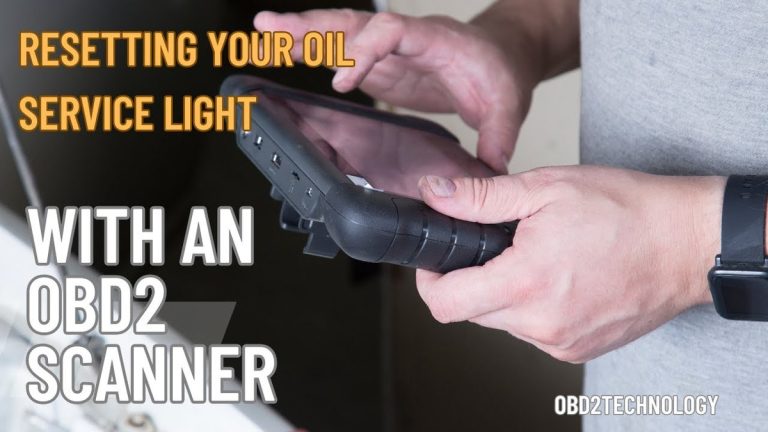
An OBD2 scanner can help you confirm whether the battery is involved. It won’t replace a battery test, but it adds valuable evidence.
Transmission Codes That Are Often Voltage-Related (P0700–P0899 Range)
Transmission trouble codes fall mostly in the P0700 to P0899 range. Some of these codes relate to shift solenoids, pressure control solenoids, or the TCM itself. A low-voltage code in this range often points back to the battery or charging system.
Not all scanners read transmission codes equally. Some entry-level models only read engine codes. Before buying, confirm that your scanner supports transmission codes. Our review of whether BlueDriver can read transmission codes explains what to look for.
Live Data to Monitor: TCM Voltage, Solenoid Duty Cycle, and Gear Position
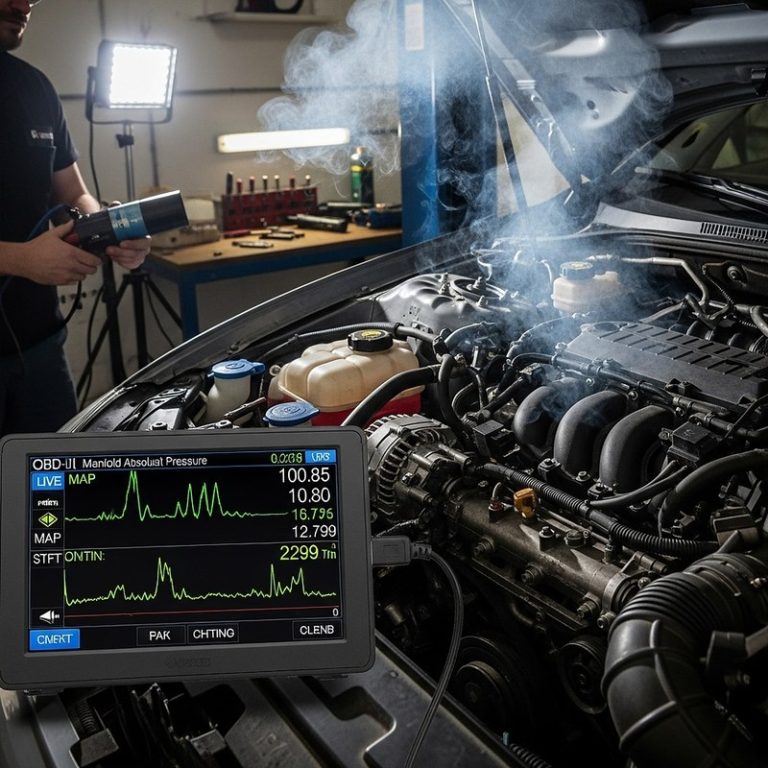
A scanner with live data can show TCM voltage, solenoid duty cycle, and commanded gear position. If TCM voltage drops while the transmission acts up, the battery or charging system is likely involved.
Duty cycle tells you how long a solenoid stays on. Unusual duty cycle readings combined with low voltage point to an electrical cause. Gear position data shows what the TCM thinks it’s doing compared to what the driver feels.
Model-Year and Protocol Coverage: What Your Scanner Can and Can’t Read
OBD2 became mandatory for most US vehicles in 1996. However, transmission codes and live data coverage vary by brand, model year, and scanner capability. Some vehicles use proprietary protocols that generic scanners can’t access.
Check the scanner’s compatibility list before purchase. If your vehicle isn’t listed or your scanner can’t reach the TCM, you may need a professional-grade tool or a shop visit.
Port Location, Ignition Mode, and Code-Reset Limitations
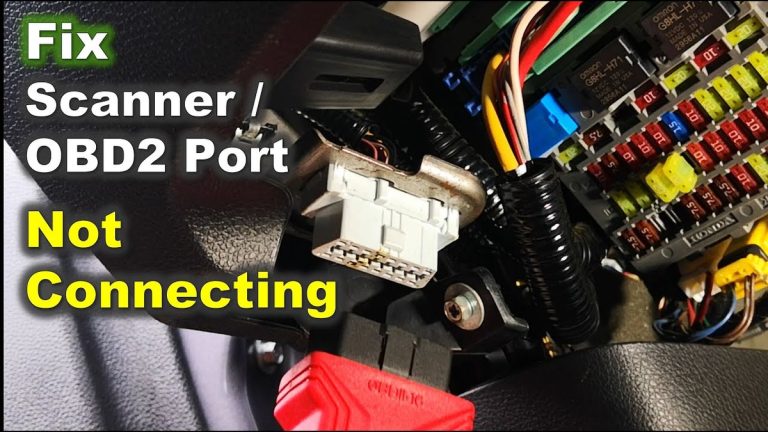
The OBD2 port is usually under the driver’s side dash, near the steering column. Some vehicles hide it behind a panel. Turn the ignition to the “on” position without starting the engine to read codes.
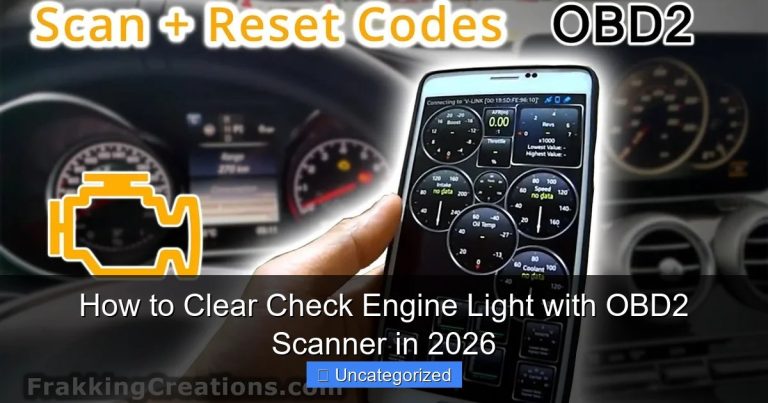
Clearing codes can be useful, but it doesn’t fix the root cause. If the battery is weak, the codes will return. Also, clearing codes may reset emissions monitors, which can cause a failed emissions test in some states.
When OBD2 Data Isn’t Enough: Professional Diagnosis and Emissions-Readiness Limits
OBD2 data is a starting point, not a final verdict. A transmission that slips under load, makes noise, or fails a road test may need professional diagnosis. Some issues require a bidirectional scan tool that can command solenoids and perform relearns.
Emissions-readiness monitors also matter. If you clear codes before an emissions test, the monitors may not be ready in time. Check your state’s rules before clearing anything.
Safe Battery Testing, Jump-Starting, and Replacement Steps
Batteries contain acid and can produce explosive hydrogen gas. Safe handling matters. Follow these steps to protect yourself and your vehicle.
Correct Connection Order and Damaged-Battery Stop Conditions
When jump-starting, connect the positive cable first, then the negative cable to an engine ground or the negative terminal. Remove cables in the reverse order. Always follow the vehicle owner’s manual for exact instructions.
Stop immediately if the battery is swollen, leaking, cracked, or smells like rotten eggs. Do not jump-start or charge a damaged battery. Have it removed and replaced by a professional.
Hybrid and EV Cautions: High-Voltage Systems and Towing Risks
Hybrid and electric vehicles have high-voltage battery packs that can deliver lethal shocks. The 12-volt accessory battery in these vehicles is still important, but the high-voltage system requires special training.
Never cut into orange high-voltage cables or attempt repairs beyond your skill level. Towing a hybrid or EV incorrectly can also damage the electric drive system. When in doubt, call a professional.
Choosing the Right Replacement Battery for Your Vehicle
Use the battery size, group number, and cold cranking amps recommended in your owner’s manual. Installing the wrong battery can lead to poor cranking, charging issues, and transmission-like voltage problems.
Check the battery date code when buying. A battery that sat on a shelf for months has less life left. Choose a reputable brand and confirm the warranty terms before purchase.
Check the owner’s manual for group size, terminal layout, and cold cranking amp rating.
Turn the engine off, remove the negative cable first, then the positive cable. Keep metal tools away from both terminals.
Place the new battery, connect the positive cable first, then the negative. Start the engine and verify charging voltage.
If the Battery Checks Out: Next Steps for Transmission Diagnosis
A healthy battery doesn’t rule out an electrical problem. The alternator, wiring, grounds, and the TCM itself can also cause voltage-related shifting issues. Here’s what to check next.
Transmission Fluid Level, Condition, and Service History
Check the transmission fluid on level ground with the engine running and warm, following the owner’s manual. Low fluid can cause delayed engagement and slipping. Dark, burnt-smelling fluid suggests internal wear.
Review the service history. If the fluid and filter haven’t been changed at the recommended intervals, that could explain shifting problems. A simple fluid service is far cheaper than a rebuild.
When to Try a TCM Reset or Relearn Procedure
Some shifting issues clear after a TCM reset or relearn. Disconnecting the battery for a few minutes can clear stored adaptive values. Reconnect and drive gently so the TCM relearns your driving style.
Not all vehicles relearn automatically. Some require a professional scan tool to perform the procedure. Check your owner’s manual or a model-specific forum before attempting it.
DIY Limits vs. Professional Repair: Cost and Safety Considerations
Fluid checks, battery tests, and code reading are safe DIY tasks. Internal transmission repairs are not. A professional diagnosis may cost a few hundred dollars, but it’s cheaper than replacing the wrong part.
If the transmission needs major work, get multiple quotes. Ask what the estimate includes and whether the shop uses OEM or aftermarket parts. A written warranty protects you if the repair fails.
How to Prevent Battery-Related Transmission Issues Long Term
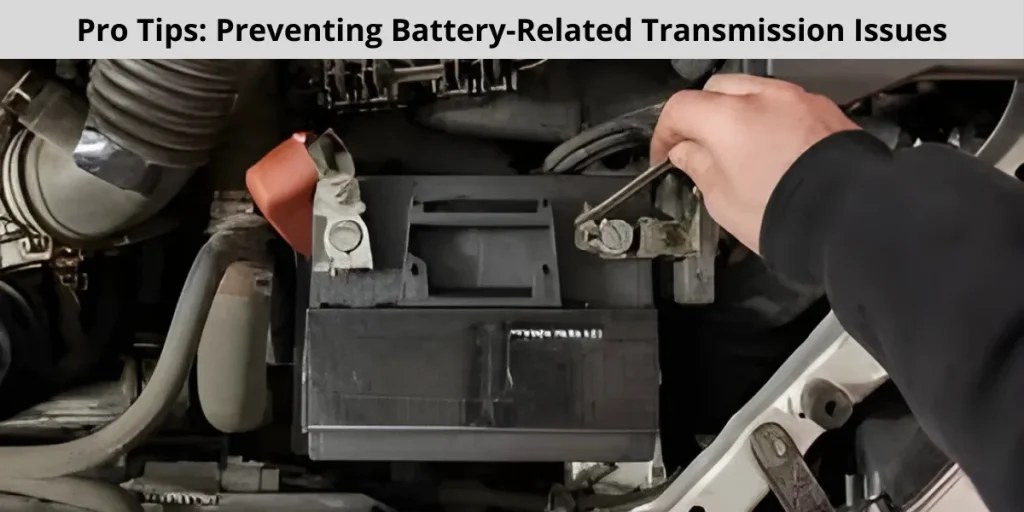
Prevention is mostly about keeping the electrical system healthy. A few simple habits reduce the chance of voltage-related shifting problems.
A Simple Seasonal Testing Routine for Battery Health
Test your battery at the start of winter and again in late spring. Cold weather is the hardest time for a battery, and summer heat accelerates wear. A quick load test catches problems before they leave you stranded.
Many auto parts stores test batteries for free. You can also buy a handheld battery tester for home use. Keep the results in your maintenance log.
Maintenance Habits That Protect Both Battery and Transmission Life
Keep battery terminals clean and tight. Corrosion adds resistance, which lowers voltage at the TCM. A wire brush and a terminal protector are cheap insurance.
Drive long enough to let the alternator recharge the battery after starts. If you only make short trips, use a battery maintainer periodically. Regular transmission fluid service also prevents internal wear that has nothing to do with voltage.
What to Do If Symptoms Return After a New Battery Is Installed
If shifting problems continue after a new battery, the battery may not be the issue. Have the alternator tested, check the ground straps, and inspect the wiring harness near the transmission.
Return to the basics: read codes, check fluid, and perform a road test. If the symptoms are consistent and electrical checks are clean, a professional transmission diagnosis is the next step.
- Best for: Drivers with intermittent shifting problems, warning lights, or limp mode who want to rule out the cheapest cause first.
- Think twice if: The transmission slips under load, grinds, or fails a road test — those point to internal mechanical issues, not just voltage.
- Next step: Test the battery and charging system before scheduling any transmission repair.
Frequently Asked Questions
Yes. A weak battery can drop system voltage below what the transmission computer needs, causing delayed shifts, harsh engagement, and limp mode. This happens even when the transmission itself is mechanically healthy.
Common symptoms include delayed or erratic shifting at low speeds, hard engagement into drive or reverse, transmission warning lights, and limp mode. These symptoms often appear during cold starts or after short trips.
Use a digital multimeter to check key-off voltage, cranking voltage, and running voltage. A load test at an auto parts store provides a more complete picture of battery health.
Codes in the P0700–P0899 range, especially those related to shift solenoids, pressure control solenoids, or low voltage, may be caused by a weak battery. Always test the battery before replacing transmission parts.
Sometimes. Disconnecting the battery for a few minutes can clear adaptive values, but not all vehicles relearn automatically. Some require a professional scan tool for a TCM reset or relearn procedure.
If the battery and charging system test fine but shifting problems continue, seek professional diagnosis. Signs like slipping under load, grinding noises, or a failed road test point to internal transmission issues.