How Much Tire Pressure Is Too High? Avoid Overinflation Damage
Any pressure above the number on your vehicle’s door-jamb placard is too high for normal driving conditions. Inflate your tires when they are cold to the placard pressure for the safest grip, even wear, and ride comfort.
If you are asking how much tire pressure is too high, the short answer is that anything above the pressure listed on your vehicle’s door-jamb placard could cause problems. That placard number, usually between 30 and 35 PSI for most passenger cars, is what matters for normal driving, not the maximum number printed on the tire’s sidewall.
- Placard is law: Use the PSI on the driver’s door placard, not the tire’s maximum sidewall number.
- Cold pressure only: Set pressure on cold tires; hot tires naturally read higher by 3-5 PSI.
- Safety first: Overinflation shrinks the contact patch, increasing hydroplaning and blowout risk.
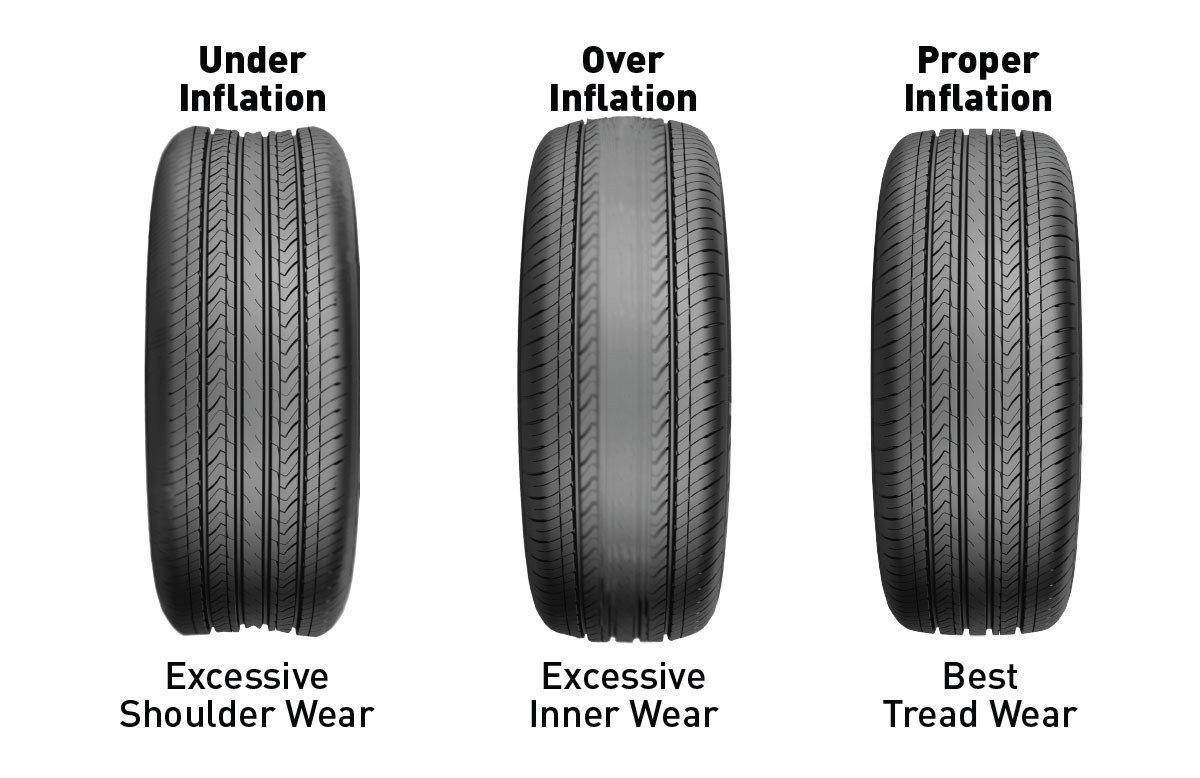
- Wear pattern identifies the problem: center wear means too high, edge wear means too low.
- TPMS limits: The system warns about low pressure but will not alert you when tires are.
How Much Tire Pressure Is Too High? The Short Answer
Your vehicle manufacturer sets a specific tire pressure for a reason. It balances ride comfort, handling, tire wear, fuel economy, and safety. If you inflate your tires past that number, especially when they are cold, you risk a rougher ride and reduced grip.
Door-Jamb Placard vs. Tire Sidewall Maximum
The door-jamb placard lists the recommended pressure for your vehicle. The tire sidewall lists the maximum pressure the tire can physically hold. Never use the sidewall number as your target. For most vehicles, exceeding the placard pressure by 3 to 5 PSI is too high for daily driving, and exceeding the sidewall maximum is a serious safety hazard.
Cold Pressure vs. Hot Pressure: Why 35 PSI Isn’t Always 35 PSI
You should always check your tire pressure when the tires are cold, meaning the car has been parked for several hours. Driving generates heat and raises the air pressure inside the tire. A tire that reads 35 PSI when cold might read 38 or 39 PSI after a highway drive. That is normal. However, if you set your “cold” pressure to 40 PSI on a hot day, the pressure could climb dangerously high while driving.
What Overinflation Does to Ride Quality and Handling
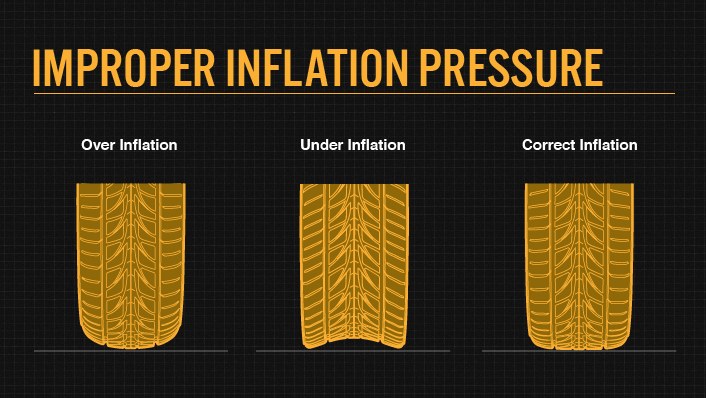
Overinflated tires might make you think you are getting better fuel economy, but the trade-off in safety and comfort is not worth it. The tire becomes stiff and the contact patch—the part of the tire that touches the road—becomes smaller and harder.
Center-Tread Wear and a Shrinking Contact Patch
When a tire is overinflated, the middle of the tread bows outward and carries most of the vehicle’s weight. This causes the center of the tire to wear out much faster than the edges. You may notice you need to replace your tires long before their expected lifespan ends. A smaller contact patch also means less grip, which is especially noticeable in corners and during emergency maneuvers.
Braking, Cornering, and Steering Response at High PSI
With less rubber on the road, your braking distance can increase. The tire may also skip or chatter when you turn, which feels like a loss of control. Steering can feel overly twitchy and harsh because the stiff sidewall transmits every road imperfection directly to the chassis. This makes the car feel nervous and reduces driver confidence.
The Safety Risks of Driving on Overinflated Tires
Ride quality and tire wear are important, but the real reason to avoid overinflation is safety. Driving on tires that are too hard can lead to sudden failure.
Blowout Risk and Impact Damage
An overinflated tire has less give. If you hit a pothole, a sharp curb, or road debris, the tire is more likely to be punctured or the sidewall could rupture instantly. This can lead to a sudden, dangerous blowout at highway speed. The reduced cushioning also puts extra stress on your suspension components like shocks, struts, and wheel bearings.
Wet-Traction Loss and Hydroplaning Dangers
This is a major risk. A correctly inflated tire pushes water through its tread grooves. An overinflated tire bulges in the center, reducing the tread’s ability to contact the road. This makes it much easier for the tire to ride up on top of water and hydroplane. Losing traction in rain is a serious crash risk.
When Overinflation Makes Sense (and When It Doesn’t)
There are a few specific situations where a higher pressure is useful stolen from the tire’s intended design. The key is that these situations are temporary and require lowering the pressure back down afterward.
Heavy Loads and Long Highway Stints
Many vehicle manuals recommend adding a few PSI when the car is fully loaded with passengers or cargo for a long trip. This helps the tire handle the extra weight. Check your owner’s manual for the exact “full load” pressure. This is a temporary adjustment, not a permanent setting.
Track Days, Off-Road Use, and Winter Tire Considerations
Track driving can generate immense heat, and a slightly higher cold pressure can prevent the tires from overheating. Off-road drivers often lower pressure for sand or rocks and then raise it back for the road. Winter tires often work best at a slightly higher pressure than summer tires, but you must still follow the vehicle placard. Unless you have a specific use case, stick to the placard.
How to Check and Adjust Tire Pressure Correctly
Checking your tire pressure is a simple task that takes five minutes. The tricky part is having a dependable method. Get into the habit of checking monthly and before any long road trip.
Gauge Accuracy: Digital vs. Analog vs. Pencil Gauges
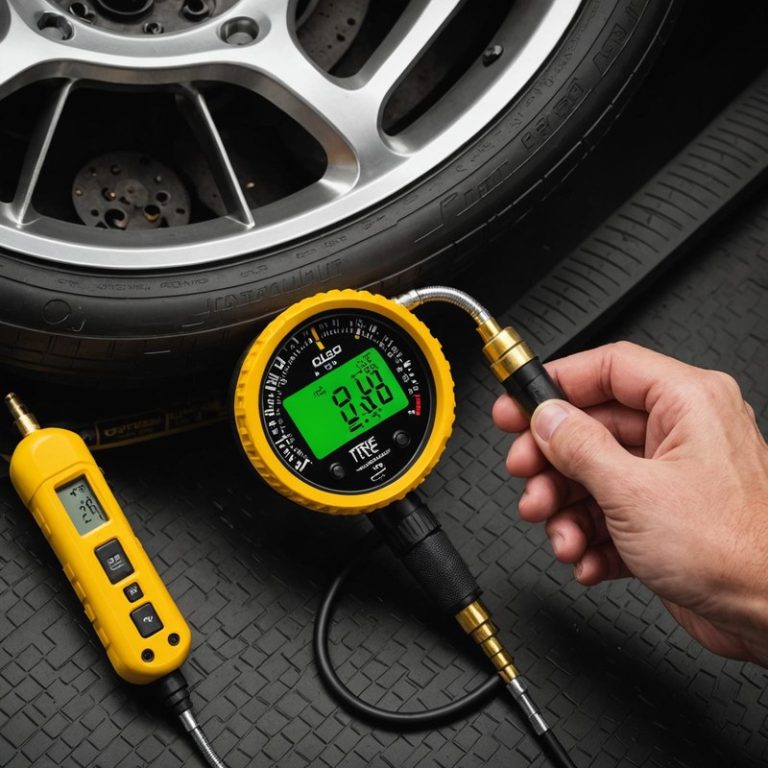
Your results are only as good as your gauge. Digital gauges are generally the easiest to read and often the most accurate. Analog dial gauges can be accurate if they are quality units assured. The small pencil-style gauges are cheap and convenient, but they can be inaccurate and hard to read. Whichever you choose, check it periodically for damage or leaks. For more detail, you can read our guide on digital vs. analog tire pressure gauges.
Inflator Duty Cycle and Compressor Limits at Home
If you use a portable tire inflator, pay attention to its duty cycle. Many small 12V compressors cannot run continuously without overheating. Overheating can cause them to shut off or give inaccurate pressure readings. If your inflator stops before reaching the set pressure, it may have tripped a thermal limiter. You can learn more about this issue by reading about why a tire inflator gets hot.
TPMS and Overinflation: What the System Can and Can’t Tell You
Your Tire Pressure Monitoring System (TPMS) is a helpful warning system, but it has limitations. It is designed to alert you to dangerously low pressure, not to fine-tune your tire pressure for optimal performance.
Warning Thresholds, Cold Pressure, and Relearn Limits
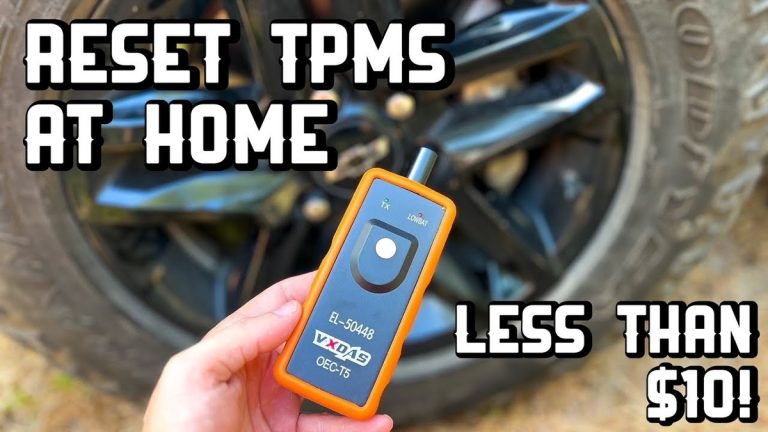
The TPMS light typically comes on when a tire’s pressure is about 25% below the placard recommendation. This means you can lose a significant amount of air before the light illuminates. Conversely, the TPMS usually does not warn you at all if your tires are overinflated beyond the placard. It does not tell you your exact pressure, only that a threshold has been crossed. If you have recently changed tire size or rotated your tires, you may need to perform a TPMS reset after a tire rotation.
When a TPMS Sensor Needs a Professional
If your TPMS light stays on after you have correctly inflated all tires, the sensor itself may be failing due to a dead battery, physical damage, or corrosion. Sensor batteries are not user-replaceable in most cases and require special tools to remove the tire and reprogram the sensor. This is a job for a tire shop or a qualified mechanic.
Overinflation vs. Underinflation: Which Is Worse for Your Tires?
Both overinflation and underinflation are harmful and can damage your tires and compromise safety. There is no “better” option, but they fail in different ways.
Wear Patterns, Fuel Economy, and Safety Compared
Underinflated tires wear out the outer edges of the tread, flex too much, and build up dangerous heat that can lead to a blowout. They also reduce fuel economy. Overinflated tires wear out the center of the tread, offer less grip, and are more vulnerable to impact damage. Both conditions reduce the tire’s ability to handle the forces of hard braking and turning. The safest choice is always the pressure on your vehicle’s placard.
| Condition | Wear Pattern | Primary Safety Risk | Best Action |
|---|---|---|---|
| Overinflated | Center of the tread wears quickly | Reduced traction, hydroplaning, blowout on impact | Release air to placard pressure |
| Underinflated | Outer edges of the tread wear quickly | Excessive heat buildup, sidewall failure | Add air to placard pressure |
For more information on dealing with low pressure, you can review our guide on whether you can drive with low tire pressure. Remember that a tire losing pressure is often a sign of a puncture or a slow leak.
Puncture Repairs and When to See a Professional
Sometimes a fluctuating or low tire pressure isn’t a setting problem—it’s a leak. If you find yourself adding air every week, you likely have a puncture or a damaged valve stem.
Puncture Location and Temporary-Repair Limits
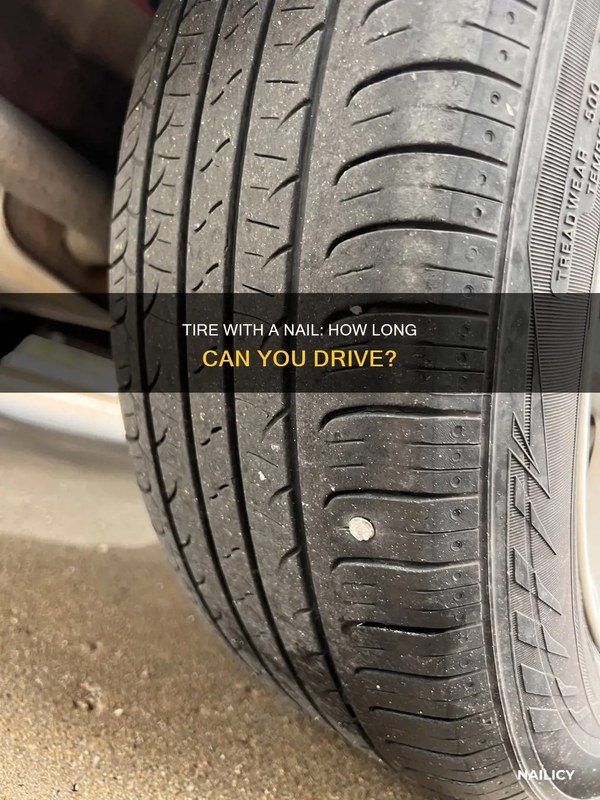
Plug kits can be a temporary fix for a nail or screw in the center of the tread. However, they are not a permanent repair case. A plug only seals the inner liner of the tire and does not address potential damage to the internal steel belts. You should never attempt to plug a puncture near the sidewall edge, in the shoulder, or in the sidewall itself. These areas flex too much, and the repair will likely fail. For a general timeline, see how long you can drive with a nail in your tire.
Professional-Repair Thresholds and Replacement Guidelines
Most tire shops will safely repair a puncture if it is in the thread area and has an angle of 90 degrees or less. However, the industry standard is to replace the tire if a puncture is larger than 1/4 inch in diameter, has multiple punctures close together, is on the sidewall, or if the tire’s internal structure has been damaged. A proper patch and plug combination is considered a more durable repair. For a deeper comparison of these methods, read our article on tire plug vs. patch safety.
- Best for: Every US driver, commuter, and road-tripper who wants safe handling, even tire wear, and maximum rim protection.
- Think twice if: You are considering inflating your tires to the sidewall “maximum” number for daily driving. The sidewall number is a structural limit, not your driving target.
- Next step: Check your cold tire pressure with a quality digital gauge and adjust it to the number on your vehicle’s door-jamb placard. Set a monthly reminder to repeat the process.
Frequently Asked Questions
It depends on the vehicle. Many passenger car placards recommend 32 to 35 PSI. Some trucks and SUVs recommend more than 40 PSI for heavier loads. Always check your driver’s door placard first.
The sidewall number is the maximum cold pressure the tire can safely hold. It is not a driving suggestion from the vehicle manufacturer. Do not use it as your target pressure.
Most TPMS systems only warn you when pressure is too low, usually by about 25%. They do not alert you to overinflation. You need to check your tire pressure manually with a gauge.
While a very hard tire can reduce rolling resistance, overinflation often hurts real-world fuel economy. The risk to safety and tire life far outweighs any small fuel savings.
Many owner’s manuals recommend adding a few PSI when carrying a full load and driving at highway speeds. Check your manual for the exact “full load” number and return to normal pressure when the load is removed.
The light can come on for several reasons: a slow leak, a temperature drop, a recent rotation, or a failing sensor. Check your pressure with a quality gauge. If it is correct and the light stays on, the sensor may need servicing.