How to Check Tire Pressure at Home: Simple, Safe Steps
Check tire pressure at home with a gauge, the door-jamb PSI, and cold tires for the most accurate reading. If pressure is low, add air in small steps and recheck each tire before driving.
Knowing how to check tire pressure at home is one of the easiest ways to protect your tires, improve ride comfort, and avoid low-pressure warning lights. You only need a gauge, a safe place to work, and the right PSI from your vehicle placard.
- Cold tires matter: Check before driving for the most accurate PSI.
- Use the placard: Follow the vehicle’s recommended pressure, not the sidewall max.
- TPMS is not enough: A warning light does not replace a manual gauge.
- Fix small issues early: Slow leaks, valve problems, and punctures can get worse.
- Keep tools ready: A gauge and inflator make monthly checks easier at home.
How to Check Tire Pressure at Home: The Fast Answer for Most Drivers
The short version is simple: check tires when they are cold, use the PSI listed on the driver-door placard, and compare each tire one by one. If a tire is low, add air in small steps and recheck until it matches the recommended pressure.
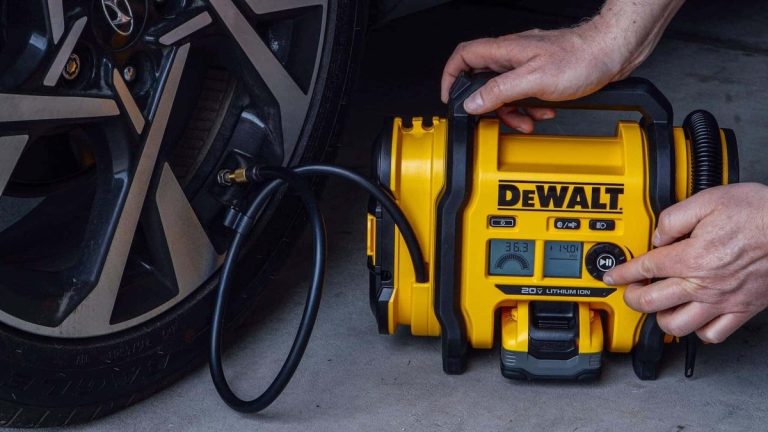
For most drivers, the best home routine is to keep a reliable gauge in the glove box or garage, inspect tires once a month, and check them before long trips or big temperature swings. If you also need to add air at home, a portable inflator can make the job faster and more consistent than waiting for a gas-station pump, as explained in our guide on how to use a portable tire inflator.
What You Need Before You Start: Gauge, Air Source, and Safety Checks

You do not need a full shop setup. A simple pressure gauge and a safe place to stand are enough for a basic check, while an inflator helps if you need to correct low pressure.
Choosing a tire pressure gauge: digital, dial, or stick
Any of the three common gauge types can work if they are in good condition. Digital gauges are easy to read, dial gauges are sturdy, and stick gauges are compact and inexpensive.
The most important factor is not the style; it is whether the gauge gives repeatable readings and has a range that fits normal passenger-car pressures. A worn or damaged gauge can mislead you, so compare readings occasionally if you keep more than one tool.
When to use a home inflator versus a gas-station air pump
A home inflator makes sense if you want convenience, cleaner storage, and less guesswork. Gas-station pumps are fine in a pinch, but they may be busy, hard to position, or less consistent than a tool you keep at home.
If you are comparing tools for the garage, a portable inflator can also help with bicycles, sports gear, and seasonal top-offs. For a broader buying view, see our portable tire inflator guide.
Safe setup: level surface, traffic visibility, and cold tires
Park on a level surface, set the parking brake, and keep away from traffic. If you are on a roadside shoulder, use extra caution and only work if it is safe to do so.
Check tires before driving, or after they have sat long enough to cool. Tires warm up as you drive, and that changes the pressure reading.
Step-by-Step: How to Check Tire Pressure at Home the Right Way
This process works for most cars, SUVs, and light trucks. The key is to use the vehicle’s recommended pressure, not the number molded on the tire sidewall.
Find the door-jamb placard and confirm the correct PSI
Open the driver door and look for the tire and loading information placard. It lists the recommended cold PSI for the front and rear tires, and sometimes it differs by axle.
Do not use the sidewall number as your daily target. That number is typically the tire’s maximum pressure rating, not the vehicle’s normal operating pressure.
Remove the valve cap, check pressure, and read the gauge accurately
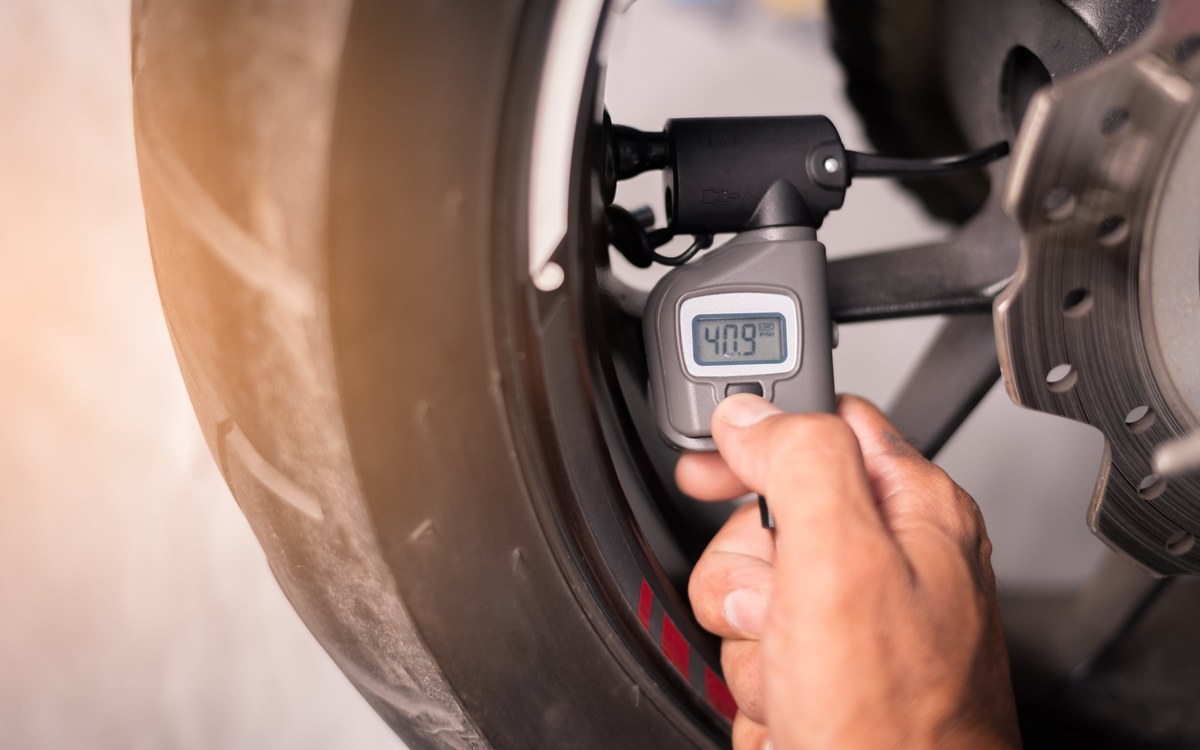
Unscrew the valve cap, press the gauge straight onto the valve stem, and hold it steady until the reading stops moving. If you hear a short hiss, that is usually just the gauge seating on the valve.
Read the number right away and write it down if you are checking multiple tires. A quick note on your phone helps you spot patterns, like one tire losing pressure faster than the others.
Adjust pressure in small increments and recheck each tire
If a tire is low, add air in short bursts and check again. It is easier to add a little more later than to overinflate and let air back out.
If you use an inflator, follow the tool instructions and the vehicle’s PSI target. For a practical walkthrough of one common home tool, see how to use a Viair 88P.
Replace caps, inspect for leaks, and verify the spare if equipped
Put the valve caps back on after each tire. Caps help keep dirt and moisture out of the valve stem.
If one tire keeps dropping, listen for a leak and inspect the tread, sidewall, and valve area. If your vehicle has a full-size or temporary spare, check that pressure too, since spare tires often get ignored until the day you need them.
Understanding Tire Pressure, TPMS, and Real-World Limits
Home pressure checks are useful, but they do not replace a full tire inspection. Pressure is only one part of tire health.
Cold pressure versus hot pressure: why timing matters
Cold pressure means the tire has not been driven on recently. That is the number your vehicle placard is based on, because heat from driving raises pressure and can make the reading look higher than normal.
If you must check a hot tire, treat the result as a rough reference only. Recheck it cold later if you need an accurate adjustment.
What TPMS can and cannot tell you about tire health
TPMS, or tire pressure monitoring system, warns you when pressure is low enough to matter. It does not tell you the exact cause, and it does not replace a manual gauge.
A tire can be underinflated without triggering a light right away, especially if the pressure loss is slow. That is why a manual check still matters even when the dashboard looks normal.
TPMS relearn limits, sensor issues, and when warning lights need service
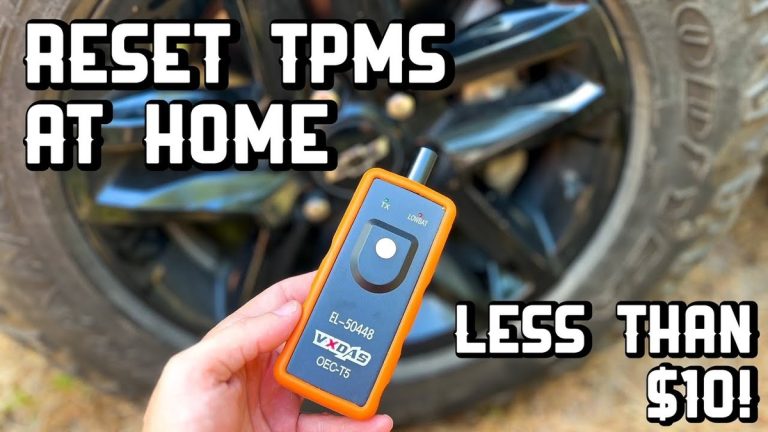
Some vehicles need a TPMS relearn after tire rotation, sensor replacement, or certain repairs. Others relearn automatically after driving for a while, but the process varies by make and model.
If the warning light stays on after you correct all tire pressures, the sensor, battery, or system may need service. A persistent TPMS issue is a good time to consult the owner’s manual or a tire shop.
Puncture location, temporary repairs, and professional-repair thresholds
A small tread puncture is sometimes repairable, but sidewall damage usually is not. Nail placement, tire age, and previous repairs all affect whether a tire can be safely fixed.
If the tire is losing air quickly, bulging, cut, or damaged near the shoulder or sidewall, stop driving and get professional help. Temporary sealants and plug kits are not a permanent answer for every problem.
Comparing Home Options: Manual Gauge, Digital Gauge, and Portable Inflator
Different tools solve different parts of the same problem. A gauge measures pressure, while an inflator adds air when you need to correct it.
| Option | Best for | Owner consideration | Driver consideration |
|---|---|---|---|
| Manual gauge | Quick monthly checks | Low cost, no battery needed | Simple, fast, and easy to store |
| Digital gauge | Easy reading and repeat checks | Needs batteries and occasional battery replacement | Helpful in low light, but depends on display quality |
| Portable inflator | Checking and topping off at home | Higher cost and maintenance than a gauge alone | More convenient than hunting for a public air pump |
Accuracy, ease of use, and repeatability side by side
A good manual gauge is often the simplest choice if you only need pressure readings. A digital gauge may be easier to read, especially for older drivers or anyone checking tires at night.
Repeatability matters more than flashy features. If the same tool gives nearly the same result each time on the same tire, that helps you trust the reading.
Which option fits daily commuters, families, and truck or SUV owners
Daily commuters often do well with a pocket gauge and a monthly routine. Families may prefer a digital gauge or inflator because it cuts down on time during busy mornings.
Truck and SUV owners may want a more durable gauge and a stronger inflator, especially if the vehicle uses higher PSI targets or larger tires. The best choice depends on your vehicle’s needs and where you usually park.
Ownership cost, maintenance, and battery requirements
A manual gauge usually has the lowest ownership cost because it does not need power. Digital gauges and inflators may need batteries, charging cables, hoses, or replacement seals over time.
Keep tools clean and stored in a dry place. For battery-related maintenance and storage basics, our guide on how to check a battery with Topdon BT200 covers useful inspection habits that also apply to tool readiness.
Check gauge accuracy against another trusted gauge from time to time, replace weak batteries, inspect inflator hoses for cracks, and keep valve caps and connectors clean.
Roadside and Emergency Tool Readiness for Tire Pressure Problems
Home tire care is easier when your tools are ready before you need them. That means storage, condition checks, and power checks matter just as much as the tool itself.
Where to store tools so they stay dry, charged, and usable
Store a gauge, inflator, and valve caps in a dry spot that is easy to reach. Many drivers keep them in the trunk organizer, cargo bin, or garage shelf.
A tool that is buried under groceries or sports gear is less useful in a real emergency. Easy access matters when the tire is low and the weather is bad.
Checking cable condition, pack condition, and current limits
Inspect cords, plugs, hoses, and clamps before you rely on them. Cracks, frays, or loose fittings can slow you down or make the tool unsafe to use.
If a tool uses a rechargeable pack, keep it charged enough for your normal needs and follow the maker’s storage advice. A weak battery can turn a simple top-off into a roadside delay.
What to inspect after use: heat, damage, and missing parts
After inflating tires, let the tool cool if it feels warm. Then check for missing caps, loose fittings, or air leaks before you put it away.
That quick after-use habit helps the tool last longer and makes the next tire check easier.
OBD2 and Diagnostic Basics for Tire Pressure and Warning-Light Troubleshooting
Some tire-pressure problems are mechanical, while others involve the TPMS system or related warning lights. An OBD2 scanner can help read certain codes, but it does not fix the tire itself.
Model-year and protocol coverage: what works on most 1996-and-newer vehicles
Most US vehicles from 1996 and newer use the OBD2 standard for emissions-related diagnostics, though TPMS coverage and live data vary by vehicle. Scanner support is not the same thing as full system support.
If you already own a scanner, check whether it can read manufacturer-specific body or TPMS-related information before you depend on it for tire warnings. Our article on how to use a Foxwell NT301 OBD2 scanner explains the basics of scanner use and coverage limits.
Port location, ignition mode, and safe connection steps
The OBD2 port is usually under the dash on the driver side, but the exact location varies. Connect the scanner while parked, with the ignition in the correct mode for your vehicle instructions.
Do not force the connector. If it does not seat cleanly, stop and check the port shape and orientation first.
Code reading versus live data: emissions readiness, reset limits, and app permissions
Code reading tells you what fault the vehicle stored. Live data shows what the system is doing in real time, which can help you understand whether the issue is a tire sensor, a wheel problem, or something unrelated.
If you use a phone app, review permissions and account settings. Some connected tools collect vehicle data, so privacy settings matter.
Firmware updates, compatibility gaps, and when diagnosis needs a professional
Firmware updates can improve support, but they do not guarantee coverage for every vehicle or every module. Some TPMS and warning-light issues still need a shop-level diagnostic process.
If the scanner cannot communicate with the vehicle, or if the warning light returns after a reset, professional diagnosis is often the fastest next step.
Battery, Electrical, and Hybrid/EV Safety When Using Inflation or Diagnostic Tools
Inflators and scanners are usually low-risk tools, but they still depend on the vehicle’s electrical system. That means battery condition and connection order matter.
System voltage, battery chemistry, and state of charge versus battery health
A weak 12V battery can cause strange warning lights, low-power behavior, or failed diagnostic sessions. That does not always mean the battery is bad, but it does mean the electrical system should be checked carefully.
If you suspect a battery issue, a separate battery test can help before you blame the tire system. For more on that process, see how to test a battery with a battery tester.
Correct connection order and damaged-battery stop conditions
Follow the tool instructions for connecting power or clamps. If a battery is swollen, leaking, cracked, or smells unusual, stop and get professional help.
Never use a damaged battery as a power source for a roadside repair tool. That can create a bigger safety problem than the original flat tire.
Hybrid and EV cautions for 12V systems, charging equipment, and service limits
Hybrids and EVs still use a low-voltage battery system for many accessories and controls. However, high-voltage service is a different category and should be left to qualified technicians.
If your vehicle has unique charging or service instructions, follow the owner’s manual. A simple tire-pressure check is usually fine, but electrical work is not the place to improvise.
When to Stop and Get Professional Help: Safety, Repair, and Ownership Cost
Home tire checks are useful, but they are not a substitute for safe repair decisions. If anything looks wrong beyond a simple pressure correction, stop early.
Signs the tire, valve, sensor, or wheel needs shop attention
Get help if you see repeated pressure loss, a bent wheel, a broken valve stem, a TPMS light that will not clear, or visible tire damage. If air escapes fast, the problem is no longer a routine top-off.
A tire shop can inspect the inside of the tire, the wheel, and the sensor area more thoroughly than a driveway check can.
Repair versus replacement cost considerations for common driver scenarios
A simple top-off is the cheapest fix, but it only works if the tire is otherwise healthy. A repair may be reasonable for a small tread puncture, while sidewall damage or severe wear may point to replacement.
For drivers who rely on the vehicle every day, the safer choice is often the one that restores confidence instead of stretching a damaged tire too far.
Transparent next steps for CarValleyNJ readers
If you want the simplest home routine, start with a reliable gauge and the placard PSI, then add a portable inflator if you need regular top-offs. If your warning light stays on, or the tire keeps losing air, move from DIY checks to professional diagnosis sooner rather than later.
- Best for: Drivers who want a fast, safe way to keep tires at the correct pressure at home.
- Think twice if: You see repeated pressure loss, tire damage, or a TPMS light that will not clear.
- Next step: Check the door-jamb placard, measure cold tire pressure, and keep a basic gauge or inflator ready in the trunk or garage.
Frequently Asked Questions
Use the cold PSI listed on the driver-door placard or owner’s manual, not the number on the tire sidewall. The front and rear tires may have different targets.
A monthly check is a good habit for most drivers, and it is smart to check before long trips or big temperature swings. If a tire seems soft or the TPMS light comes on, check sooner.
No. TPMS warns you about low pressure, but it does not replace a manual gauge or tell you the exact cause of the problem.
For many drivers, yes. It is especially useful if you want to top off tires at home instead of finding a gas-station pump.
Recheck the valve stem, tread, sidewall, and wheel for leaks or damage. If the tire keeps dropping pressure, have it inspected by a tire shop.
If all tires are at the correct pressure and the light still stays on, the sensor or system may need service. A shop or the vehicle manual can help with relearn or diagnosis steps.