Why Does My Portable Tire Inflator Keep Shutting Off
Your portable tire inflator usually shuts off because it is overheating, losing stable power, hitting a preset PSI, or fighting a leak. Check the power source, pressure setting, and tire condition before assuming the inflator has failed.
Why does my portable tire inflator keep shutting off? In most cases, the cause is heat protection, weak power delivery, an auto-stop setting, or an air leak that makes the compressor work harder than expected. The good news is that many shutdowns are normal protection behavior, not total failure, but you still need to know when to stop and when the tire itself is the bigger problem.
- Heat matters: Duty-cycle limits often cause normal thermal shutdowns during long fills.
- Power first: Weak 12V outlets, low battery voltage, and loose clamps commonly trigger cutoffs.
- Use the right PSI: Follow the driver-door placard, not the tire sidewall maximum.
- Check for leaks: A bad chuck seal, damaged valve stem, or puncture can make the inflator overwork.
- Know when to stop: Rapid air loss, sidewall damage, or extreme tool heat means professional help is safer.
Why a Portable Tire Inflator Keeps Shutting Off: The Most Common Causes First
A portable inflator usually shuts off for one of four reasons: it got too hot, it is not getting stable power, the pressure target or gauge reading is off, or the tire and hose setup are causing the compressor to struggle. Start with the simple causes before assuming the tool is broken.
Overheating from duty-cycle limits and continuous run time
Small inflators are not designed to run nonstop for long periods. Most compact models have a duty cycle, which means a set amount of run time followed by a cool-down period. If you try to air up a very low tire, multiple tires in a row, or a larger SUV or truck tire, the unit may hit its thermal limit and shut itself off.
This is often normal protection behavior. The motor, hose, and housing can get hot fast, especially in summer or when the inflator is stored in a warm trunk. If you are unsure whether your inflator is sized for your vehicle, our guide on what size tire inflator you need can help match tool output to tire size.
Low vehicle battery voltage, weak 12V outlet current, or poor clamp/cable connection
Many shutoff complaints are really power-delivery problems. A 12V socket may not provide enough current for a high-draw inflator, especially if the outlet circuit is fused lightly or the plug fits loosely. Clamp-style units can also cut out if the battery connection is dirty, weak, or reversed.
If the vehicle battery is already low, voltage sag under load can trigger protection mode. That is more likely if the car has been sitting, the battery is aging, or other accessories are running. A related check is whether you may be dealing with a bigger battery issue, like the ones covered in why a car battery dies after sitting overnight.
Auto-stop pressure setting, inaccurate gauge readings, or user setup errors
Some inflators stop because they think the target pressure has already been reached. A preset PSI that was entered incorrectly, a gauge that reads high, or a poor valve-chuck seal can all cause confusing behavior. The unit may cycle on and off, stop early, or display a pressure that does not match a separate handheld gauge.
It also matters whether the tire pressure was checked cold or after driving. Hot tires read higher than cold tires, which can make an inflator stop sooner than you expect.
Air leaks, hose restrictions, and internal compressor protection shutdowns
A leaking valve stem, damaged chuck seal, kinked hose, or partial blockage can make the compressor work harder while moving less air. Some inflators respond by overheating or shutting off to protect the motor. Repeated shutdowns with slow or no pressure gain often point to a leak or restriction, not just weak output.
How to Diagnose the Shut-Off Problem Safely at the Side of the Road or at Home
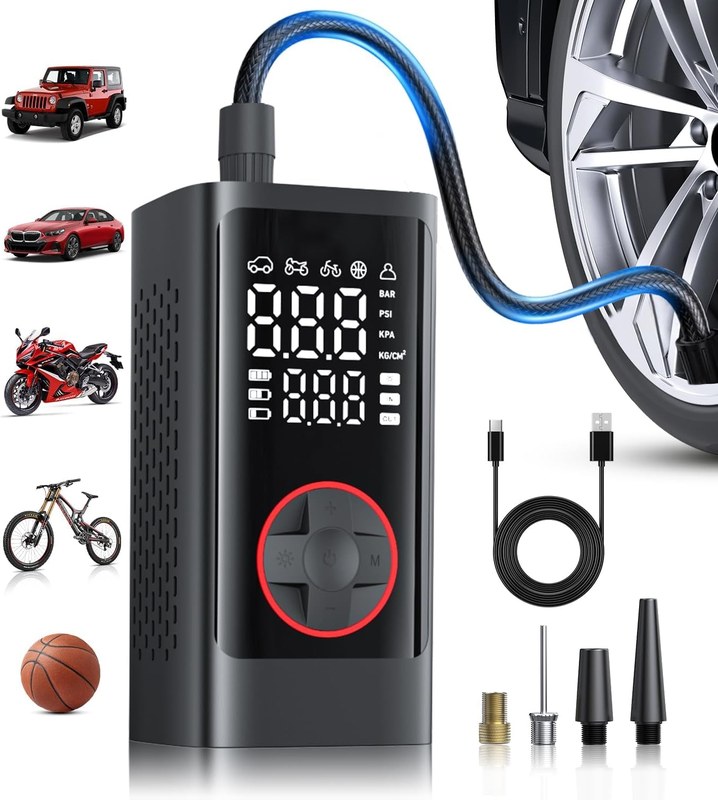
Safe troubleshooting matters as much as the diagnosis. An inflator problem can distract you from traffic, a damaged tire, or an unsafe parking spot.
Choose a safe location, improve traffic visibility, and stabilize the vehicle before use
If you are roadside, pull as far from traffic as possible on level ground. Turn on hazard flashers and set the parking brake. If local rules allow it, use reflective warning gear or triangles for added visibility.
Keep the inflator and cable on the side away from moving traffic when possible. Do not kneel where you cannot quickly move if another vehicle drifts toward the shoulder.
Check storage damage, cable condition, connector heat, fuse status, and tool completeness
Before plugging anything in, inspect the inflator body, hose, cord, clamps, and plug. Look for crushed sections, melted plastic, loose pins, cracked insulation, or missing adapters. If the plug or clamps were hot during the last use, that is a clue that resistance or overload may be involved.
Also check whether the inflator’s fuse, spare fuse, and valve adapters are present. Emergency tools are only useful when complete, which is one reason many drivers keep them with other trunk essentials listed in our guide to what tools every car owner should keep in the trunk.
Confirm the tire’s cold pressure on the driver-side door-jamb placard before inflating
Use the pressure listed on the driver-side door-jamb placard, not the maximum PSI molded into the tire sidewall. The placard is the vehicle maker’s recommended cold pressure for that vehicle setup. If you need a refresher on the process, see our article on how to check tire pressure at home.
Set the inflator to that target if it has an auto-stop feature. Then verify with a separate gauge if available.
Note puncture location and decide whether inflation is temporary or no longer safe to attempt
If the tire went flat because of a nail in the tread area, inflation may buy you time to move the vehicle to a safer place or service location. If the puncture is in the shoulder or sidewall, or the tire has visible bulges, cuts, or bead damage, stop and plan for professional help instead.
Power Problems That Trigger Shutoffs: 12V Outlets, Battery Clamps, Jump Packs, and Vehicle Electrical Limits
Power issues are one of the biggest reasons a portable inflator stops mid-job. The compressor may be healthy, but the vehicle or power source may not be delivering what it needs.
Required system voltage, outlet amperage limits, and why some inflators need direct battery connection
Not all inflators are meant to run from a standard 12V accessory socket. Some higher-output models need more current than many cabin outlets can safely supply, which is why they use battery clamps instead. If a unit designed for direct battery use is adapted to a lighter-style socket, shutdowns are likely.
Vehicle outlets also vary. One socket may perform better than another, and some only provide full power in certain ignition modes. Always follow the inflator manual and the vehicle manual together.
Correct connection order for clamp-style inflators and how reversed or loose connections cause protection mode
Clamp-style inflators should be connected exactly as the manufacturer instructs. Reversed polarity, weak clamp bite, or corrosion on the battery terminals can trigger protection circuits or prevent startup. Even if the motor starts, a poor connection can create heat and voltage drop that leads to shutoff under load.
Battery chemistry, state of charge versus battery health, and damaged-battery stop conditions
A battery can show some voltage and still perform poorly under compressor load. State of charge and battery health are not the same thing. An older battery, a sulfated battery, or one with an internal fault may let lights and electronics work but still sag badly when the inflator draws current.
Rechargeable inflators and jump packs have similar limits. A battery-powered inflator that was left discharged for too long may shut down early even if it appears to charge normally.
Hybrid and EV cautions, DC-DC converter behavior, and when to avoid using the accessory battery
Hybrids and EVs need extra caution because their 12V systems do not always behave like a traditional gasoline vehicle’s electrical system. Some can support accessory loads well when in the correct ready mode, while others may have stricter limits or model-specific guidance. Do not assume the small 12V battery in a hybrid or EV should be used like a large starting battery.
Check: Verify your vehicle’s 12V outlet rating, battery access, ignition or ready mode, and any hybrid or EV cautions in the owner’s manual. Limitations: Some inflators work best only with direct battery connection, and some vehicles limit accessory power depending on mode.
Inflator Duty Cycle, Heat, and Pressure Accuracy: The Tire-Specific Reasons It Stops Mid-Job
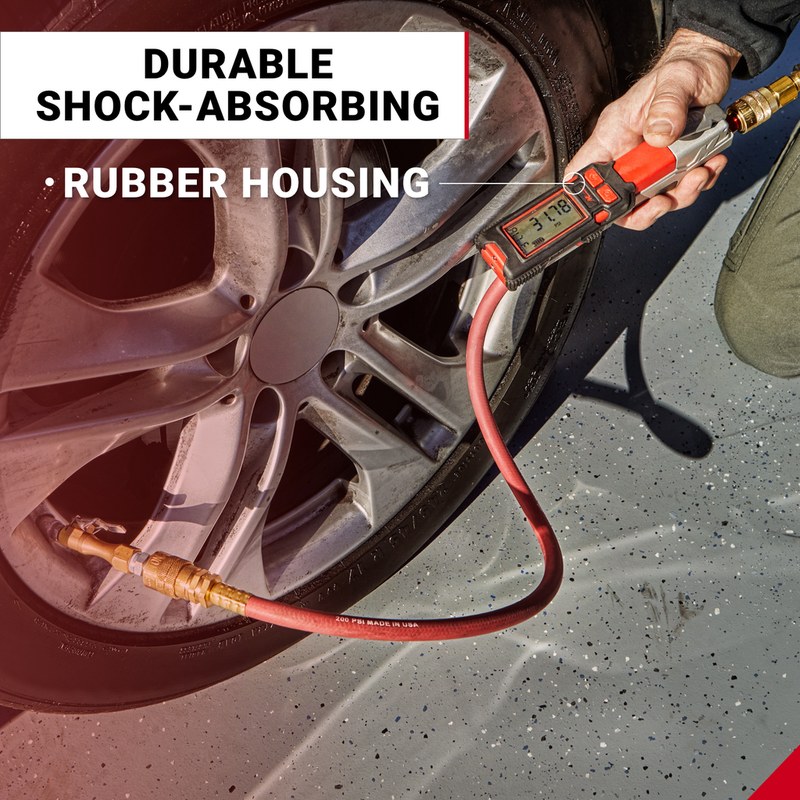
Sometimes the inflator is doing exactly what it was designed to do. It is the tire size, pressure gap, or heat buildup that pushes it past its intended use.
What duty cycle means and how long compact inflators can run before cool-down is required
Duty cycle is the amount of time the inflator can run before it needs to cool down. The exact limit varies by model, but compact inflators generally need breaks sooner than heavy-duty units. Ignoring this can shorten motor life and increase the chances of shutdown.
Why larger tires, low starting pressure, and high target PSI increase shutdown risk
It takes more time and more heat to raise a large tire from very low pressure to the proper PSI. That is why a compact inflator that works fine on a sedan may struggle with an SUV, pickup, or off-road tire. If your vehicle has larger tires, compare options in our guides to the best tire inflator for SUVs and the best tire inflator for trucks.
Gauge accuracy, hose heat, and why cold pressure matters more than a hot-tire reading
Pressure readings can drift because of gauge tolerance, hose heat, or air loss when disconnecting the chuck. That is why a separate known-accurate gauge is useful. Vehicle placard pressure is a cold-tire specification, so a hot reading after driving may not be the right target.
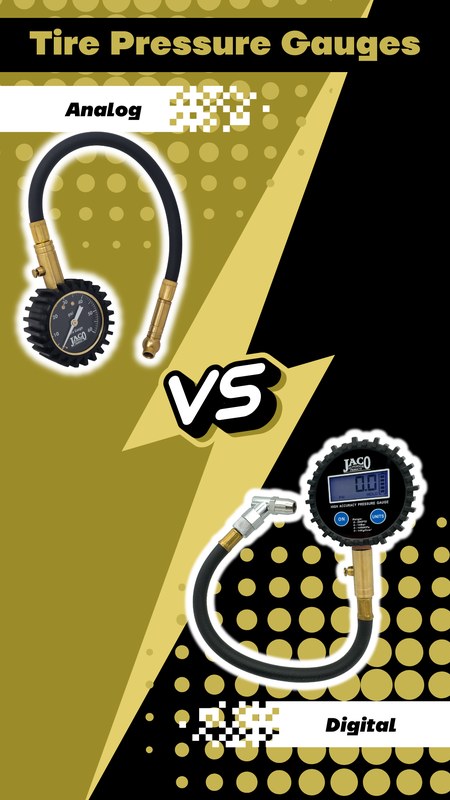
If you are comparing gauge styles, digital and analog tools each have tradeoffs in readability and durability. The key is consistency and using a gauge you trust.
When repeated shutoffs point to a failing motor, thermal switch, or pressure sensor
If the inflator shuts off quickly even with a good power source, a correct PSI setting, and no obvious leaks, the tool itself may be developing a fault. Common suspects include a weak motor, failing thermal switch, bad pressure sensor, or damaged control board. At that point, repair may not be cost-effective on a budget inflator.
Step-by-Step Troubleshooting Guide for 2026 Drivers
Use a simple process so you do not miss the easy fix. Most portable inflator problems can be narrowed down in a few checks.
Verify target PSI, auto-stop setting, and ignition mode recommended by the inflator and vehicle manual
Start by checking the target PSI against the door-jamb placard. Confirm that auto-stop is enabled correctly and that the vehicle is in the ignition or ready mode recommended by the inflator and vehicle manuals. Some inflators need the engine running or the vehicle in a specific power mode to avoid voltage drop.
Test with another 12V socket, another tire, and a known-accurate handheld gauge
Try a different outlet if your vehicle has one. Then test another tire to see whether the problem follows the inflator or stays with one wheel. Compare the inflator’s reading to a separate handheld gauge to rule out a bad sensor or display.
Inspect the valve stem, chuck seal, hose, and fuse for leaks or restrictions
Listen for hissing at the valve connection. Check the chuck seal for wear, inspect the hose for kinks, and verify that the fuse is intact and the plug is seated firmly. A small leak can make the inflator run longer, get hotter, and shut off before reaching the target.
Use timed cool-down intervals and stop if the cable, plug, or compressor housing becomes excessively hot
If the inflator stops, let it cool fully before trying again. Do not keep cycling it back on immediately. If the plug, cable, clamps, or compressor body become excessively hot to the touch, stop troubleshooting and follow the manufacturer’s instructions for inspection or replacement.
- Use the driver-door placard pressure as your target
- Test with a separate gauge and a second power source if possible
- Allow cool-down time when the inflator stops from heat
- Assume the tire sidewall maximum is the right everyday pressure
- Keep running an inflator with a hot plug, hot cable, or melting smell
- Rely on repeated top-offs when the tire is losing air quickly
When the Tire, TPMS, or Damage Condition Is the Real Problem
Sometimes the inflator is only revealing a tire problem that was already there. If air will not stay in the tire, the compressor may not be the main issue at all.
Door-jamb placard pressure versus sidewall maximum pressure: which number to follow
For normal driving, follow the driver-door placard. The sidewall number is not the vehicle’s recommended daily setting. Overinflating to the sidewall maximum can hurt ride quality, traction balance, and tire wear.
TPMS warning behavior after inflation and the limits of TPMS relearn without a scan tool
The TPMS light may not turn off instantly after you add air. Some vehicles need a short drive before the system updates, and others may need a relearn procedure depending on the situation. If the warning stays on after the pressures are correct, the issue may be a sensor, relearn need, or another tire-related problem rather than low pressure alone.
Puncture location, sidewall damage, and temporary-repair limits for sealant or plug kits
Not every puncture is repairable. Damage in the sidewall or shoulder area is a major red flag, and temporary sealants or plug kits have limits. If you are unsure, read our guide on whether a tire plug kit can fix a sidewall puncture before trying a repair that may not be safe.
Professional-repair thresholds: rapid pressure loss, bead leaks, wheel damage, or repeated low-pressure alerts
If the tire loses pressure again within a short time, the bead may be leaking, the wheel may be bent, or the puncture may be too severe for a temporary fix. Repeated low-pressure warnings after proper inflation are a sign to get the tire inspected professionally.
Portable Tire Inflator Types Compared: 12V Plug-In vs Battery-Powered vs Heavy-Duty Clamp-On
Different inflator types shut off for different reasons because they use different power sources and are built for different workloads.
Power source, current limits, inflation speed, runtime, and best-fit vehicle types compared side by side
| Option | Best for | Owner consideration | Driver consideration |
|---|---|---|---|
| 12V plug-in | Sedans, compact SUVs, emergency top-offs | Outlet amperage and plug fit matter a lot | Simple roadside use, but slower on larger tires |
| Battery-powered | Quick convenience and no cord to vehicle power | Battery pack must be maintained and recharged | Easier positioning around the vehicle |
| Heavy-duty clamp-on | Trucks, larger SUVs, repeated use | Needs battery access and more storage space | Usually faster, but setup is less convenient roadside |
Which option suits sedans, SUVs, trucks, off-road tires, and emergency-only drivers
Emergency-only drivers with smaller tires often do fine with a compact 12V or cordless unit. SUV and truck owners usually benefit from more airflow and a stronger duty cycle. Drivers with oversized or off-road tires often need a heavy-duty inflator rather than a small glove-box-style tool.
Ownership cost, maintenance needs, storage tradeoffs, and reliability expectations
Battery-powered inflators trade convenience for battery maintenance. Plug-in models avoid pack aging but depend on the vehicle’s electrical system. Clamp-on units take more space and setup time, yet they are often the better match for larger tires and repeated use.
Warranty, support, firmware or app features on smart inflators, and evidence limits before buying
Some newer inflators add digital presets, Bluetooth, or app features, but convenience features do not guarantee durability. Before buying, check the manual, warranty terms, replacement-part support, and whether the maker clearly explains runtime and power requirements. Where evidence is limited, treat marketing claims carefully.
- Confirm your tire size and how much airflow your vehicle likely needs
- Check whether the inflator is designed for a 12V socket, battery clamps, or a built-in rechargeable pack
- Review warranty, support, spare hose or fuse availability, and return policy
- Make sure the tool can be stored safely in your trunk or cargo area
- Choose a model sized for your real use, not just occasional marketing claims
Smart Inflators, OBD2 Tools, and App-Based Diagnostics: What They Can and Cannot Tell You
Some drivers assume a smart inflator or scan tool can explain every shutdown. In reality, these tools help in limited ways.
Model-year and protocol coverage for OBD2 vehicles in the United States and where the port is usually located
In the US, OBD2 coverage generally applies to light-duty vehicles from the standard federal rollout period forward, but feature support still varies by tool and vehicle. The port is usually under the dashboard on the driver side, though exact placement differs.
Ignition mode requirements, code and live-data limits, and why an inflator issue rarely appears as a fault code
An inflator shutting off usually will not create a diagnostic trouble code because the inflator is normally not part of the vehicle’s monitored emissions system. A scan tool may help you confirm battery voltage or related system behavior on some vehicles, but it usually will not identify a compressor power fault directly. If your scanner itself will not connect, see our guide on why an OBD2 scanner won’t connect.
Emissions readiness, reset limitations, and why clearing codes will not fix a compressor power fault
Clearing codes does not repair a weak outlet, bad inflator fuse, or failing compressor motor. It can also erase useful diagnostic information. Use a scan tool for actual vehicle diagnostics, not as a shortcut around an inflator or tire problem.
App permissions, Bluetooth pairing, firmware updates, privacy considerations, and when professional diagnosis is required
App-based inflators and scan tools may request Bluetooth, location, account, or notification permissions. Read those permissions carefully and keep firmware updated only through official channels. If the issue involves the vehicle electrical system, charging behavior, or repeated TPMS faults, professional diagnosis may be the smarter next step.
Maintenance, Storage, and the Point Where Replacement or Professional Help Makes More Sense
A portable inflator that is ignored between emergencies is more likely to fail when you need it most. A few maintenance habits can reduce shutdown problems and extend service life.
Post-use inspection checklist for cables, battery packs, hoses, seals, and overheating signs
After each use, inspect the plug, clamps, hose, chuck seal, and housing for wear or heat damage. Let the inflator cool before packing it away. On rechargeable models, check the battery pack for swelling, unusual heat, or charging problems.
Best storage conditions for summer heat, winter cold, moisture, and trunk vibration
Extreme heat, freezing temperatures, and moisture can all shorten inflator life. Trunk storage is convenient, but it also exposes the tool to vibration and temperature swings. Use a case or padded storage bag if the manufacturer provides one or recommends it.
How to maintain rechargeable inflators, monitor pack condition, and avoid deep-discharge damage
Rechargeable inflators should be topped up on the schedule recommended by the manufacturer. Leaving a lithium-powered unit fully drained for long periods can reduce performance or trigger protection behavior later. If you also carry a jump pack, similar storage habits matter there too.
Next steps if it still shuts off: repair, replacement, roadside assistance, or a tire shop visit
If you have ruled out heat, power, settings, and leaks, the inflator may simply be at the end of its useful life. Replacement often makes more sense than repair on low-cost units. But if the tire is the real issue, a tire shop or roadside service is the better next move than buying another inflator first.
- Best for: Drivers who need a clear way to separate normal thermal shutdowns from real inflator, battery, or tire problems.
- Think twice if: You plan to rely on a compact inflator for large truck or off-road tires without checking duty cycle and power requirements.
- Next step: Verify placard PSI, test the inflator with a separate gauge and stable power source, and stop if the tire loses air quickly or the tool overheats.
Frequently Asked Questions
Yes, many portable inflators have thermal protection and duty-cycle limits. If it stops after several minutes of hard use, especially on a large or very low tire, a cool-down period may be normal.
Yes. Low battery voltage or a weak 12V outlet can cause the inflator to lose power or enter protection mode under load. A loose plug, dirty battery clamp, or aging battery can make the problem worse.
Use the driver-door-jamb placard for normal inflation. The sidewall marking is not the recommended everyday pressure for your vehicle.
The auto-stop setting may be wrong, the gauge may be inaccurate, or the chuck may not be sealing well at the valve stem. Check the target PSI and confirm the reading with a separate handheld gauge.
Sometimes, but you should follow the vehicle manual and the inflator instructions closely. Hybrid and EV 12V systems can have model-specific limits, and some inflators may work better only in the correct ready mode.
Stop if the tire loses air rapidly, has sidewall damage, will not hold pressure, or the inflator cable or housing becomes excessively hot. In those cases, professional tire service or roadside assistance is safer than repeated inflation attempts.