What Battery Voltage Is Too Low to Start a Car? Below 12.0v
The direct answer: 12.0 volts is too low to start most cars reliably. Keep resting voltage at or above 12.4V, and have the battery load-tested before winter.
If you’re asking what battery voltage is too low to start a car, the short answer is 12.0 volts. At that reading, a standard lead-acid battery holds only about 25 percent of its charge — usually not enough to crank a cold engine reliably.
- 12.0V is too low: A lead-acid battery at 12.0V holds about 25 percent charge and may not crank.
- 12.4V is the safety line: Charge any battery that rests below 12.4V before relying on it for a start.
- Voltage isn’t health: A battery can read 12.6V at rest and still fail under load; cranking voltage.
- Test correctly: Measure resting voltage after the car sits for at least four hours, ideally overnight.
- Know your battery type: AGM and lithium starter batteries have different voltage floors than flooded lead-acid.
Yes, 12.0 Volts Is Too Low — Here’s the Exact Starting Threshold
A car battery works on a sliding voltage scale. The difference between a confident start and a frustrating click-click-click is often just a few tenths of a volt.
Resting Voltage vs. Cranking Voltage: The 30-Second Explanation
Resting voltage is what the battery reads after the car has been off for several hours. Cranking voltage is what it drops to while the starter spins the engine. Resting voltage shows how much energy the battery holds. Cranking voltage shows whether it can deliver that energy under load.
A battery can look fine at rest and still collapse the moment you turn the key.
Why 12.0V Means Only 25% Charge Left (and Why 12.4V Is the Real Safety Line)
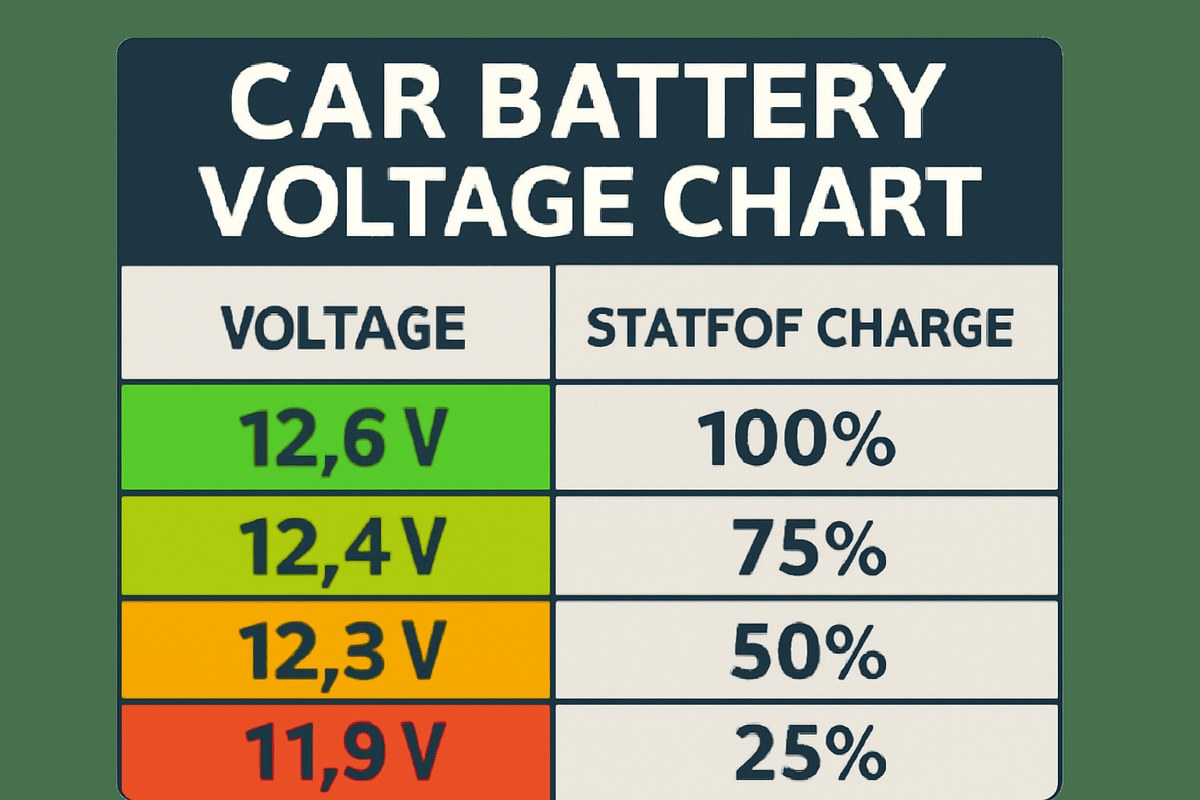
For a standard flooded lead-acid battery, the common state-of-charge table looks like this: 12.6V or higher is roughly 100 percent, 12.4V is about 75 percent, 12.2V is about 50 percent, and 12.0V is about 25 percent.
At 25 percent, the battery can run a dome light but can’t deliver the burst of current a starter motor needs. That’s why 12.0V is the danger zone. Treat 12.4V as your real safety line. If your battery rests below that, charge it before you rely on it for a cold-morning start.
Decoding Battery Voltage: Chemistry, State of Charge, and Health
Voltage is the easiest battery measurement to take, but it’s not the whole story. Chemistry, age, and internal condition all affect the number.
Lead-Acid, AGM, and Lithium: Different Voltage Floors for Different Chemistries
Most cars still use flooded lead-acid batteries, where the numbers above apply. AGM batteries use the same chemistry but typically rest slightly higher, around 12.8V when fully charged.
Lithium starter batteries, usually LiFePO4, rest higher, around 13.2V to 13.4V, and hold voltage more steadily under load. A low voltage for a lithium battery is not the same as a low voltage for lead-acid.
State of Charge vs. Battery Health: Why a Fully Charged Battery Can Still Fail
State of charge is how full the battery is. Battery health is how much usable capacity it has left after years of use. A battery can be fully charged and still fail because its internal plates have degraded.
That’s why voltage alone can’t predict a no-start. A weak battery with a dead cell can show 12.6V at rest, then drop below 9.6V when the starter draws current. You need a load test, not just a voltage reading. If you want to understand what a battery tester’s health reading means, our guide on low state of health in battery testers explains the difference.
How Your Car’s Charging System Should Read at Idle and Under Load
With the engine running, the alternator should push system voltage to about 13.5V to 14.5V. If you see 12.6V while running, the alternator may not be charging. If you see over 15V, the voltage regulator may be overcharging. Both are reasons to have the charging system checked.
How Temperature, Engine Size, and Oil Viscosity Move the Starting Threshold
The voltage that starts a car on a warm spring day may not start the same car in a New Jersey January. Temperature changes the chemistry, and engine size changes the demand.
Cold Cranking Amps (CCA) and the Voltage Sag at Ignition
Cold cranking amps measure how much current a battery can deliver at 0°F for 30 seconds while staying above 7.2 volts. Cold oil is thicker, so the starter has to work harder, and the battery voltage sags more.
A healthy battery might drop to around 10V during cranking on a cold morning. A weak battery might drop below 9.6V, which is the common rule-of-thumb floor for a reliable start.
Why 12.4V Can Be Plenty for a Small 4-Cylinder but Not a Big V8 in a New Jersey Winter
A small four-cylinder needs less current to crank, so a battery resting at 12.4V might handle the job. A large V8 needs more current, and a battery at 75 percent charge may not deliver it.
Add freezing temperatures and thick winter oil, and the same battery that started the car in September becomes a no-start in January.
How to Test Your Battery Voltage Without Guessing
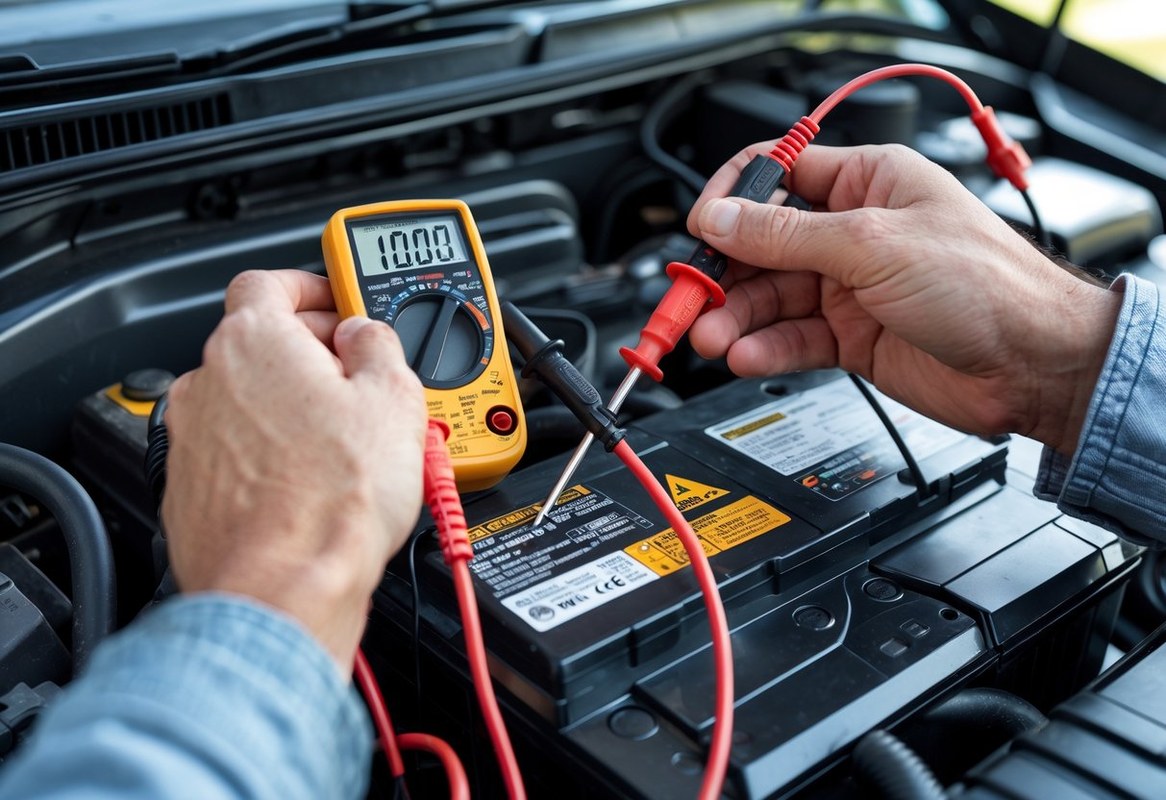
Testing battery voltage takes ten minutes with the right tool. The key is matching the tool to the question.
Multimeter, Load Tester, or OBD2 Scanner: What Each Tool Actually Tells You
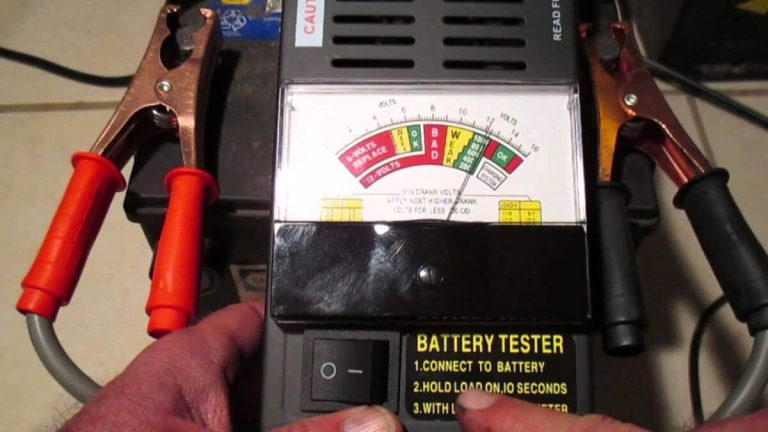
A multimeter gives a clean resting voltage reading. It’s cheap and simple, but it can’t test under load. A load tester applies a controlled electrical load and measures how the battery responds, which is closer to a real-world starting test.
An OBD2 scanner can read battery voltage through the vehicle’s computer in some cars, but that’s system voltage, not true resting voltage. It’s a convenience, not a replacement for a direct test.
Step-by-Step Safe Voltage Test: Correct Connection Order and Key-On Ignition Mode
Set your multimeter to DC voltage in the 20V range. Connect the red lead to the positive terminal and the black lead to the negative terminal. For a resting voltage, make sure the car has been off for at least four hours.
For a cranking voltage, have a helper hold the key in the start position while you watch the meter. The lowest number you see during cranking is your voltage sag. For a reliable overnight baseline, our guide on testing a battery after sitting overnight walks through the full routine.
Damaged-Battery Stop Conditions: Swollen Case, Sulfur Smell, or Corrosion Means Stop and Call a Pro
Corrosion on the terminals is also a warning sign. A crusty white or blue buildup can block current flow even when the battery itself is healthy. Clean it carefully with the battery disconnected, or have a shop do it.
Voltage Below 12.0? How to Jump-Start and Charge Safely
If your battery reads below 12.0V and the car won’t start, a jump-start can get you moving. But a jump is a temporary fix, not a cure.
Jump-Pack vs. Jumper Cables: Current Limits, Cable Condition, and Tool Completeness
A jump pack is self-contained. Jumper cables are cheaper but need a donor vehicle. Check the jump pack’s peak amperage against your engine size. A small four-cylinder needs less current than a large V8.
Inspect both tools first. Cracked insulation, corroded clamps, or a frayed cable is a reason to replace the tool, not use it. If you’re unsure how much current your car needs, our guide on jump-start amps explains the basics.
Smart Charging vs. Replacement: When a Battery Is Beyond Saving
A smart charger can often revive a battery that’s simply low. It monitors the process and stops when full, reducing overcharge risk.
But if the battery is old, has a dead cell, or won’t hold a charge after a full cycle, replacement is the honest answer. A battery that drops below 12.0V after sitting overnight, even after a full charge, is telling you its usable life is over.
Terminal Corrosion and Post-Use Inspection: What to Check After Every Jump
- Confirm the jump pack or donor car matches your vehicle’s system voltage
- Connect positive first, then negative, and remove in reverse order
- Inspect terminals, cables, and the battery case after every jump
- Jump a battery that is swollen, leaking, or cracked
- Connect the negative clamp directly to a dead battery’s negative post on many modern cars
- Treat a jump-start as a permanent fix without testing the battery afterward
Hybrid and EV Owners: Don’t Ignore the 12-Volt Accessory Battery
Hybrid and electric vehicles still use a standard 12-volt battery for computers, lights, locks, and contactors. If that small battery dies, the car may not start even with a fully charged traction pack.
Why a Full Traction Pack Doesn’t Guarantee Your Car Will Start
The high-voltage battery powers the wheels, but the 12-volt battery wakes up the computer systems that connect the high-voltage pack to the rest of the car. No 12-volt power, no startup sequence.
The dashboard may light up dimly or show a warning, but the car refuses to enter ready mode. The fix is the same as any other car: charge or replace the 12-volt battery.
High-Voltage System Cautions: What Not to Touch and When to Call a Professional
When Voltage Reads Fine but the Car Still Won’t Start
A healthy voltage reading doesn’t guarantee a start. Sometimes the battery is fine and something else is blocking the flow of power.
Starter Motor, Parasitic Drain, Corroded Grounds, and Faulty Sensors
A failing starter motor can draw excessive current or spin without engaging the flywheel. A parasitic drain can pull the battery down overnight. Corroded ground straps can interrupt the circuit between the battery, starter, and chassis.
Faulty sensors can also prevent a start by telling the engine computer to cut fuel or spark. These problems won’t show up on a battery voltage test. In fact, a battery tester that says good battery but the car still won’t start usually points to a different diagnosis.
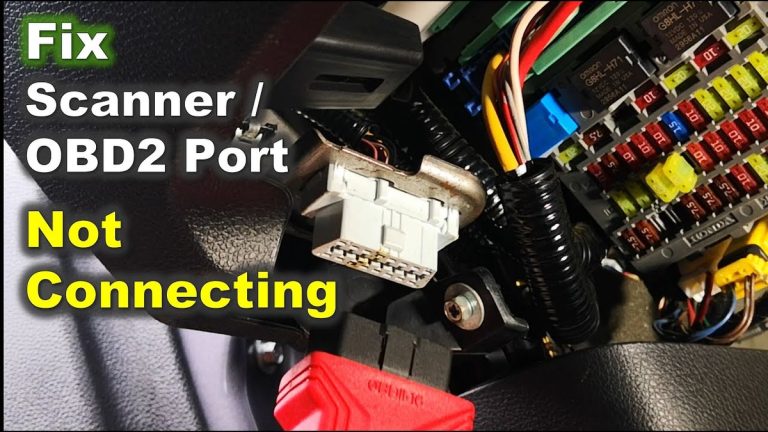
OBD2 Scan Limits: Model-Year Coverage, Port Location, Live-Data Accuracy, and Reset Limitations
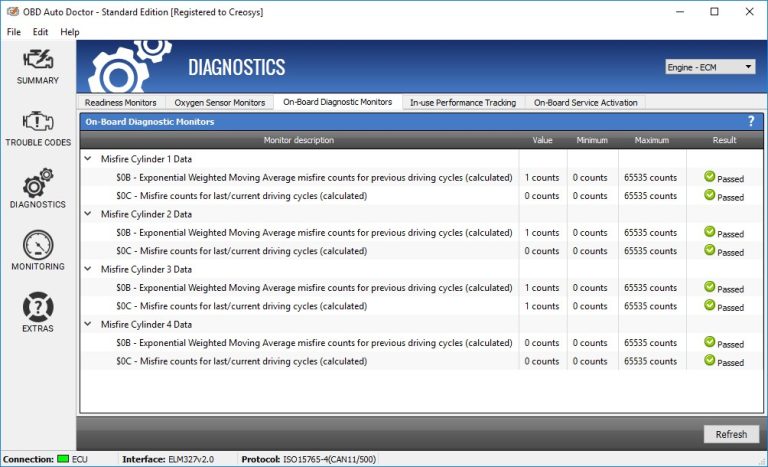
An OBD2 scanner can pull diagnostic trouble codes and show live data, but it has limits. Older cars may use different protocols, and some scanners only read engine codes, not ABS, airbag, or body modules.
Live data is only as good as the sensors feeding it. Clearing codes without recording them first can erase useful evidence. If the problem returns after you clear a code, you’ve lost the diagnostic trail.
Emissions Readiness, App Permissions, and Firmware: Why a Cheap Scanner Isn’t a Mechanic
Many scanners show emissions readiness monitors, which matter for New Jersey inspection. But a scanner can’t tell you why a monitor isn’t ready, and it can’t fix the underlying fault.
Bluetooth scanners that pair with a phone app may ask for location, account, or vehicle data. Review app permissions before you connect. Firmware updates can change what a scanner can read, so check for updates regularly.
When to Stop DIY Diagnosis and Visit a New Jersey Shop
If the battery tests healthy, the charging system works, and the starter draws normal current, but the car still won’t start, stop guessing. A professional shop can run controlled starting and charging tests and inspect wiring for intermittent faults a driveway test can’t catch.
The Real Cost of a Low-Voltage Battery Problem in 2026
Ignoring a low-voltage battery rarely saves money. It usually just moves the cost from a planned replacement to an unplanned tow.
Battery Replacement Costs: DIY vs. Professional Installation
Battery prices vary by group size, chemistry, and brand. A standard flooded battery for a common sedan costs less than a premium AGM battery for a modern start-stop vehicle. DIY installation saves labor but requires safe handling, correct terminal torque, and proper disposal of the old battery.
Professional installation adds labor but includes handling, recycling, and often a warranty. If your battery sits under a seat or in the trunk, professional installation is usually safer.
New Jersey Recycling, Core Charges, and Warranty Considerations
Warranty terms vary by brand and retailer. Some warranties are prorated, meaning the refund shrinks over time. Keep your receipt and register the battery if the manufacturer offers it.
Next Steps: A Simple Voltage-Check Maintenance Routine to Avoid Strandings
Check resting voltage after the car sits overnight. Below 12.4V, charge it. If it drops below 12.4V again within a week, have the battery load-tested and check for a parasitic drain. This routine catches most battery failures before they strand you.
- Best for: Any driver who wants a clear answer to what battery voltage is too low to start a car — 12.0V is too low, and 12.4V is the safety line.
- Think twice if: You rely only on voltage readings and skip load testing; a battery can look healthy at rest and still fail under load.
- Next step: Test your battery’s resting voltage this week, charge anything below 12.4V, and schedule a load test if you’re unsure of its health.
Frequently Asked Questions
It might, but it’s risky. At 12.2 volts a lead-acid battery is only about 50 percent charged, which may not deliver enough current to crank the engine, especially in cold weather. Charge the battery before relying on it for a start.
With the engine running, system voltage should read about 13.5V to 14.5V. That range means the alternator is charging the battery. Readings below 13V or above 15V suggest a charging system problem.
Let the car sit for at least four hours, ideally overnight, before measuring resting voltage. A battery that just came off a drive or charger can read artificially high for a short time.
Yes. At 11.9 volts a lead-acid battery is below 25 percent charge and very unlikely to crank most engines. Charge the battery and have it load-tested before attempting a start.
Yes. Resting voltage only measures state of charge, not internal health. A battery with a dead cell or heavy internal corrosion can show 12.6V at rest and still fail when the starter draws current.
Yes. Most hybrids and EVs use a standard 12-volt battery to power the computers, lights, and contactors that wake up the high-voltage system. If that 12-volt battery dies, the car may not start even with a fully charged traction pack.