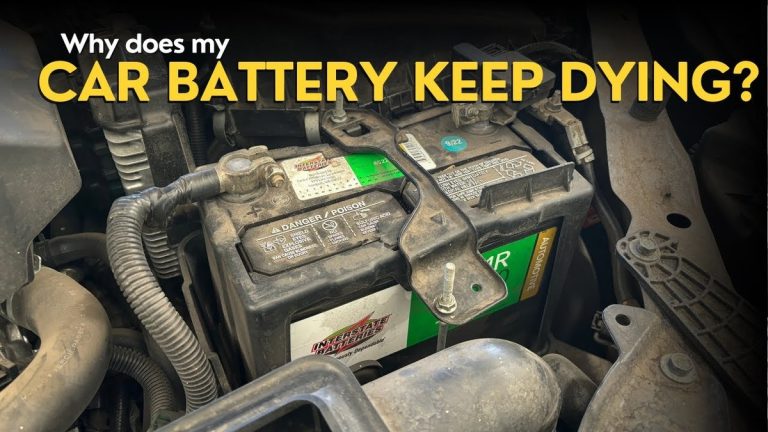
How Accurate Is a Battery Tester? Avoid These Common Mistakes
A battery tester is accurate only when the battery is fully charged, rested, and tested with the correct settings. Most false readings come from surface charge, wrong settings, or poor connections, not from the tester itself.
If you have ever asked how accurate is a battery tester, the honest answer is: very accurate when used correctly, and misleading when it is not. Most false readings come from the operator, not the tool. Surface charge, wrong settings, and loose connections cause more bad results than a faulty tester ever will.
- Accuracy depends on conditions: Test a fully charged, rested battery for a reliable health reading.
- Surface charge is the top mistake: Wait or drain it before testing to avoid a false “good” result.
- Settings matter: Enter the correct CCA, battery type, and chemistry for your vehicle.
- Know the limits: A battery tester cannot diagnose the alternator, starter, or high-voltage hybrid systems.
- Confirm before buying: Retest or get a printed shop result before replacing a battery.
How Accurate Is a Battery Tester? The Short Answer
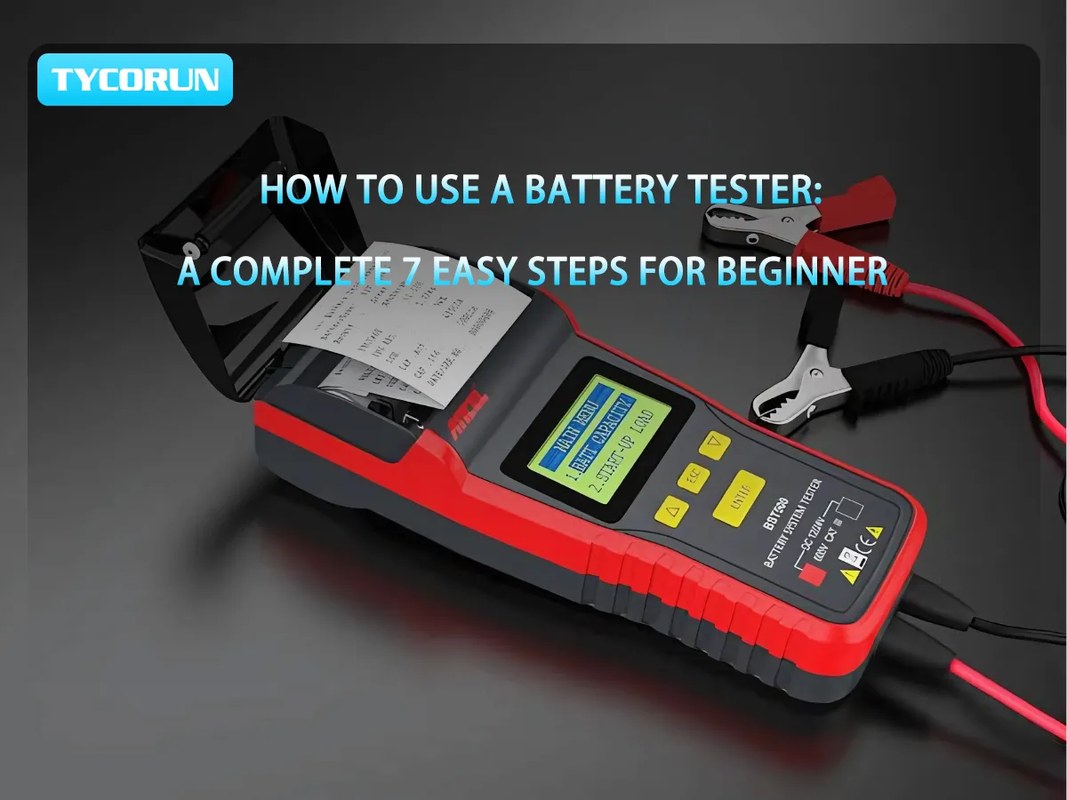
A quality electronic battery tester measures three things: voltage, internal resistance, and cold cranking amps (CCA). It compares those readings to the rating printed on the battery label. When the battery is fully charged, at a normal temperature, and the correct settings are entered, a good tester can identify a weak battery with high confidence.
That confidence drops fast when test conditions are wrong. The same tester can call a good battery bad or a bad battery good. Accuracy depends on preparation, settings, and knowing what the reading actually means.
What “Accurate” Actually Means: CCA, Voltage, and Internal Resistance
Cold cranking amps (CCA) is the amount of current a battery can deliver at 0°F for 30 seconds while keeping voltage above 7.2 volts. It is a starting-power rating, not a health score. A battery can have a high CCA rating and still be worn out.
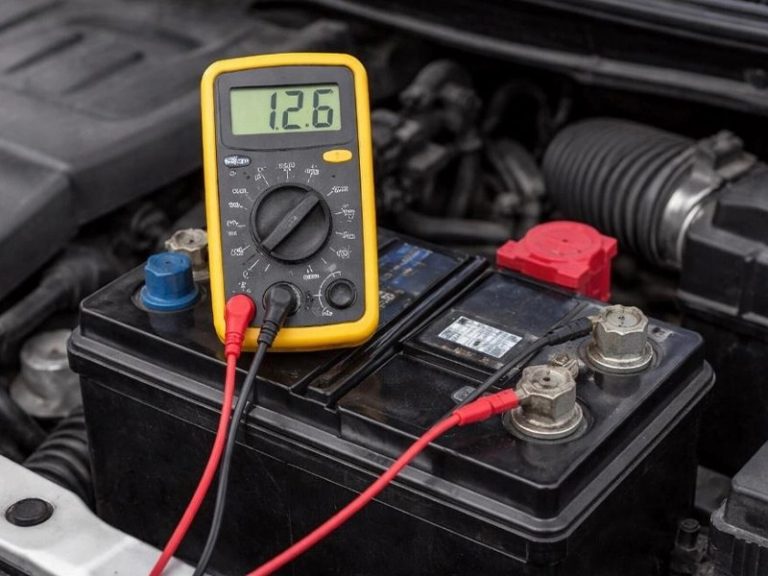
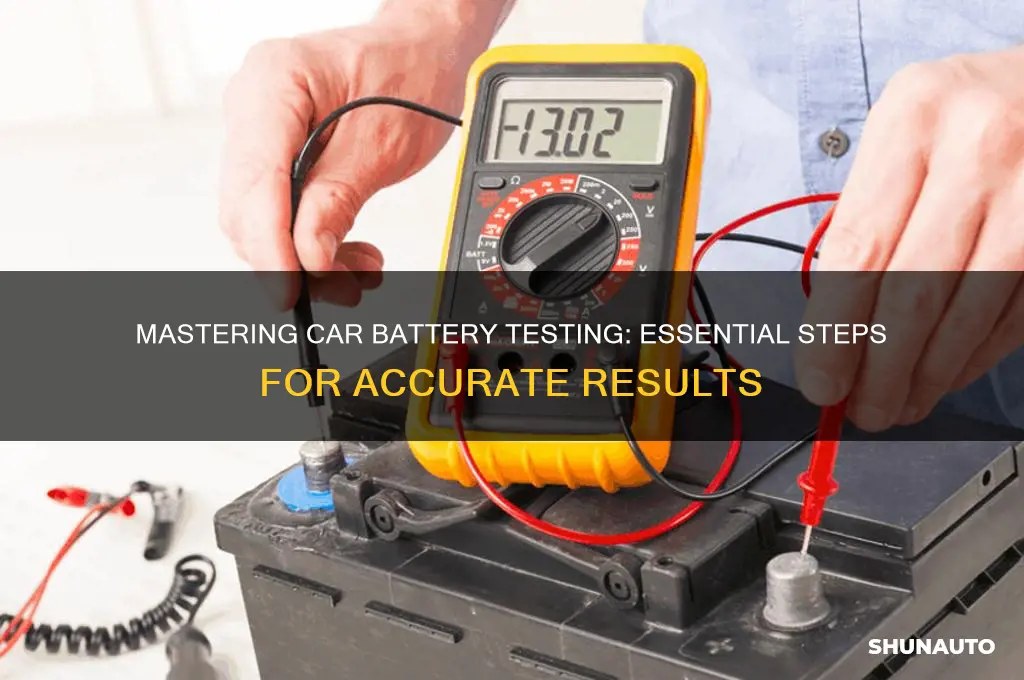
Voltage tells you state of charge. A fully charged 12-volt battery should rest around 12.6 volts. Below 12.4 volts, the battery is only partially charged, and most testers will not give a reliable health reading.
Internal resistance is the hidden number. It measures how easily current flows through the battery. As a battery ages, internal resistance rises. A tester that measures conductance or resistance gives a much better health picture than one that only reads voltage. If you want to understand the difference between a simple voltage check and a full test, our comparison of a battery tester vs multimeter explains when each tool is useful.
Why a Quality Tester Can Still Give a Misleading Result
A battery tester reads what it sees at the terminals. It cannot see inside the battery. Loose clamps, corroded posts, a discharged battery, or extreme cold can all distort the reading. The tool is not necessarily wrong. The test conditions are.
What a Battery Tester Measures — and What It Misses
State of Charge vs. Battery Health: The Critical Difference
State of charge is how full the battery is. Battery health is how much usable capacity remains compared to when it was new. These are not the same thing.
A discharged battery can test as low health even if it is still a good battery. A fully charged old battery can test as good and then fail under a real load. That is why charging before testing matters. A health reading from a partially charged battery is not trustworthy.
System Voltage, Battery Chemistry, and the Limits of a Handheld Reading
A handheld tester only sees the battery. It does not test the alternator, the starter, or a parasitic drain. A battery can test perfectly good while the charging system is failing. That is why a good battery test does not solve every no-start problem.
The Most Common Battery Tester Mistakes That Skew Your Results
Testing a Surface Charge: The #1 Accuracy Killer
Surface charge is the higher voltage that remains right after driving or charging. It can make a weak battery look healthy. Testing too soon after the car has been running is the most common accuracy mistake.
To remove surface charge, let the battery rest for several hours, or turn on the headlights for a few minutes before testing. For a reliable baseline, many owners prefer to test a car battery after sitting overnight.
Wrong Test Setting, Wrong Chemistry, or Wrong Connection Order
Entering the wrong CCA rating is another common error. If the tester asks for the battery’s CCA and you enter a higher or lower number, the result will be wrong. The correct rating is printed on the battery label.
Choosing the wrong battery chemistry also skews results. Flooded, AGM, and EFB batteries have different profiles. Connecting the clamps in the wrong order or attaching them to dirty posts causes voltage drops that fool the tester.
Ignoring Temperature, Battery Age, and Recent Driving Habits
Cold batteries read lower. Hot batteries read higher. Extreme temperatures can push a borderline battery into the wrong category.
Recent driving habits matter too. A series of short trips leaves the battery partially charged. Battery age also plays a role. A five-year-old battery can test good at rest but fail under the heavy load of a cold start.
- Confirm the battery type, CCA rating, and test setting before you start
- Remove surface charge and let the battery rest before testing
- Clean and tighten the clamps for a solid connection
- Test a battery right after driving, charging, or jump-starting
- Ignore a swollen, cracked, or leaking battery case
- Trust a health reading from a partially charged battery
How to Test a Car Battery the Right Way
Step-by-Step: Prep, Connection Order, and Test Sequence
Follow the tester’s instructions, but the basic sequence below applies to most electronic battery testers.
Find the CCA rating and battery type on the label. Enter them into the tester before starting.
Let the battery rest for a few hours, or run the headlights for a few minutes to drain the surface charge.
Attach the red clamp to the positive terminal and the black clamp to the negative terminal. Clean posts give better readings.
Follow the tester prompts. Save the reading or take a photo for comparison.
Damaged-Battery Stop Conditions: When to Stop Immediately
Do not test a battery that looks damaged. A swollen case, cracks, leaking acid, a strong sulfur smell, or a battery that is hot to the touch are all stop conditions. Testing a damaged battery can be dangerous.
Cheap vs. Professional Battery Testers: Is Accuracy Worth the Price?
What a $20 Tester Can and Cannot Tell You
A basic $20 tester usually reads voltage and may apply a simple load. It can tell you that a battery is dead or very low. It cannot reliably measure internal resistance or estimate CCA.
That makes a cheap tester useful for a quick check, but not for a health verdict. If you are deciding whether to replace a battery, a cheap tester can mislead you in both directions.
Professional Testers, Warranty Claims, and the Printout That Matters
Professional conductance testers measure internal resistance and compare it against a large database of battery ratings. Many can print a result slip. That printout matters if you need to file a warranty claim.
Modern Vehicle Cautions: AGM, Start-Stop, and Hybrid/EV Batteries
AGM and EFB Settings: Why Battery Chemistry Matters
AGM (absorbent glass mat) and EFB (enhanced flooded battery) batteries charge and behave differently from standard flooded batteries. Testing them with the wrong setting produces inaccurate readings.
Many modern testers include AGM and EFB settings. Use them. If your vehicle has start-stop technology, the battery type matters even more. Our guide to the best car battery tester for AGM and lithium batteries can help you choose a tester that supports the right profiles.
Hybrid and EV High-Voltage Systems: Never Guess Here
Hybrid and electric vehicles have high-voltage battery packs that can deliver a lethal shock. A handheld 12-volt battery tester is not designed for those packs. Never connect one to the high-voltage system.
When to Trust Your Tester — and When to Call a Professional
Tester Says “Replace”: Confirm Before You Buy
If the tester says replace but the car still starts fine, do not buy a battery immediately. Charge the battery fully and retest. If the result is still replace, a second opinion from a shop with a printed result is worth the cost. Our article on what to do when the battery tester says replace but the car still starts covers this situation in detail.
Tester Says “Good” But the Car Won’t Start: Charging System Faults
If the battery tests good but the car will not start, the problem may be the alternator, starter, ignition switch, or a parasitic drain. A battery tester cannot diagnose those. You need a charging system test and possibly a professional diagnostic. Our guide on what to do when the battery tester says good but the car will not start explains the next steps.
Next Steps: Keep Your Battery Test Results Honest for Years
Maintenance Habits That Extend Battery Life and Preserve Accuracy
Clean battery terminals, a tight hold-down, and regular charging keep the battery in a more consistent condition. A maintained battery gives more reliable test results over time.
Limit short trips when possible, and charge the battery after a deep discharge. These habits reduce the chance that a tester will read a healthy battery as weak.
Battery Disposal, Legal Notes, and Final Owner Takeaways
Final owner takeaway: a battery tester is a tool, not a crystal ball. Use it on a charged, rested battery with the correct settings, and it will give you honest guidance. Use it on a surface-charged, half-discharged battery, and it will guess.
- Best for: Owners who test a fully charged, rested battery with the correct CCA and chemistry settings.
- Think twice if: You expect a handheld tester to diagnose charging system faults, starter problems, or high-voltage hybrid systems.
- Next step: Review the right way to test a battery with a battery tester before you trust the result.
Frequently Asked Questions
A quality battery tester is accurate when the battery is fully charged, rested, and the correct settings are used. A professional shop tester adds a controlled load and a database of battery ratings, which makes it more reliable for warranty decisions.
A tester can say replace because the battery has high internal resistance or low health, even if it still has enough power to start a warm engine. Charge the battery fully and retest before buying a replacement.
Only if the tester has an AGM setting. Testing an AGM battery as a standard flooded battery can produce a false reading because the two chemistries behave differently.
Yes. A partially charged battery will not give a reliable health reading. Charge it fully and let it rest before you test.
A battery tester only checks the battery. The problem may be the alternator, starter, ignition switch, or a parasitic drain. Have the charging system tested separately.
State of charge is how full the battery is. Battery health is how much capacity it has left compared to new. A tester needs a charged battery to judge health accurately.