Does FOXWELL NT301 Read ABS Codes or Only Engine Faults?
No, the FOXWELL NT301 usually does not read ABS codes. It is best for engine fault codes, live data, and emissions checks, so drivers with an ABS light usually need a scanner with brake-system access.
does foxwell nt301 read abs codes is a common question, and the short answer is no for most drivers. The FOXWELL NT301 is mainly a basic OBD2 engine scanner, so it is best for check-engine faults, live engine data, and emissions readiness rather than full brake-system diagnostics.
- ABS coverage: The NT301 is mainly for engine codes, not brake-module diagnostics.
- Best use: Good for check-engine lights, live data, and readiness monitors.
- Safety: An ABS light can affect braking stability, so do not ignore it.
- Buy smart: If ABS is your main issue, choose a scanner with system-specific access.
Does FOXWELL NT301 Read ABS Codes? Quick Answer for CarValleyNJ Readers
If you are trying to diagnose an ABS warning light, the NT301 usually is not the right tool. It can help with engine-side trouble codes, but ABS, SRS, transmission, and many manufacturer-specific modules typically need a scanner with system-level access.
What the NT301 can read: engine fault codes, live data, and emissions readiness
The NT301 fits the standard OBD2 job most U.S. drivers need first: reading generic powertrain codes, showing basic live data, and checking readiness monitors before an emissions test. That makes it useful for check-engine lights, rough running, and some driveability issues tied to the engine or emissions system.
For a deeper look at engine-side data, see our guide on how to read fuel trim on Foxwell NT301. If you are comparing what it can do after a fault is found, our article on whether the Foxwell NT301 can clear codes explains the difference between reading and clearing.
What it cannot reliably read: ABS, SRS, transmission, and manufacturer-specific modules
The NT301 is not designed as a full-system scan tool. In normal use, that means it should not be counted on to pull ABS trouble codes, airbag codes, transmission faults, or brand-specific body and chassis data.
That limitation matters because a warning light on the dash does not always point to the engine. If the ABS lamp is on, the problem may be in wheel-speed sensors, wiring, hydraulic control, or the module itself, and those checks usually call for a scanner that can talk to the brake system directly.
Who this scanner is best for in 2026: basic DIY drivers versus advanced diagnostics
The NT301 is a good fit for basic DIY drivers who want a simple, low-friction way to read engine codes and monitor emissions readiness. It also works well for commuters, parents, and rideshare drivers who want quick answers before deciding whether a repair is urgent.
It is a weaker fit for owners who need ABS diagnosis, module resets, bidirectional functions, or brand-specific service features. If that is your use case, a more advanced scanner is usually the better buy, even if it costs more up front.
How the FOXWELL NT301 Fits into OBD2 Diagnostics in the United States
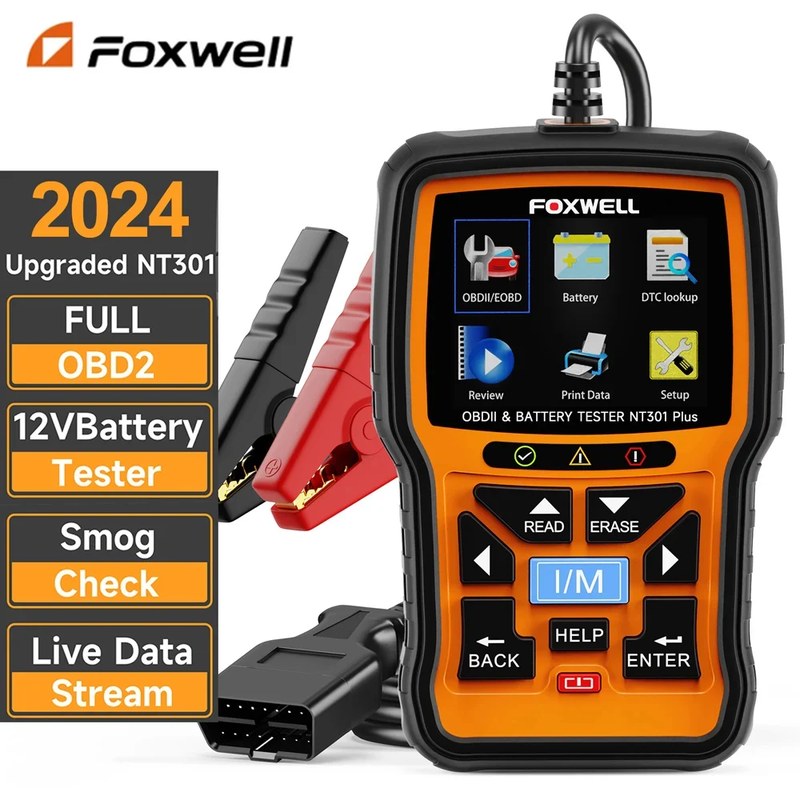
In the U.S., the NT301 sits in the basic OBD2 category, which is enough for many gasoline vehicles but not enough for every warning light. That distinction matters because OBD2 is a standards-based engine-emissions system, while ABS and other modules often live outside that basic layer.
OBD2 model-year coverage, protocol support, and vehicle compatibility limits
Most U.S. gasoline vehicles from 1996 and newer use OBD2, so the NT301 is aimed at that broad market. Compatibility still depends on the vehicle, the diagnostic port, and the specific system you want to access.
Some vehicles may show generic engine information normally but still block deeper access to ABS or other modules. If you want a broader compatibility check before buying, our article on what vehicles are compatible with Foxwell NT301 is a useful starting point.
Why 1996-and-newer matters for most U.S. gasoline vehicles
For most U.S. drivers, 1996 is the key cutoff because that is when OBD2 became standard on gasoline vehicles. That is why many basic scanners, including the NT301, are marketed around that model-year range.
Older vehicles may need different diagnostic methods, and some newer hybrid or special-purpose vehicles may still have coverage gaps. So “1996 and newer” is a helpful rule, but it is not a promise of full-system access.
Port location, ignition mode, and the basic connection steps drivers should expect
The diagnostic port is usually under the dash, near the steering column, but the exact location varies by vehicle. The scanner typically needs the ignition in the correct mode so the vehicle’s modules can communicate with it.
Before plugging in, make sure the vehicle is parked safely and stationary. If the scanner does not power up or connect, the issue may be a blown fuse, a weak battery, a loose port connection, or a vehicle-side communication problem rather than the scanner itself. Our guide on Foxwell NT301 not connecting to vehicle covers common causes.
Check: Verify make, model, year, trim, voltage, ports, mounting space, and OEM requirements. Limitations: Confirm whether your ABS, SRS, or transmission module needs a system-specific scanner.
ABS Codes, Warning Lights, and Safety: What Drivers Need to Know
ABS faults are not just a convenience issue. They can change how the vehicle behaves during hard braking, wet roads, loose gravel, and winter driving, especially when traction is already reduced.
How ABS faults affect braking stability, traction, and winter driving confidence
The ABS system helps prevent wheel lockup under braking. When it is not working correctly, the vehicle may still stop, but stability and steering control during panic braking can be reduced.
That matters most in rain, snow, slush, and on uneven pavement. Drivers may notice longer stopping distances, unexpected pedal behavior, or a traction-control light tied to the same fault.
When an ABS light means “drive carefully” versus “stop and diagnose immediately”
An ABS light does not always mean the vehicle is unsafe to move a short distance, but it does mean the brake system needs attention. If the brakes feel normal and the issue is only the ABS lamp, many drivers can usually proceed carefully to a repair location.
Stop driving and seek help right away if the brake pedal feels soft, the vehicle pulls hard, the brake warning light is also on, or braking performance changes suddenly. In those cases, the problem may be beyond the ABS light alone.
Why ABS diagnosis often requires a scanner with system-specific access
ABS diagnosis often starts with reading the ABS module directly, not the engine computer. A basic OBD2 reader may miss the fault code that actually explains the warning light.
That is why many owners move from a simple code reader to a scanner that can access brake, airbag, and transmission modules. If you want to understand the NT301’s broader limits, our page on whether the Foxwell NT301 OBD2 scanner is good breaks down where it fits and where it falls short.
NT301 Limitations: Live Data, Reset Functions, and Emissions Readiness
The NT301 is useful, but it is still a basic scanner. Knowing what it cannot do is just as important as knowing what it can.
Code reading versus code clearing versus full system resets
Reading a code tells you what the vehicle reported. Clearing a code removes the stored fault from the display, but it does not repair the problem.
Full system resets are different again. Those often require access to a specific module and can involve service procedures that the NT301 does not support. For a closer look at clearing behavior, see our article on Can Foxwell NT301 Clear Codes.
Live-data usefulness for engine troubleshooting and what it does not tell you
Live data can be very helpful for engine diagnosis. It can show how sensors and fuel trim change while the engine runs, which helps narrow down intake, fuel, or emissions issues.
But live data from the engine computer will not tell you everything about an ABS fault. Wheel-speed sensor data, brake module status, and chassis-specific fault histories usually sit outside the NT301’s core strengths.
Emissions readiness monitors, inspection prep, and why clearing codes can create setbacks
For inspection prep, emissions readiness matters because many states check whether monitors have completed. Clearing codes can reset readiness monitors and create a new waiting period before the vehicle is test-ready.
That is why drivers should avoid clearing a code until they have written it down and understand the likely cause. If you use the NT301 mainly for inspection prep, our guide on can Foxwell NT301 check emissions explains the practical side of readiness checks.
Compatibility Guide: Which Vehicles and Drivers Benefit Most from the NT301?
The NT301 makes the most sense when your needs are simple and your vehicle is OBD2-friendly. If you expect full-module diagnostics, you may outgrow it quickly.
Gasoline cars, light trucks, and older daily drivers that fit the NT301 well
Most gasoline cars and light trucks from 1996 and newer are the best match for this scanner. It is also a practical choice for older daily drivers where the main goal is to read check-engine codes without paying for advanced shop-level features.
For many households, that is enough to decide whether a problem is minor, whether a repair is urgent, or whether a vehicle is safe to keep driving to work or school.
Why hybrid and EV owners should be cautious about expectations and scope
Hybrid and EV owners should be careful not to assume a basic OBD2 reader will cover every warning lamp. Some powertrain functions may be accessible, but high-voltage, battery-management, and chassis systems often need more advanced support.
That does not mean the NT301 is useless for those owners. It just means the tool should be bought for its confirmed OBD2 engine functions, not for broad diagnostic coverage it may not provide.
When a more advanced ABS-capable scanner is the better buy
If your main concern is an ABS light, a traction-control fault, or a brake-system issue, a scanner with ABS coverage is the better purchase. The extra cost often pays off in fewer guesses and less time spent swapping parts unnecessarily.
Drivers who maintain multiple vehicles, work on family cars, or want broader diagnostic reach should compare module coverage before price alone. A basic reader is cheaper, but a better-fit scanner can be the smarter ownership choice.
| Option | Best for | Owner consideration | Driver consideration |
|---|---|---|---|
| FOXWELL NT301 | Engine codes, live data, emissions readiness | Lower-cost basic ownership | Simple, low-distraction use while parked |
| ABS-capable scanner | Brake, chassis, and module-specific faults | Higher upfront cost, broader coverage | Better for warning lights tied to safety systems |
Battery, Electrical, and Power-Use Considerations Before You Scan
Even a simple scanner depends on the vehicle’s electrical system. That means battery condition, connection quality, and safe use matter more than many buyers expect.
System voltage basics, battery chemistry, and state of charge versus battery health
A scanner needs enough stable voltage to communicate with the vehicle. A battery can show some charge and still be weak under load, which may cause odd scan behavior or intermittent connection problems.
For drivers, the key point is simple: state of charge is not the same as battery health. A weak battery can create false troubleshooting paths if the scanner loses communication while you are diagnosing the car.
Correct connection order, low-voltage warning signs, and damaged-battery stop conditions
Follow the vehicle and tool instructions for the correct connection order. If the display flickers, the scanner resets repeatedly, or the vehicle behaves strangely, stop and check the battery and port connection before continuing.
If you see swelling, leaking, corrosion, burning smell, or damaged terminals, do not keep testing blindly. That is a stop condition, not a “try again” situation.
Hybrid and EV cautions, accessory power limits, and avoiding unnecessary electrical strain
Hybrid and EV owners should be especially careful around high-voltage systems and service procedures. A basic OBD2 scan may be harmless, but anything beyond that should follow the vehicle manual or a qualified technician’s process.
Also avoid leaving diagnostic tools plugged in longer than needed if the vehicle’s accessory power strategy is unclear. Small loads can still matter when a battery is already weak.
Maintenance, Tire, and TPMS Checks That Matter Alongside OBD2 Scans
Engine codes are only one part of ownership. Tire safety, TPMS alerts, and basic maintenance can affect how the vehicle feels and how safely it gets you to a repair appointment.
Using the door-jamb placard, cold pressure checks, and gauge accuracy for tire safety
For tire pressure, always start with the door-jamb placard, not a guess. Check pressure when the tires are cold, and use a gauge you trust so you are not chasing a false reading.
Underinflated tires can hurt fuel economy, handling, and braking feel. Overinflated tires can reduce comfort and may change wear patterns, so accuracy matters either way.
Inflator duty cycle, puncture location, temporary-repair limits, and when to seek professional repair
If you are using an inflator or portable repair kit, remember that temporary fixes have limits. Sidewall damage, large punctures, and repeated air loss usually need professional inspection or tire replacement.
Even a good temporary repair should be treated as a short-term solution unless the tire repair method and damage location are approved by a tire professional.
TPMS relearn limits and why a scanner like the NT301 will not solve every tire-pressure issue
TPMS lights can be caused by low pressure, sensor faults, relearn needs, or battery failure inside the sensor. The NT301 is not a TPMS service tool, so it will not solve every tire-pressure warning.
If the light stays on after you correct pressure, the issue may need a TPMS-specific reset or service procedure. That is another example of why matching the tool to the job matters.
Roadside, Emergency, and Ownership Factors: Cost, Storage, Privacy, and Support
Buying a scanner is not just about features. It is also about where you keep it, how you use it, and whether the support structure is good enough for long-term ownership.
Safe location, traffic visibility, cable or pack condition, and post-use inspection
Always scan in a safe, parked location away from traffic. If you are using the tool roadside, make sure you and the vehicle are visible and that you are not standing in a travel lane.
After use, inspect the cable, connector, and housing for wear or bent pins. A damaged connector can create confusion the next time you need the tool in a hurry.
Storage conditions, firmware updates, app permissions, and privacy concerns with connected tools
The NT301 is a standalone scanner, so it avoids some app-permission issues common with connected tools. That said, any scanner should be stored clean, dry, and away from heat or moisture so the screen and connector stay in good shape.
If you later move to a Bluetooth or app-based scanner, review account permissions, data sharing, and cloud storage settings before linking a vehicle profile. Diagnostic data can include VIN-related information and fault history, so privacy settings matter.
Ownership cost, warranty/support expectations, and transparent alternatives for ABS-capable diagnostics
For ownership cost, the NT301 is attractive because it stays simple and usually does not require a subscription for basic OBD2 use. The trade-off is diagnostic reach, not recurring fees.
If ABS coverage is your priority, compare the scanner’s module access, update policy, and support terms before buying. Our broader comparison on Foxwell NT301 vs BlueDriver can help if you are deciding between a basic reader and a more connected diagnostic path.
- Best for: Drivers who want a simple OBD2 reader for engine codes, live data, and emissions readiness.
- Think twice if: Your main goal is ABS, SRS, transmission, or other module-specific diagnostics.
- Next step: Confirm the exact system coverage you need before buying, especially if the ABS light is your main concern.
Frequently Asked Questions
Usually no. The NT301 is mainly a basic OBD2 engine scanner, so ABS codes often require a scanner with brake-system access.
It can clear many engine-side codes on supported vehicles, but clearing does not fix the fault. Always record the code first so you do not lose the original clue.
It can help you check readiness monitors and see engine fault status. If you clear codes too early, readiness monitors may reset and delay inspection.
Basic OBD2 scanning may be fine, but hybrid and EV high-voltage systems need extra caution. Follow the vehicle manual and avoid working on orange-cable or battery-service components unless you are qualified.
An ABS light usually points to the brake module, wheel-speed sensors, wiring, or hydraulic control. A basic engine reader may not access those systems, so you may need an ABS-capable scanner.
Check your vehicle year, system coverage, and whether you need ABS, SRS, or transmission diagnostics. Also review support, updates, and whether the scanner matches your main repair goal.




2 Comments